

The 20th-century Cold War was fought through proxy conflicts and arms races. Propaganda was directed mainly inward: information flows were tightly controlled, and broadcasts such as Radio Free Europe could be easily jammed. Reaching the minds of the enemy's masses was virtually impossible.
Technology has since rewritten the rules. Social networks now allow mass manipulation tailored to each individual, and the cognitive domain has emerged as one of the defining battlegrounds of great-power rivalry.
The contest for global dominance is no longer settled by GDP, debt or trade figures alone. It is fought in how people make sense of the world. This goes beyond propaganda. It is an attempt to rewrite the rules of global governance itself. To understand the current flashpoints in Iran and Taiwan, it helps first to understand what story each country is telling.
China: Ancient Empire, Modern Strategy
China has turned apparent weakness into a strategic asset. Information warfare rewards the underdog: the oppressed party commands sympathy that the dominant one cannot buy. David commands the reader's sympathy from the first line - Goliath does not. Beijing has cast the West as Goliath - chaotic, decaying and at the mercy of its own democratic pressures, fundamentally unpredictable. That instability, in China's telling, is not a temporary condition but democracy's defining feature.
China has skillfully drawn on its historical experience of Western oppression, particularly in building relations with African states that suffered under colonial rule. Beijing regularly invokes its own humiliation during the Opium Wars as a reminder that uncritical openness towards the West has historically come at a cost.
The argument is not that the West is inherently evil, but that it is, in Beijing's view, fundamentally unstable. Against that uncertainty, China offers the guarantee of continuity, predictability and firm order. It is systematically building its reputation on the promise of harmony and win-win cooperation.
China does not simply claim a seat at the table of great powers. It claims a different table altogether. It presents itself as a distinct civilizational model, with its own account of modernization and political legitimacy. The message is simple: prosperity, Beijing argues, does not require Western-style democracy. Civilizational pluralism replaces universal values; effective governance replaces democratization.
China casts itself as a wise elder statesman: far-sighted, unhurried and above the turbulence of daily politics. Rather than coercion, it offers cooperation framed as mutually beneficial. The real strength of this message lies in its promise of stability in a chaotic world. Yet the promise has a cost. It can only be sustained through strict state surveillance and the suppression of dissent.
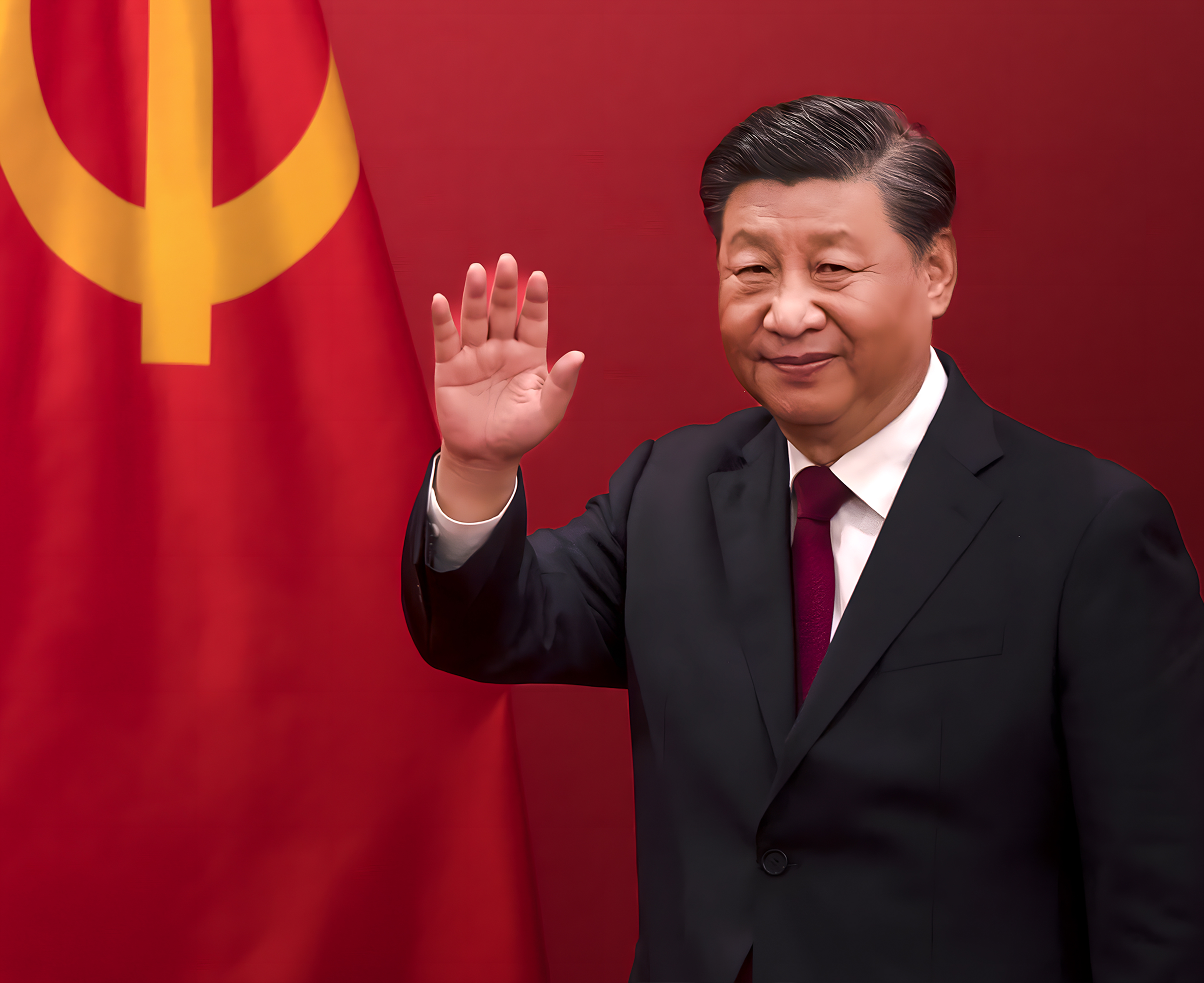
The US: Indispensable Nation, Technological Power
The United States takes the opposite approach. Where China offers stability, America offers the capacity to change, adapt and prevail. The winner's position is central to American strategy, regardless of whether Republicans or Democrats hold the White House. America attracts by promising the opportunity to succeed, but only through hard work, rules and discipline.
From that foundation flows a broader narrative. The United States presents itself as a moral and technological beacon and the indispensable guarantor of a rules-based international order. The underlying argument is that a free market, an open society and a capable alliance network can overcome any challenge.
The American narrative is built on more than military power. It rests on the conviction that the US is a systemic exception, a country whose global leadership is grounded in freedom, innovation and universal values.
American hegemony is therefore framed as a form of service. Washington casts itself as the guarantor of open seas, security alliances, global trade and technological progress.
America First does not fundamentally alter this belief. It adjusts the tone. Other countries are no longer expected to emulate the American model. They are simply expected not to oppose the American order.
Where Narratives Meet Reality
The planned May summit between the two leaders will be, among other things, a live contest of narratives. Iran and Taiwan already show how that contest works in practice.
In the Iranian crisis, American communication has been governed by a single imperative: Washington must be seen to win, at all costs. To a European observer, the execution has at times bordered on the comical. Judging solely by President Donald Trump's social media posts, one might conclude that Iran is on its knees begging the White House for mercy.
China, by contrast, has been at pains to dispel any suggestion that the crisis would force it to declare open support for Iran. Its dissatisfaction with the American approach is channelled not into threats to enter the conflict but into efforts to secure oil and gas from Iran on more favorable terms. For Beijing, the clash itself is merely one episode in a longer civilizational rivalry. What matters is the world order that emerges from it.
The same narrative dynamic plays out over Taiwan. The United States is working to establish among its allies a shared expectation of imminent Chinese military action. Beijing contests this framing, implicitly noting that if it had wanted to take the island by force, it would have done so long ago. China is instead betting on a long-term outcome in which the Taiwanese themselves gradually open the door, driven in part by their growing economic dependence on the mainland.
Cracks in the Facade
Both powers are working to hold their narratives together, but each faces the same underlying problem: their greatest vulnerabilities lie not in the propaganda of their adversaries but in their own internal contradictions.
China presents itself as a civilization whose patience is innate: one that has time, a plan and a long horizon. Yet that image is straining against debt-ridden provinces, a real-estate crisis, a demographic downturn and the frustration of a younger generation for whom the promise of endless ascent may no longer hold. The stability Beijing sells to the world is proving increasingly expensive to sustain at home.
The United States casts itself as the indispensable leader of the free world, a technological power and a country that emerges stronger from every crisis. Yet that narrative is fraying from within. Polarization, the high cost of living, unaffordable housing and a fading sense of possibility are hollowing out the moral authority on which the American message depends. America may continue to speak the language of victory, but a growing share of the world sees a country whose conviction in itself is fading.
The information war between the US and China is not simply a clash between two propaganda apparatuses. It is a contest between two empires over who can persuade the world that their own internal crises are temporary disturbances while those of their rival are proof of systemic decline. The winner will not be the loudest. It will be the one whose story holds together longest.