How AI, Remote Trials and New Business Models Could Transform Drug Testing
In an interview with Statement, Lindus Health co-founder Mery Beckwith explains how AI and remote clinical trials could cut drug development costs and speed up treatments for rare diseases.
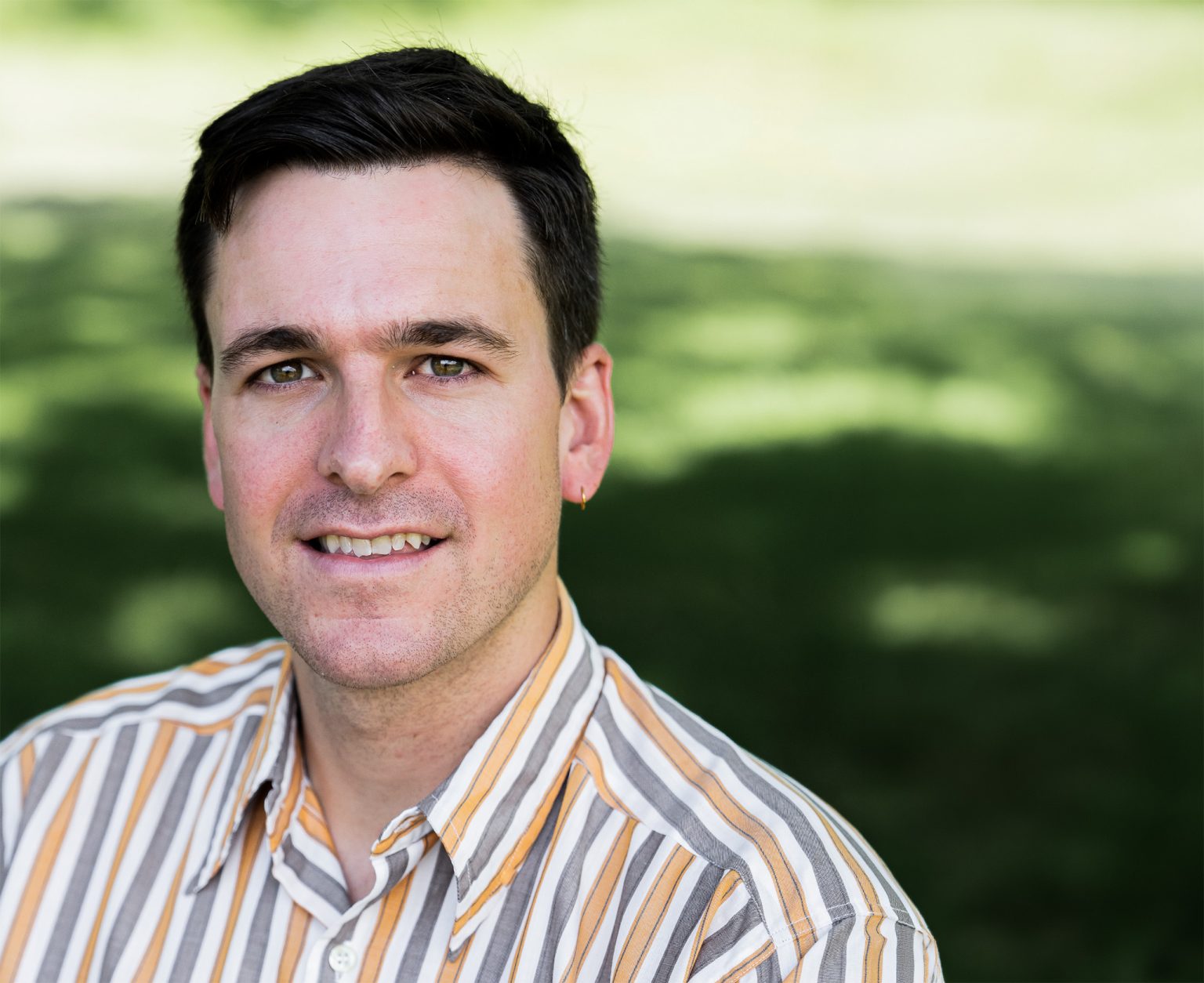
Meri Beckwith. Photo: Personal Archive
|
The pharmaceutical industry is facing a paradox. Artificial intelligence is accelerating drug discovery at extraordinary speed, computing power is growing exponentially and biotech investment remains enormous. Yet the process of clinically testing drugs on humans remains painfully slow and expensive. It is also often inaccessible to the very patients who most urgently need experimental treatments.
According to Meri Beckwith, co-founder of the clinical trial company Lindus Health, the real bottleneck in modern medicine is no longer the discovery of promising drugs. It is running the clinical trials to get them approved.
“Something is very deeply broken in life sciences”, Beckwith told Statement. “Unless we fix it, we are just not going to have progress in medicine.”
Clinical trials account for roughly 75% of the cost of developing a new drug. Despite advances in biotechnology, trial costs have increased dramatically since the 1950s, a phenomenon often referred to as Eroom’s Law, the inverse of Moore’s Law, in which pharmaceutical research becomes slower and more expensive over time rather than cheaper and faster.
Beckwith believes the problem lies not just in regulation or science but in the structure of the industry itself.
Traditional clinical research organizations, known as CROs, are usually paid according to the amount of work performed: the hours billed, monitoring visits conducted and administrative processes completed. Lindus Health uses a different model. It charges clients based on outcomes, particularly successful patient recruitment.
“The rest of the industry works on a fee-for-service model”, Beckwith said. “We charge on outcomes. We only charge when the study recruits patients.”
That approach fundamentally changes incentives. In conventional trial systems, reducing delays and inefficiencies can actually decrease CRO revenue. Beckwith argues that this discourages innovation.
“If you are getting paid on inputs instead of outcomes, you are incentivized to be less efficient”, he said.
The issue, according to Beckwith, is compounded by the economics of the pharmaceutical sector itself. Many major pharmaceutical companies dominate specific disease areas with limited competition, reducing pressure to cut costs or accelerate development.
“Most pharma companies are like collections of monopolies”, he said. “They are not really under much pressure to do things faster and more efficiently.”
COVID Revealed the Weaknesses
The origins of Lindus Health date back to the COVID-19 pandemic, when Beckwith volunteered for vaccine trials himself. What he encountered shocked him.
“These were urgent, well-funded trials open to almost anyone”, he said. “Yet the process of hearing about the trial and signing up was very slow and painful.”
He estimated that each participant in a COVID vaccine study was worth approximately $30,000 to $40,000 to the trial. Despite that, the recruitment systems were clumsy, the websites were poorly designed and the enrolment procedures were confusing.
“I had to be really persistent just to get myself onto the trial”, Beckwith said.
That experience convinced him that the industry had little incentive to optimize recruitment processes. The longer the trials lasted, the more money service providers earned.
The problem becomes even more severe for patients with rare diseases. Many patients struggle to access clinical trials despite actively searching for them.
Germany, like many countries, still relies heavily on recruitment through university hospitals and specialist centers. Patients outside those networks can struggle to participate even when they meet all the medical criteria.
For patients with rare diseases, this creates enormous frustration. Around 300 million people worldwide are estimated to live with a rare disease, many without any approved treatment. For them, an effective trial can literally be the difference between life and death.
Lindus Health is attempting to redesign the process by adopting remote-first clinical trials that recruit patients directly rather than relying entirely on hospitals.
Beckwith described a recent study conducted with a German pharmaceutical company involving patients with ME/CFS, a debilitating chronic illness. Because many severely ill patients could not physically travel to clinics, the trial was conducted remotely from participants’ homes.
“We actually captured much richer data than most other studies because we used wearables to capture longitudinal data”, Beckwith said.
Instead of relying on a handful of in-person visits, researchers could digitally monitor patients through wearable devices, continuously capturing data in their real-world settings.
What makes this approach striking is not the technological complexity but the fact that the pharmaceutical industry has been slow to adopt it.
“This is not rocket science”, Beckwith said. “No one has really been incentivized to think creatively about how we do this.”
The company’s software platform, Citrus, functions like an operating system for clinical trials. It helps to identify and screen patients, collect data from doctors and participants, monitor safety issues and analyze the results in real time.
The FDA has supported these kinds of digital approaches for years. Beckwith argues that American regulators are actually far more technologically progressive than their European counterparts and sometimes even the pharmaceutical companies.
“The FDA is light years ahead of other regulatory organizations in terms of innovation”, he said. “They are often the ones forcing the industry to adopt new technology.”
A woman wearing a sleep mask and headphones lies on a couch beside a sign reading “ME/CFS = When even sleeping is exhausting”. Remote trials may help researchers include patients unable to travel to clinics. Photo: Pia Bayer/picture alliance via Getty Images
China’s Growing Dominance
The global clinical trial landscape is also changing geographically. China has rapidly emerged as a major force in drug development, particularly in early-stage trials.
According to Beckwith, phase one clinical trials can be 10 to 20 times cheaper in China than in the United States or Europe because Chinese regulators demand less pre-clinical data before human testing begins.
“China has much laxer regulations, particularly in the earlier part of the process”, he said.
The country’s transformation from a producer of generic drugs into a biotechnology innovator has accelerated rapidly. Beckwith noted that roughly half of assets currently being developed in US clinical trials may now originate in China.
That does not necessarily mean Chinese regulation is superior, he cautioned. Rather, Western systems have accumulated layers of costly complexity and administrative burden.
The issue is particularly acute in diseases such as psychiatry, where regulators may demand extensive historical documentation that can be difficult to provide consistently.
Can AI Reduce Drug Costs?
Artificial intelligence is increasingly used not only to discover drugs but also to manage trials.
AI systems can identify patients more efficiently, monitor data continuously and even determine whether a trial is likely to succeed earlier than traditional methods.
Companies such as Unlearn are already using Bayesian statistical models and machine learning to reduce trial sizes and stop unsuccessful studies earlier.
For rare diseases, where patient populations may number only a few thousand globally, this could be transformative.
“With Bayesian approaches, you can actually get enough data from the patients that are out there”, Beckwith said.
The financial implications could be enormous. Some analysts now suggest that AI-driven clinical trials could reduce development costs for rare-disease therapies from hundreds of millions of dollars to as little as 10 million dollars in some cases.
Beckwith believes such reductions are realistic.
“We regularly run phase two trials for one-tenth or even less the cost compared to published benchmarks”, he said.
Lower trial costs could dramatically expand research into diseases currently ignored because the financial rewards are too small to justify the current costs.
Despite advances in AI, Beckwith insists that human trials will remain essential. Enthusiasm around artificial intelligence curing all diseases, he argues, overlooks the unavoidable realities of biology.
“You still need human trials”, he said. “You cannot bypass that bottleneck.”
At the same time, public attitudes towards medical risk appear to be changing. Patients with severe illnesses are often willing to accept experimental treatments long before regulators or pharmaceutical companies feel comfortable approving them.
The rise of self-experimentation with peptides and other unregulated compounds reflects growing frustration with slow-moving approval systems.
“There is definitely a kind of failure where we over-regulate some drugs and completely under-regulate others”, Beckwith said.
That tension between clinical safety and patient desperation may become one of the defining debates in healthcare over the next decade.
A New Pharmaceutical Era?
Lindus Health is now moving beyond running trials for other companies. After raising $55m in a Series B funding round, the company plans to start developing drug assets of its own.
Beckwith believes the ability to conduct trials more efficiently could eventually become a competitive advantage powerful enough to reshape the pharmaceutical industry itself.
“If we can run studies much faster and cheaper, the best way to extract value is to own the drug asset ourselves”, he said.
The broader vision is ambitious: a future where drug development resembles software development more closely, with rapid iteration, constant feedback and dramatically reduced costs.
Today, most drugs go through only a handful of iterations before reaching patients. By comparison, software products may undergo thousands of refinements.
“For every drug we take, there is probably a better formulation or dose that does not exist because nobody has been able to test it”, Beckwith said.
If companies like Lindus Health succeed, the future of medicine may depend less on discovering miracle molecules and more on reinventing the machinery that tests them.
Welcome to the comments section of the Štandard daily. Please take note of our guidelines, comments are moderated by us. You can contact the moderators at support@statement.com.
Participate in the discussion
Comments are available to subscribers only. If you'd like to join the discussion, choose a subscription starting at €6.72 per month.
All comments 0
Register
Comments are available to registered users only. If you'd like to join the discussion, register here.