
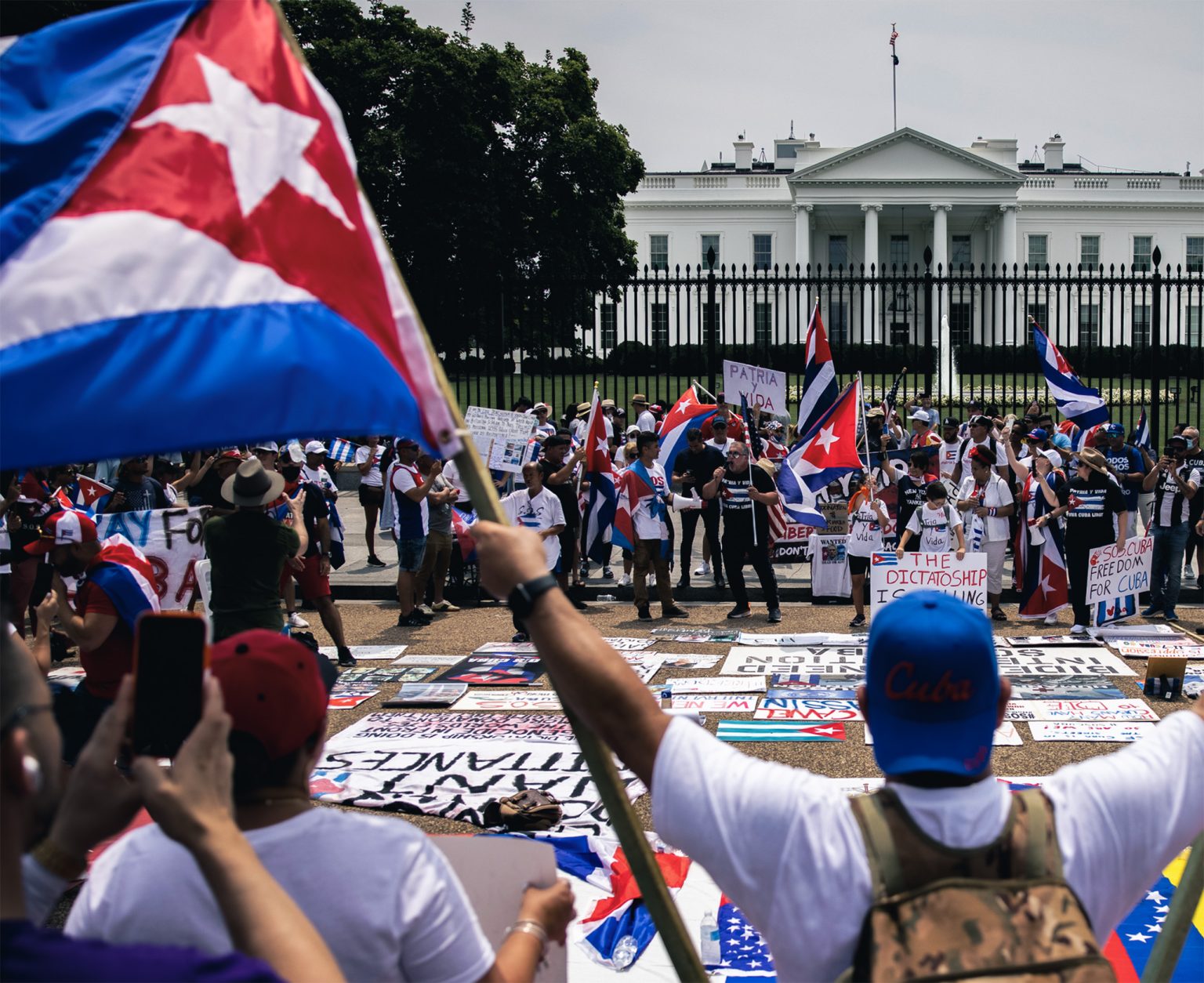
Since Donald Trump returned to the White House, the US government has expanded sanctions and increased diplomatic and military pressure across Latin America. The most dramatic result so far was Venezuela, where US forces seized Nicolás Maduro and his wife, Cilia Flores, in early January.
Maduro was captured on 3 January after months of escalating US pressure in the Caribbean. Trump had already invoked a revived version of the Monroe Doctrine, giving Washington greater room to act against governments in its own hemisphere. First articulated in 1823, the doctrine warned outside powers against intervention in the Americas. Over time, it became a justification for US dominance in Latin America and the Caribbean.
In Trump’s updated version, the doctrine is directed above all at governments seen as hosting or serving foreign strategic rivals. Caracas, long allied with China, Russia and Cuba, had little room left to maneuver.
The pattern is now familiar: sanctions, threats, military pressure, criminal designation and then direct action. The same template could be applied to other countries that Trump’s version of the Monroe Doctrine treats as extensions of strategic adversaries.
Colombia and Nicaragua may also come into view. But many of the early steps now point toward Cuba.
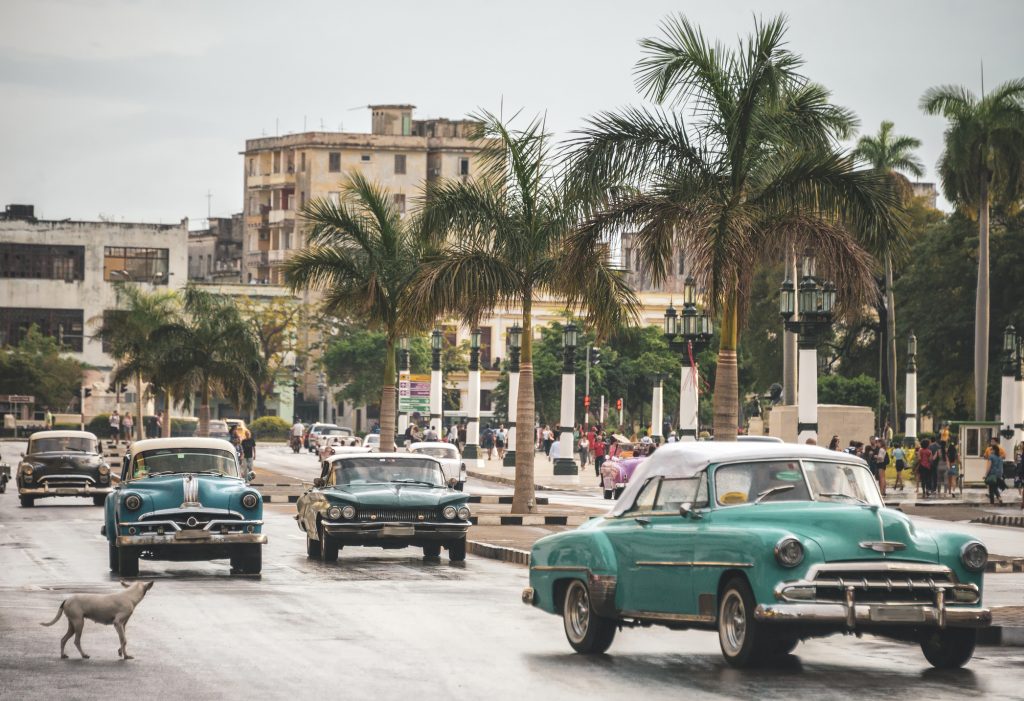
A New Pressure Campaign
Havana has been under US sanctions since the 1959 revolution that overthrew Washington’s ally, General Fulgencio Batista. After Trump’s return, the White House adopted a “maximum pressure” policy resembling its campaign against Iran.
Axios reported in mid-May that escalating rhetoric from Trump and Marco Rubio had raised concerns that a US invasion of Cuba could be imminent. The outlet noted that there were no definitive signs Trump would target the island next, but cited increased US surveillance flights off Cuba’s coast, new sanctions and the island’s worsening humanitarian crisis.
Cuban Foreign Minister Bruno Rodríguez described the latest US measures as a “collective punishment of a genocidal nature”. Cuban officials have blamed the crisis on what they call a US “energy blockade”, saying it prevents oil suppliers from serving the island.
At the same time, Havana received a US delegation headed by CIA Director John Ratcliffe. He met Raúl Guillermo Rodríguez Castro, the grandson of Cuba’s former leader Raúl Castro, Interior Minister Lázaro Álvarez Casas and the head of Cuba’s intelligence services. A CIA official said Ratcliffe had emphasized that cooperation was possible only if Cuba made “fundamental changes”.
US officials have also made clear that Washington does not want Cuba to remain a safe haven for adversaries in the Western Hemisphere. Cuban officials insisted that the island did not pose a threat to US security and objected to its continued inclusion on the US list of state sponsors of terrorism.
The visit came as Cuba’s internal crisis was deepening. The island had run out of diesel and fuel oil, while power outages in some areas were lasting up to 22 hours a day.
Washington’s pressure also has a legal front. The US Department of Justice has unsealed an indictment charging Raúl Castro and five co-defendants over the 1996 shooting down of two unarmed US civilian aircraft operated by Brothers to the Rescue, an exile group based in Florida. US prosecutors allege that Castro and other Cuban officials were involved in the attack.
The symbolism is clear. The United States is combining sanctions, legal pressure, intelligence diplomacy and military deterrence at a moment when Cuba is economically weak and regionally exposed.
Drones and Pretexts
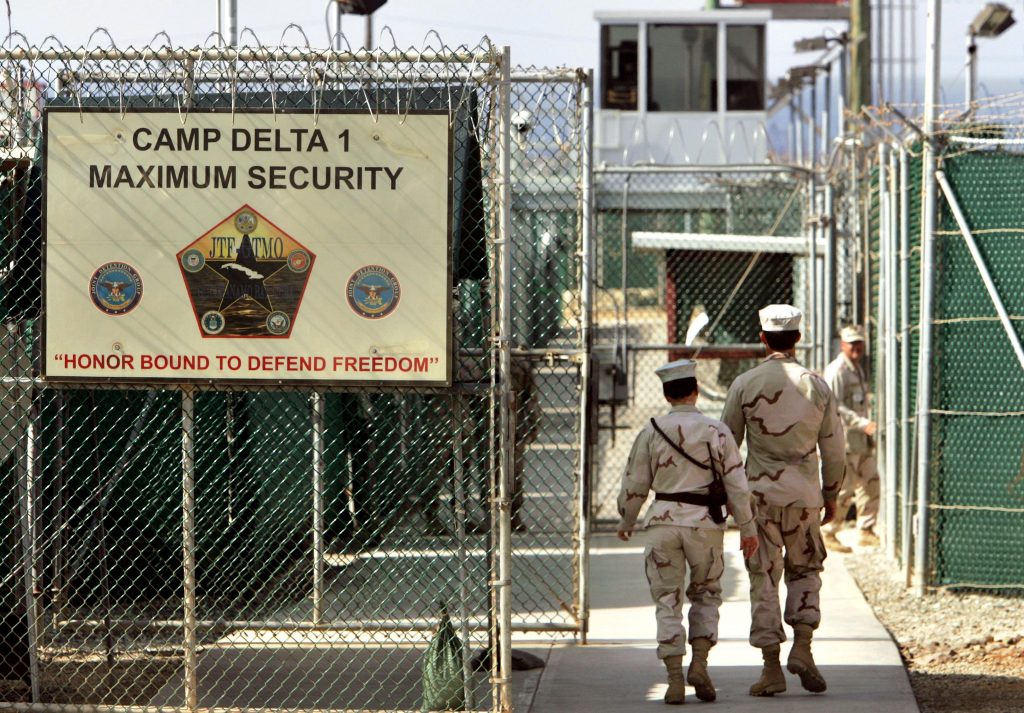
The next layer of escalation came through intelligence assessments. Classified US intelligence suggested that Cuba had purchased more than 300 military drones and that officials feared they could be used against the Guantánamo base, nearby US naval vessels or even Key West in the Florida Keys.
Key West is only about 144 km from the Cuban coast. Axios noted that such intelligence could also serve as a pretext for a pre-emptive US strike.
US intelligence services also reportedly identified Iranian military advisers in Havana. Against the backdrop of the war with Iran, that allegation has given the Cuba file a new urgency in Washington.
The Cuban government denied the report about attack drones. The Cuban embassy said the country had the right to defend itself against external aggression, calling self-defense a right protected by international law and the United Nations Charter.
The US government has listed Cuba as a state sponsor of terrorism at various points. As Axios put it, the island is considered the “head of the snake” exporting revolutionary Marxism throughout Latin America. For some in Washington, the move against Venezuela was therefore not an isolated operation, but the first stage of a wider campaign.
The Weakness Inside Havana
The focus on 94-year-old Raúl Castro is no accident. He was defense minister under his brother Fidel, became president in 2008 and formally stepped down as head of state in 2018. He also resigned as first secretary of the Communist Party’s central committee three years later. Yet many Cuba watchers argue that his successor, Miguel Díaz-Canel, does not wield the same power and that Castro continues to operate from behind the scenes.
The real question is not only who sits in the presidential office, but who controls the armed forces and the money. Much of that power is tied to GAESA, the military-linked conglomerate that controls some of Cuba’s most lucrative assets, including hotels, petrol stations, supermarkets and currency exchange operations.
The structure matters because Cuba’s civilian state is weak while the military economy remains powerful. Reports have described GAESA as a system with little transparency and enormous influence over the island’s economy. The armed forces do not merely defend the regime. They finance themselves through it.
That creates tension with Díaz-Canel, who has tried to shift parts of the economy toward more formal use of the US dollar. Last December, he authorized the use of dollars in domestic transactions and allowed the Ministry of the Economy to issue licenses for currency exchange offices by government decree, in an attempt to move some activity out of the military’s reach.
The move amounted to an admission that the peso crisis had become impossible to hide. In a December speech to the National Assembly, Díaz-Canel acknowledged that Cuba was facing a “severe crisis”. He cited years of declining gross domestic product, high inflation, shortages, an energy crisis and falling foreign income.
The crisis has hit ordinary Cubans hardest. The military-linked structures around GAESA, however, continue to control some of the country’s most profitable assets. That imbalance is one reason the system now looks more brittle than it has for years.
Rubio’s Offer
Washington has noticed. On Cuban Independence Day, Secretary of State Marco Rubio addressed Cubans in Spanish and announced that the US government had proposed a humanitarian aid package worth $100m.
Rubio, the Florida-born son of Cuban emigrants, blamed the island’s shortages of food and fuel on the communist government. “We in the United States are offering to help you not only to alleviate the current crisis, but also to build a better future”, he said in a video address.
He had been even sharper after Trump’s return from China. “But they’re incompetent communists. The only thing worse than a communist is an incompetent one”, Rubio said.
The offer was therefore not only humanitarian. It was also political. Washington is presenting itself as a rescuer while framing Havana as unable to feed or power its own people.
Cuba may not be next in exactly the same way Venezuela was. An invasion remains uncertain, and there are no definitive signs that Trump intends to target the island next. But the elements of pressure are now in place: sanctions, fuel shortages, intelligence warnings, criminal charges, military precedent and a government weakened by a severe economic crisis.
After Venezuela and Iran, Washington’s hawks may once again turn to America’s backyard. If the Monroe Doctrine is being revived, Cuba is no longer just a symbol from the Cold War. It is becoming the next test.