
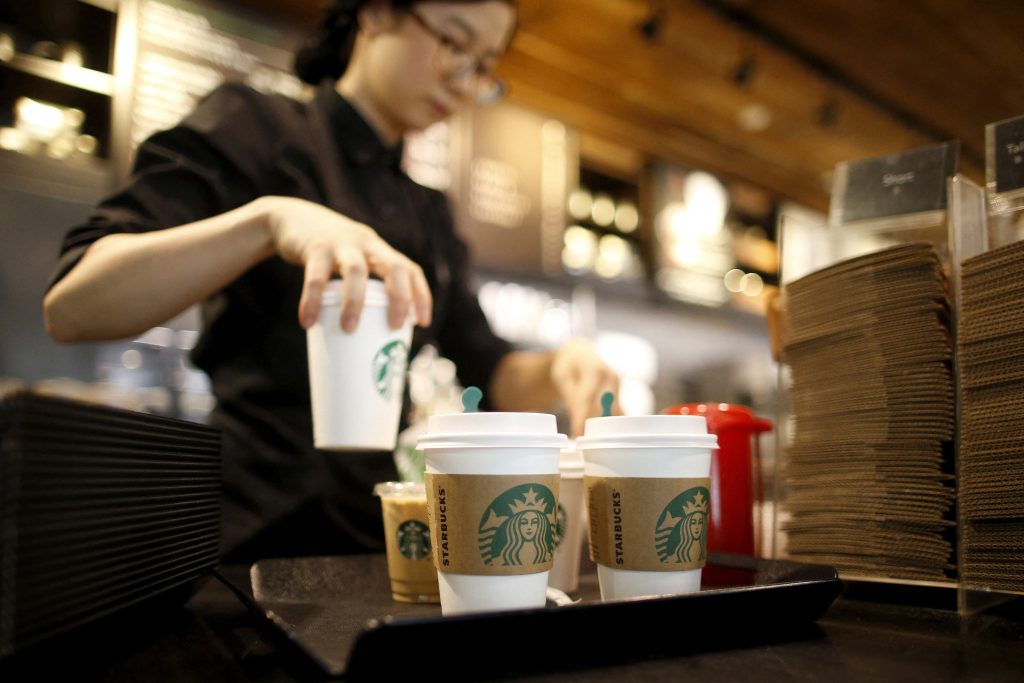
Starbucks this week ended an artificial intelligence program used by workers to automate certain inventory calculations, nine months after it was rolled out across the company’s North American stores.
The tool formed part of CEO Brian Niccol’s efforts to address persistent product shortages at the coffee chain, which he blamed for declining sales.
The app, designed to improve Starbucks’ visibility into stores’ limited inventory, frequently miscounted and mislabeled items. For example, it confused similar types of milk or failed to register them altogether.
A Program Full of Mistakes
“Starting today, Automated Counting will be retired”, read an internal company newsletter dated Monday. “Beverage components and milk will now be counted the same way you count other inventory categories in your coffeehouse.”
In February, Starbucks told Reuters that the introduction of the tool had improved product availability in stores, one of the main indicators Niccol has used to measure progress in his turnaround strategy at store level.
However, in a statement on Thursday, the company said it was ending automated counting for milk and other beverage products as part of a decision to “standardize how inventory is counted across coffeehouses as we continue to focus on consistency and execution at scale”.
The coffee chain said it is working on more frequent daily restocking and broader supply chain improvements. “Our goal is simple: if it’s on the menu, customers should be able to order it”, the company said.
The company also shared screenshots of employee feedback praising the decision. “Thanks for discontinuing Automatic Counting! The thought behind it was great, but the execution was proving difficult”, one employee wrote.
Fast Rollout in September
Starbucks launched the tool across North American locations in September. The AI-powered app was intended to replace the manual counting of certain products with automated inventory checks. The company expected the change to improve both speed and accuracy.
Cafe staff used a tablet running the app beside shelves containing milk, syrups and other beverages. The system scanned inventory using Lidar, a technology that uses laser beams to create an accurate three-dimensional map of a space, together with camera data.
That information, which Starbucks has since removed from its website, said the technology would pave the way for “smarter supply chain optimization”.
A video published by Starbucks at the time showed the tool identifying a bottle of peppermint syrup on a shelf while counting neighboring bottles.
Niccol, who took over as chief executive in late 2024, has hired logistics managers as part of an effort to overhaul a supply chain that current and former employees described as fragmented and constrained by outdated systems.
Analysts at Morningstar wrote last month that they expect restaurant-level margins to improve over the long term based partly on “technology initiatives aimed at saving labor hours and waste, such as AI inventory tracking”, as well as operating leverage.
Tested for Years
Niccol relied heavily on technology, including new AI-driven tools designed to organize orders and assist baristas, as part of Starbucks’ operational restructuring plan known as “Back to Starbucks”.
The chief executive, known for overseeing restructurings at Chipotle and Taco Bell, is under pressure from investors to sustain recent revenue growth and improve profitability, which has weakened due to heavy investment in additional staff.
Starbucks shares struggled during the early months of his tenure but are up 24% in 2026.
Last month, Starbucks reported its strongest quarterly revenue growth in two and a half years. However, operating margins in its key North American market have fallen to 10% from 18% two years ago, before Niccol took over.
The automated counting program had been tested for years before the new chief executive inherited it and rolled it out across North America.
The app’s provider, NomadGo, said in a statement to Reuters on Thursday that it is “continuously learning from customer and user feedback” to improve its products.
(reuters, im)