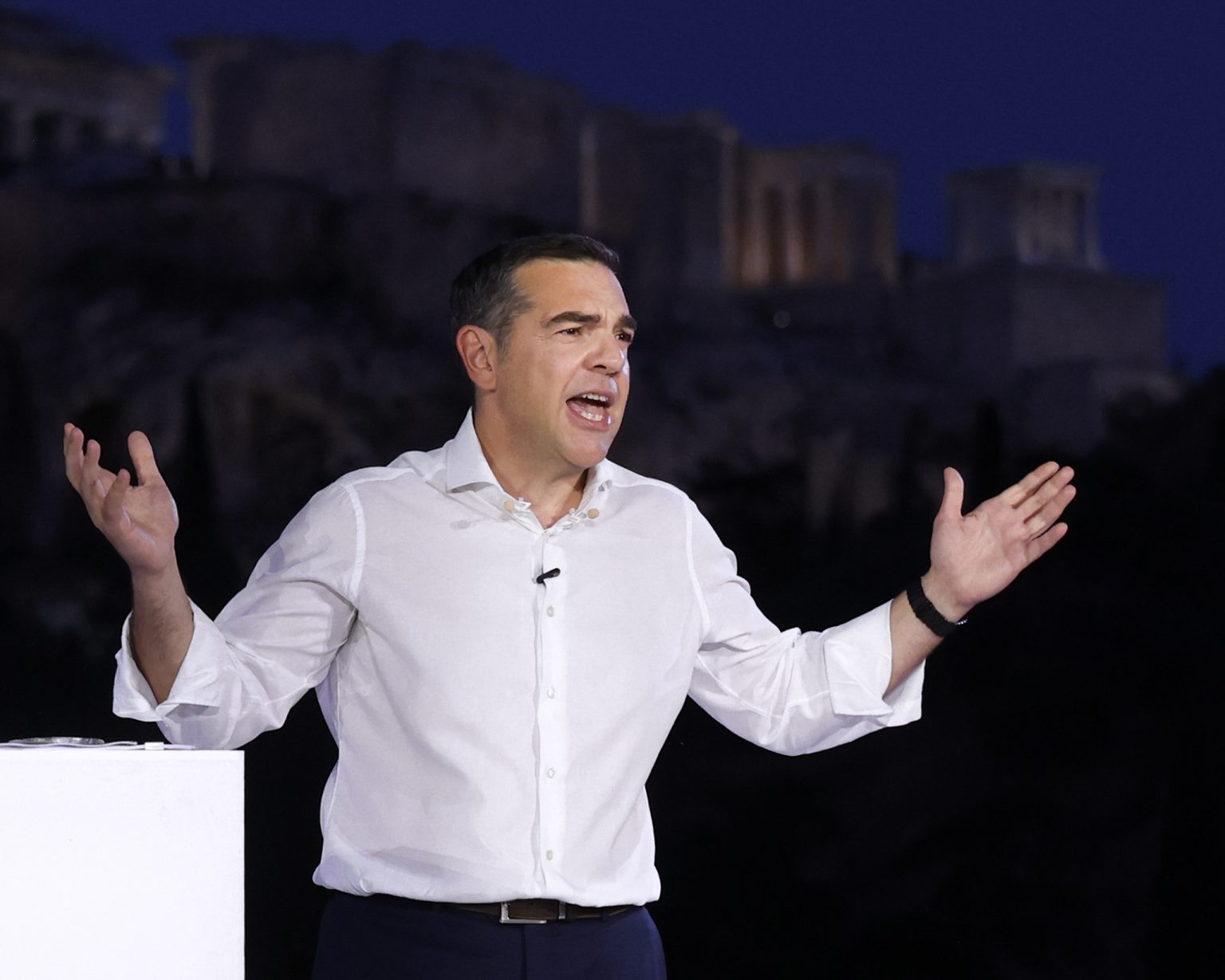
The real U-turn came only when Tsipras had run out of financial room for maneuver. He eventually accepted a third bailout package with strict conditions. For his supporters, that was realpolitik under duress. For his critics, it was proof that left-populist promises collapse when they meet reality. Greece left the bailout program in 2018, but Tsipras was clearly defeated by Mitsotakis’ conservatives in the 2019 election. After another defeat in 2023, he stepped down as SYRIZA leader. In 2025, he also gave up his seat in Parliament.
Old Remedies for a Changed Country
Tsipras is now trying to rewrite his political story. In a book, he revisited his time in government, but largely blamed former ministers and close allies for the mistakes made. Genuine self-criticism over his own decisions was largely absent. His new political offer also looks less like a break with the past than a modernized version of his old messages.
Tsipras talks about social justice, higher wages, affordable housing, national sovereignty and a tougher approach to corruption, cronyism and political networks. He accuses the Mitsotakis government of weakening the rule of law and deepening social inequality. There are also economic policy proposals strongly reminiscent of 2015. A “patriotic special tax” on bank and big-business profits is on the table, as is the possibility of stronger state control over the energy provider Public Power Corporation.
ELAS has not yet presented a detailed program. But the direction is clear. Tsipras wants to win back voters who feel excluded from Greece’s economic recovery. There are many of them. In macroeconomic terms, the country is in much better shape than during the crisis. Greece is once again regarded as creditworthy, has grown faster than the EU average for years and is posting budget surpluses. The image of Greece as a hopeless fiscal offender no longer matches economic reality.
For many citizens, however, that reality has improved only to a limited extent. Real incomes remain below their pre-debt crisis level. Purchasing power has risen only weakly since 2019, while rents and living costs have climbed sharply. In Athens in particular, housing has become the central social problem for many households. Tsipras is targeting precisely that point: the gap between statistical recovery and the stagnation many people still feel in everyday life.
That sets the current situation apart from 2015. Back then, Tsipras could rely on a country marked by mass unemployment, pension cuts, tax pressure and drastic income losses. Anger at the old parties, creditors and EU institutions carried him into office.
Today Greece is no longer in a state of emergency. The political appetite for a radical break has become smaller. Yet dissatisfaction remains, and it is enough to set the party system in motion again.
Mitsotakis Remains Ahead, but Vulnerable
For Prime Minister Kyriakos Mitsotakis, Tsipras’ return comes at an awkward moment. The conservative New Democracy has governed since 2019 and remains clearly the strongest force in the polls. But the gap with its earlier results is substantial. In the May 2023 election, the party still won 40.6%. In current polls, it is well below that level, in some cases only at around 26%. That may no longer be enough for a stable absolute majority in Parliament.
The reasons are obvious. Inflation, stagnant incomes and rising rents are weighing on the public mood. Political scandals have added to the strain, including the wiretapping scandal and allegations over the misuse of EU agricultural subsidies. Mitsotakis has positioned Greece internationally as a reform-minded, investor-friendly and more stable state. Domestically, however, the impression is growing that the fruits of the recovery are being distributed unevenly.
Tsipras wants to exploit that weakness. His problem is that for many Greeks, he himself remains part of the political past. Those who support him see him as the man who stood up to European creditors in 2015 and later still found a way out of the crisis. Those who reject him remember closed banks, a loss of control and promises that could not be kept. That ambivalence will accompany his comeback.
He also faces competition within his own camp. PASOK has been trying for years to establish itself as a serious center-left alternative. SYRIZA is weakened, but has not disappeared. Other small left-wing and progressive parties are competing for similar voters. Tsipras’ ELAS could reunite the left. But it could also fragment it further at first.
Greece therefore faces a paradoxical situation. The man who once wanted to break open the old party system is returning to put a collapsed camp back in order. His messages sound familiar, but the country is different.
The big question is therefore not only whether Alexis Tsipras can win another election. It is whether Greece is prepared to believe him again.