
Ukrainian military strategists view the war in the Middle East with ambivalence. It has weakened Iran, one of Russia's most important allies. Tehran has long supplied Moscow with Shahed-131 and Shahed-136 drones for attacks on Ukrainian cities and infrastructure, but Russia has since begun manufacturing them domestically under the designations Geran-1 and Geran-2.
Zelensky hoped the US-Israeli operation would curb Iran's ability to support Russia and open new doors for Kyiv in the Middle East. That calculation has partly borne out: Gulf states, confronted with the limits of their own air defense systems, have shown growing interest in Ukraine's experience countering Iranian drones.
The benefits, however, come with a cost. The United States has had to replenish its own weapons stockpiles and redirect capabilities to the Middle East, fueling fears in Kyiv that Ukraine will lose a portion of the Western supplies on which it remains dependent.
Europe Comes Up Short
A mid-April assessment by the European Union Institute for Security Studies (EUISS) found that European states continued to look to Washington for both their own rearmament and their support for Ukraine, a reliance that had grown more pronounced since Donald Trump took office.
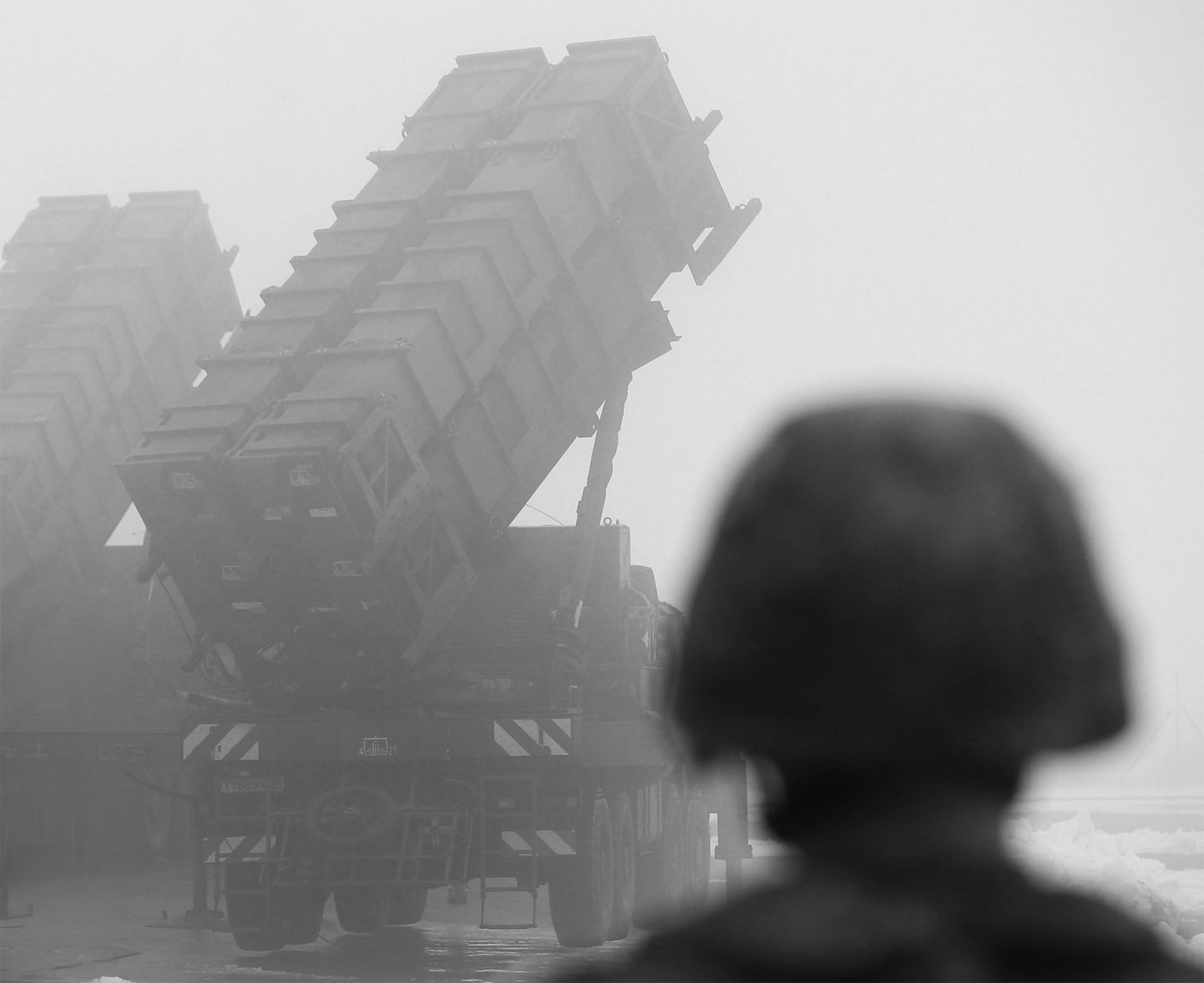
Many governments had assumed that purchasing US equipment would help preserve transatlantic ties and guarantee access to systems Europe could not produce in sufficient quantities on its own. Patriot anti-aircraft systems are the most cited example.
The war between the US and Iran has put that assumption under severe strain.
Trump is not only leaving the defense of the old continent to member states politically, but is proving an unreliable supplier of military equipment. Replenishing Tomahawk missiles, used to strike deep targets in enemy territory, and Patriot and Terminal High Altitude Area Defense (THAAD) missiles, designed to intercept incoming missiles and drones, will take the US at least three years.
Several anonymous sources have indicated that Baltic and Scandinavian states will not receive equipment they have already purchased under the Foreign Military Sales (FMS) program. If European countries cannot quickly build up their own capabilities, their ability to support Ukraine will be correspondingly limited – and Washington will not make up the difference.

The Patriot Shortfall
In July 2025, the Trump administration stopped donating Patriot missiles to Ukraine altogether, switching instead to sales to European allies, who then channel them to Kyiv through the Prioritized Ukraine Requirements List (PURL) program. The weapons are drawn either from existing US stockpiles or from new production, according to Foreign Policy.
Deliveries have nonetheless fallen short of what Ukraine needs. The US has already used roughly half of an estimated stockpile of 2,330 Patriot missiles, and with the war against Iran still ongoing, that share is likely to grow.
In a letter to Trump and members of Congress sent a few days ago, Zelensky urged the United States to supply Ukraine with anti-ballistic missiles, arguing that Russian missile attacks are intensifying because Moscow is losing momentum on the battlefield.
"Only the United States can produce such a quantity", he said.
The Trump administration's silence in response has only deepened concerns in Kyiv that Washington's attention is drifting further east.
Ukraine Plays the Long Game
Even as both sides speak of ending the war this year, Ukraine is already planning for what comes next, drawing on a new concept of warfare shaped by four years of conflict.
That forward thinking was on display at the end of March, when Zelensky visited Saudi Arabia, the United Arab Emirates and Qatar – a tour analysts have described as a textbook example of wartime diplomacy.
Davyd Aloyan, Deputy Secretary of Ukraine's National Security and Defense Council, made clear that the Gulf region is not viewed as a source of short-term gain but as the foundation for lasting partnerships.
"If we face similar challenges again, we are confident that these countries will stand with us. These partnerships are built with that long-term perspective in mind", Aloyan said.
Zelensky signed agreements he described as "historic" during the Gulf visit. Their contents have not been made public, but they are understood to cover financial support, stable energy supplies and strategic investments.

Ukraine's New Strategic Currency
In return, Ukraine has deployed 200 drone interception specialists to the region to help protect sensitive infrastructure and US bases.
The Gulf states have drawn a practical lesson from the conflict: intercepting inexpensive, slow-moving Iranian drones with costly Patriot missiles is not a viable long-term strategy. They have agreed with Kyiv on a comprehensive air defense package covering maritime drones, electronic warfare, drone detection and counter-drone technologies, along with arrangements to develop production capacity in Ukraine and in partner countries.
Ukraine has become a formidable supplier of defense technology. Last year it produced around three million drones and is expected to manufacture up to eight million this year. Long-range strikes have destroyed roughly 40% of Russia's oil export capacity – a deliberate response, in part, to one unwelcome side effect of the Iran war: the rise in oil prices from which Moscow has been profiting.
The Gulf visit marked a turning point in how Zelensky projects Ukraine's role internationally. For the first time since the war began, he arrived not as a leader in need of international support but as one with hard-won expertise to offer.
The Middle East war has cut both ways for Ukraine. It has drained Western stockpiles and drawn American attention elsewhere. But it has also turned Ukraine's battlefield experience into a strategic export – and opened markets that did not exist before.