
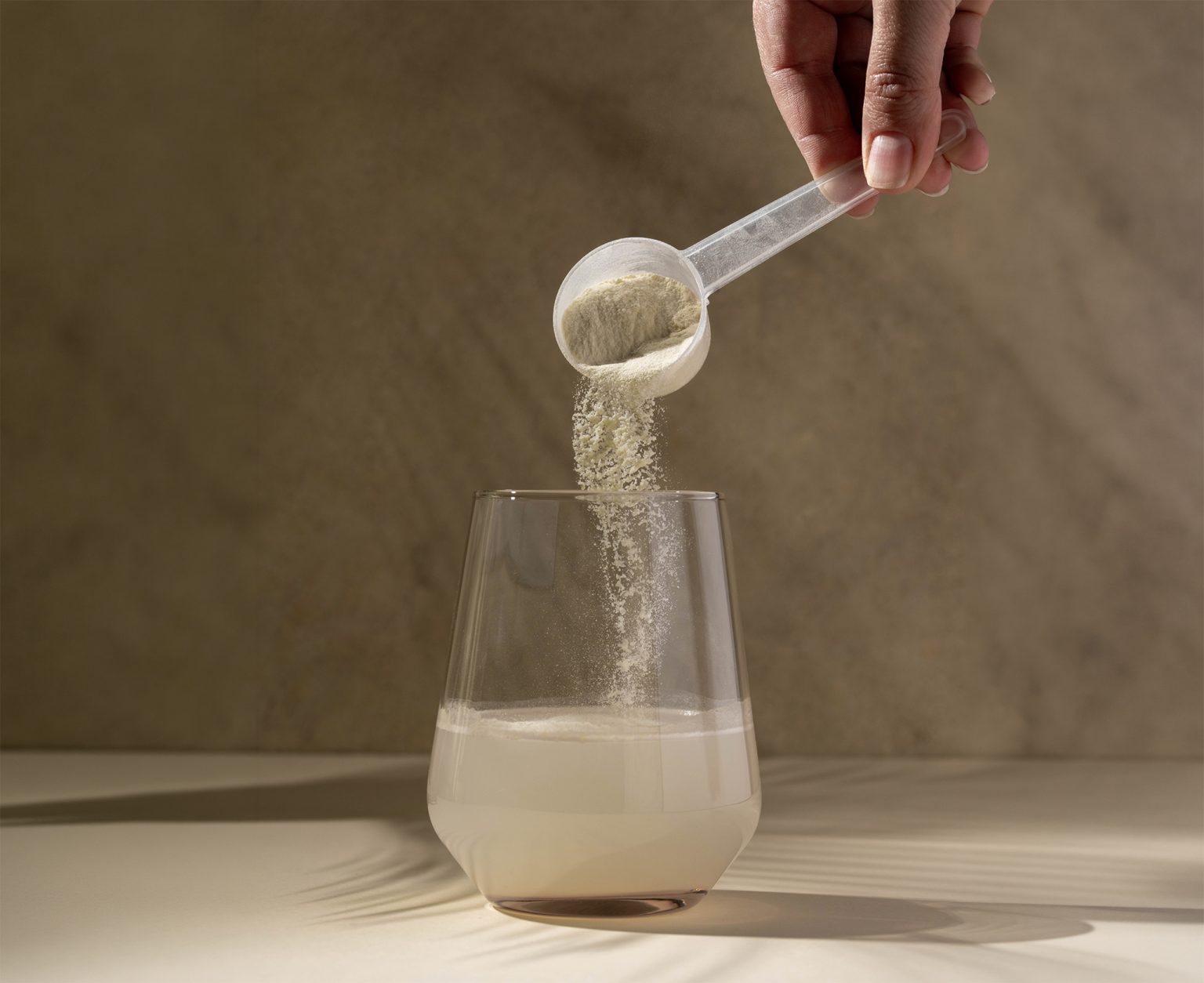
Collagen has become one of the great promises of the supplement industry. Social media is full of influencers advertising powders, capsules and drinks that claim to make skin glow, reduce wrinkles or protect joints. Yet the line between a real effect and clever marketing is often blurred.
Collagen is the most abundant protein in the human body. It is a basic building block of skin, bone and connective tissue. With the market growing, consumers have often been guided less by product composition than by claims on labels and in online advertising.
General practitioner and internist Iveta Plsekova told Statement that there are about 20 types of collagen, but that consumers should pay particular attention to type I and type II.
Type I collagen accounts for most of the collagen in the skin and is important for the quality and growth of hair and nails. Type II collagen is associated mainly with cartilage, joints, tendons and the musculoskeletal system.
Plsekova said that type III collagen is involved in wound healing, while type V is important for the elasticity of blood vessels.

The Glue Between Cells
According to Plsekova, collagen acts as a kind of glue between cells. It also gives elasticity and flexibility to the skin, joints, tendons, cartilage and other tissues that have to move. With age, the body produces less of it.
“When we are small and growing, production is strong and fast, which is why children’s wounds heal quickly. Older people, or people in their forties, notice that things no longer heal as they used to. They also feel that the strain on joints and muscles is greater than it once was”, she said.
The amount and quality of collagen are influenced by genetics, but also by lifestyle. Vitamin C is essential for collagen formation and regeneration, while smoking, excessive sun exposure, lack of movement and poor hydration can all work against it.
“Smoking damages collagen. Smokers have worse skin and poorer skin condition, but also worse joints and blood vessels”, Plsekova said.

Old Sources, New Packaging
Humanity has always obtained much of its collagen from animal foods, especially bones, skin and gelatinous broths. Today, the same old source still enjoys wide popularity, only in a more neatly served form.
“These dishes naturally contain collagen of animal origin. Their disadvantage, however, is that they raise cholesterol, so moderation is important”, Plsekova said.
She added that marine collagen from fish is often presented as a lighter alternative. Many supplements now contain hydrolyzed collagen, which is broken down into smaller peptides and is easier to digest.
When buying supplements, Plsekova recommends looking at the type of collagen listed on the label. Type I collagen is usually marketed for skin, hair and nails, while type II is more closely associated with joints and cartilage. For joints, she said, collagen is often combined with substances such as glucosamine, while vitamin C is added because of its role in collagen formation.
Among more natural ways of supporting collagen, she recommends onions, garlic and olives.
What the Studies Say
Collagen supplements have become increasingly popular in recent years, and the expanding market has been accompanied by a growing body of clinical studies. The research points to some measurable benefits, especially for skin hydration and certain joint symptoms, but the findings remain narrower and more qualified than much of the advertising suggests.
A 2023 systematic review and meta-analysis of 26 randomized controlled trials involving 1,721 participants found that hydrolyzed collagen supplements significantly improved skin hydration and elasticity compared with placebo. The findings support a measurable effect on some skin parameters, especially with longer use, but they do not by themselves justify the broader rejuvenation promises often made in marketing.
Studies on joints show possible benefits, though the evidence is more specific. A systematic review and meta-analysis on knee osteoarthritis included 11 randomized controlled trials with 870 participants and found significant improvements in pain and function scores among people taking oral collagen-based supplements. The findings suggest that collagen may help relieve symptoms in some patients with knee osteoarthritis.
A newer meta-analysis in The American Journal of Medicine reached a more skeptical conclusion. It reviewed 23 randomized controlled trials with 1,474 participants and found improvements in skin hydration, elasticity and wrinkles when all studies were analyzed together. When the authors looked only at studies not funded by pharmaceutical or supplement companies, however, the apparent benefit disappeared.

What Collagen Can and Cannot Claim
The gap between limited evidence and broad marketing promises is also reflected in regulation.
Ondrej Sukelj, president of the Slovak Chamber of Pharmacists, reached a similar assessment. He told Statement that collagen supplements are “a successful commercial product”, although not entirely without a medical basis.
“Some studies suggest a beneficial effect on the skin or joints, but the magnitude of the effect tends to be modest. Popularity far outweighs the strength of the scientific evidence”, he said.
A bigger problem, he added, is often exaggerated expectations. In the digestive tract, collagen is broken down into peptides and amino acids, which the body then uses according to its own needs. The body does not know whether a particular amino acid came from meat, an egg or a supplement, which means it cannot be assumed that ingested collagen is directly incorporated into cartilage or skin.
In the supplement industry, manufacturers are not allowed to present dietary supplements as medicines or attribute medicinal effects to them. Health claims are subject to European regulation, but much of the marketing operates through softer promises, images and wording that create expectations beyond the evidence.
The regulatory picture is stricter than much of the advertising suggests. In 2013, the European Food Safety Authority (EFSA) assessed a proposed health claim for VeriSol®P, a specific collagen hydrolysate product, related to skin elasticity and skin function. The applicant argued that the product could help maintain skin health, indicated by increased elasticity and reduced wrinkle volume, but EFSA concluded that a cause-and-effect relationship had not been established.
EFSA had reached a similar conclusion in 2011 on collagen hydrolysate and the maintenance of joint health. The application concerned a proposed health claim for physically active people, but the panel concluded that a cause-and-effect relationship had not been established between consumption of collagen hydrolysate and maintenance of joints.
That does not mean every collagen supplement is useless. It means manufacturers cannot simply claim that collagen improves skin, joints or muscles unless the specific claim has been authorized. Consumers should be wary of products that turn limited evidence into promises of younger skin, stronger joints or visible rejuvenation.
That is why collagen is best understood as one possible part of a broader approach, not as a shortcut to younger skin or healthy joints. Sleep, movement, sufficient protein intake, vitamin C, not smoking, sensible sun exposure and a balanced diet remain at least as important.