
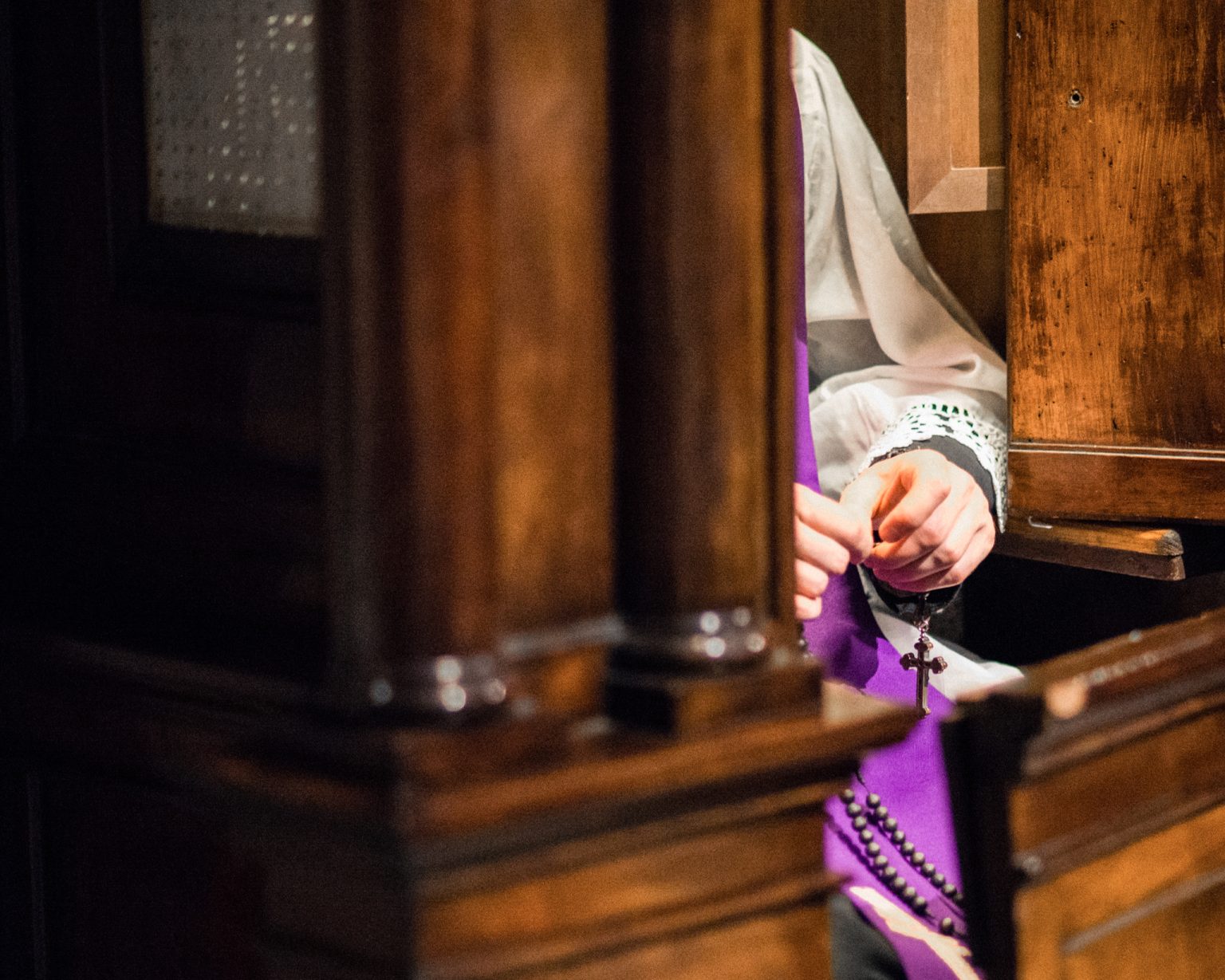
A French bill on child protection and school violence has alarmed the country's Catholic bishops, despite the removal of its most controversial clause before passing into law. The legislation was drafted following a parliamentary inquiry into the Notre-Dame de Bétharram Catholic school scandal and contained a number of measures relating to the protection of minors, among them a proposal to break confidentiality in cases of sexual violence against children.
The Bétharram affair erupted after the revelation of decades of physical and sexual abuse at the Notre-Dame de Bétharram Catholic school. More than 200 former pupils brought legal action, and the resulting scandal prompted a parliamentary inquiry that exposed serious failures to protect children.
The Bishops' Conference of France (CEF) said it fully supports efforts to combat violence against children but warned that certain provisions of the bill would infringe fundamental rights and freedoms, among them freedom of conscience, professional secrecy, freedom of education and freedom of religion.
An Old Debate
The debate over confessional secrecy has deep roots in France. As far back as October 2021, the Independent Commission on Sexual Abuse in the Catholic Church (CIASE) tackled the issue in its final report, calling for a review of certain aspects of confessional secrecy in cases of sexual violence against minors and vulnerable persons.
The commission urged the Church to develop "precise directives to confessors regarding the seal of confession. Confessors must not be allowed to derogate, on the grounds of the sanctity of the seal of confession, from the obligations [...] to report to the competent authorities cases of sexual violence inflicted against a child or a vulnerable person".
That recommendation found an echo four years later, when the parliamentary commission of inquiry into violence in the school environment published similar findings on 2 July 2025.
Confessional Secrecy Above the Laws of the Republic
Archbishop Eric de Moulins-Beaufort, then president of the French Bishops' Conference, was quick to respond to these initiatives, doing so as early as 2021. He argued that confession must remain secret because it creates a space for the free word spoken before God, and that in this sense it stands above the laws of the Republic.
He also cautioned that any exception to confidentiality would backfire, proving counterproductive to the very protection of victims it was meant to serve.
His reasoning was straightforward: a penitent who could not be certain of secrecy might never speak at all. The confessional, he insisted, must be preserved as a space that can be the first step towards liberation and the breaking of silence.
Church law is unambiguous on the matter. Under Canon 983 §1 of the Code of Canon Law (CIC), a confessor may never "in any way betray the penitent, for any reason whatsoever, whether by word or in any other manner". Canon 984 §1 goes further, prohibiting a confessor from using knowledge acquired through confession to the detriment of the penitent, even where there is no risk of disclosure.
The confessional secret covers all sins disclosed by the penitent in the course of seeking absolution, whether grave or light, hidden or publicly known, insofar as the confessor has come to know of them through the exercise of sacramental authority.
The obligation of secrecy is absolute: not even the penitent can release the confessor from it. Any direct violation carries the gravest penalty Church law provides, namely automatic excommunication, known as excommunication latae sententiae, which only the Pope can lift.
The bind extends beyond the act of confession itself. A confessor is forbidden to voluntarily recall what was confessed and must suppress any involuntary recollection of it. Anyone else who has come to know the contents of a confession is equally bound to secrecy under Canon 983 §2 of the Code of Canon Law.
Catholic Schools in the Spotlight
Confessional secrecy was not the only flashpoint in the draft law. It also provided for significantly more frequent administrative inspections of private Catholic schools operating under contract with the state, with visits to take place at least once every five years.
Crucially, these inspections would not have been confined to curricular compliance. The state would have been empowered to scrutinize all aspects of a school's functioning, including its religious character, prompting the bishops to call for the freedom of education and the identity of Catholic schools to be respected.

Parliament Steps Back From the Confessional – For Now
The impasse was resolved through compromise. On 1 June, the National Assembly unanimously approved the law after members of parliament deleted Article 9, which would have required clerics to report sexual offences against minors disclosed during the sacrament of reconciliation. Its removal was the price of passing the legislation as a whole.
Under French law, information obtained during confession continues to be treated as a form of professional secrecy, placing it on the same footing as the confidentiality obligations of doctors, psychologists and lawyers.
The Bishop of Nanterre, Matthieu Rouge, was among those to welcome the outcome. He argued after the vote that confidentiality is not an obstacle to the protection of victims but can, on the contrary, be the first step towards healing.
Bishop Rouge acknowledged that the argument might seem paradoxical but maintained that confessional secrecy can itself be a means of liberating the word. He pointed to a account published in the Catholic daily La Croix, in which a man described how confession had been the first setting in which he was able to speak about his suffering, and how the priest had subsequently encouraged him to do so elsewhere, allowing him to begin the journey of healing.
The vote is unlikely to draw a line under the debate. It showed, however, that French lawmakers were not yet ready to intervene in one of the oldest and most sensitive areas of Catholic religious life.
Originally published on DoKostola.sk, a Slovak Catholic website.