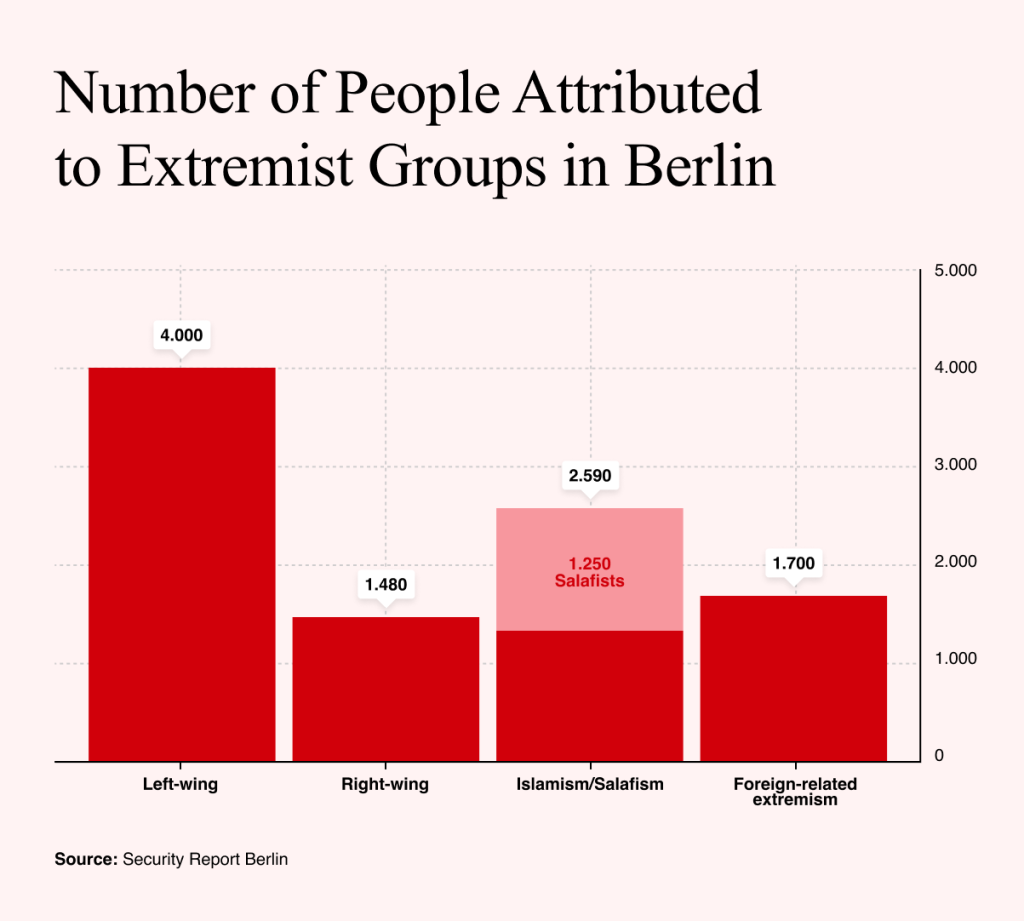
Berlin’s 2025 domestic intelligence report presents a stark picture of the capital’s extremist landscape. Almost 4,000 people in the city fall under the left-wing extremist category, making it the largest extremist milieu. Islamist networks remain a serious threat, while the radicalization of young people is increasingly shifting to digital spaces.
In numerical terms, the biggest extremist threat in the capital therefore comes from the left. The number of right-wing extremists stands at 1,480. The domestic intelligence agency puts the Islamist spectrum at 2,590 people, including 1,250 Salafists. Foreign-linked extremism comprises 1,700 people, including supporters of the Kurdistan Workers’ Party (PKK), Turkish right-wing extremists and around 600 anti-Israel and antisemitic actors.
Left-Wing Extremists Target Infrastructure
Left-wing extremism is especially striking. The domestic intelligence agency describes small, closed-off groups that advocate and carry out violence against state institutions, companies and critical infrastructure. The report cites attacks on cable ducts along railway lines, radio masts, data lines and company vehicles. Berlin Interior Senator Iris Spranger drew particular attention to attacks on energy infrastructure when presenting the report.
Such acts do not only affect political opponents. They target the ability of an entire city to function. Anyone who attacks the power supply, railway traffic or communication lines is attacking the everyday lives of citizens. The report identifies “eco-anarchism” as one ideological driver. Parts of the scene combine climate radicalism, anti-capitalism and hostility to the state into a worldview in which sabotage appears as a legitimate fight against the system.
Islamist and Anti-Israel Networks Overlap
The second focus is Islamism. The threat posed by Islamist terrorism remains unchanged at a high level for Germany and Berlin, the report says. In the capital, 200 Hamas supporters and 300 people from the milieu of the Lebanese Hezbollah are counted. The figure includes 350 violence-oriented Salafists. At the same time, foreign-linked extremism is growing.
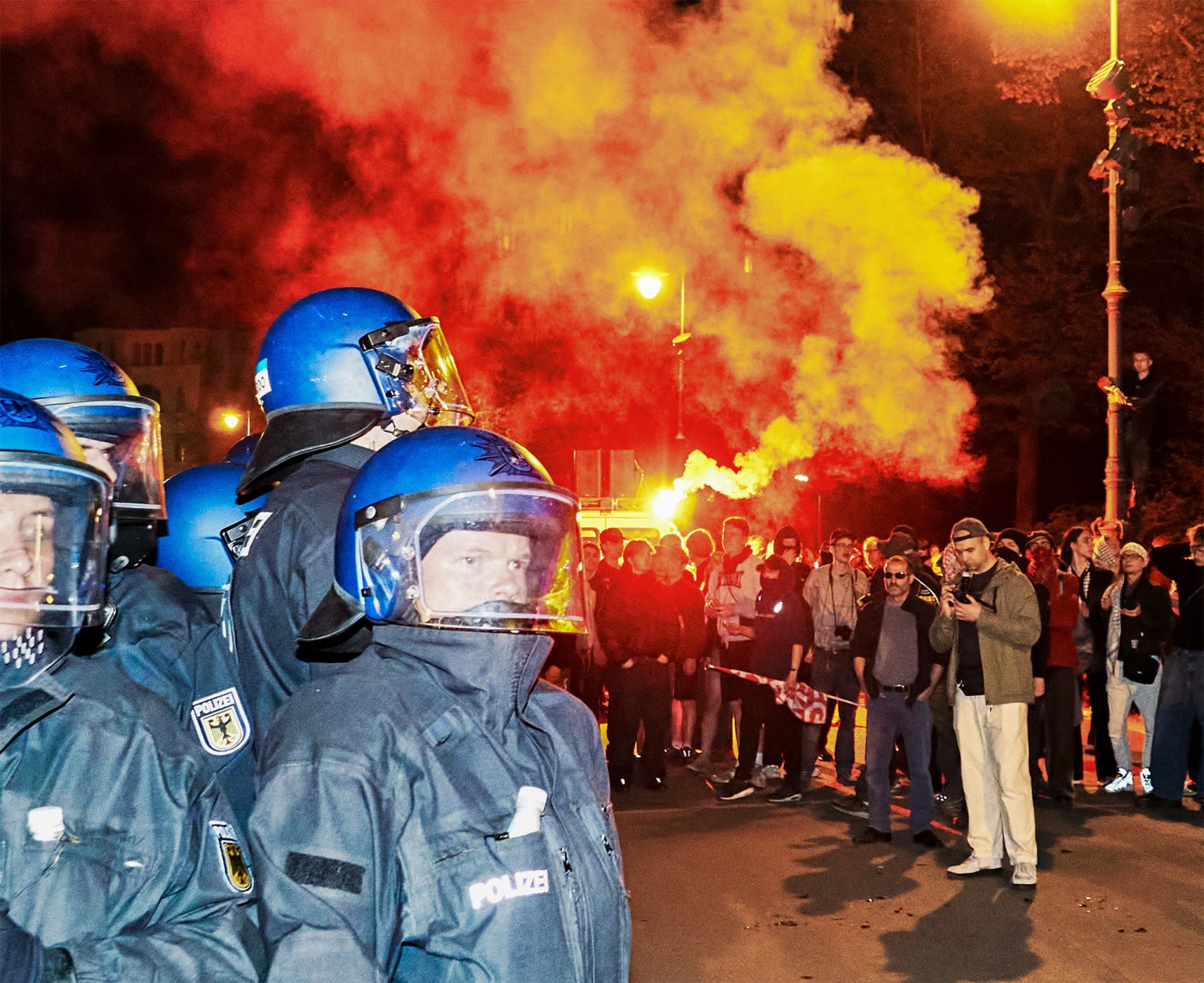
Since 7 October 2023, anti-Israel demonstrations, slogans against Israel and aggressive conduct toward police have become increasingly significant in Berlin. The domestic intelligence agency identifies overlaps between foreign-linked extremism, domestic left-wing extremism and Islamist milieus.
Radicalization Is Moving Younger and Online
The increasing radicalization of young people is particularly concerning. Extremist groups use blogs, podcasts, videos, memes, reels and stories to reach teenagers. So-called Palestine solidarity plays a central role. It offers a simple worldview of perpetrators and victims, resistance and oppression, morality and enemy images. The report therefore shows a clear tendency: extremism in Berlin is becoming younger, more left-wing and more strongly shaped by Islamist and anti-Israel milieus.
Mainstream media and politics still focus above all on right-wing extremism. Yet the biggest and most dynamic threats currently lie elsewhere. That is a bad omen for the rest of Germany. Berlin is not always an exception. Often, it is a warning of what comes next.