In an interview with Statement, physicist Gerd Ganteför calls for less alarmism and more rationality in the climate debate. Panic-driven claims, he says, do not withstand scientific scrutiny.
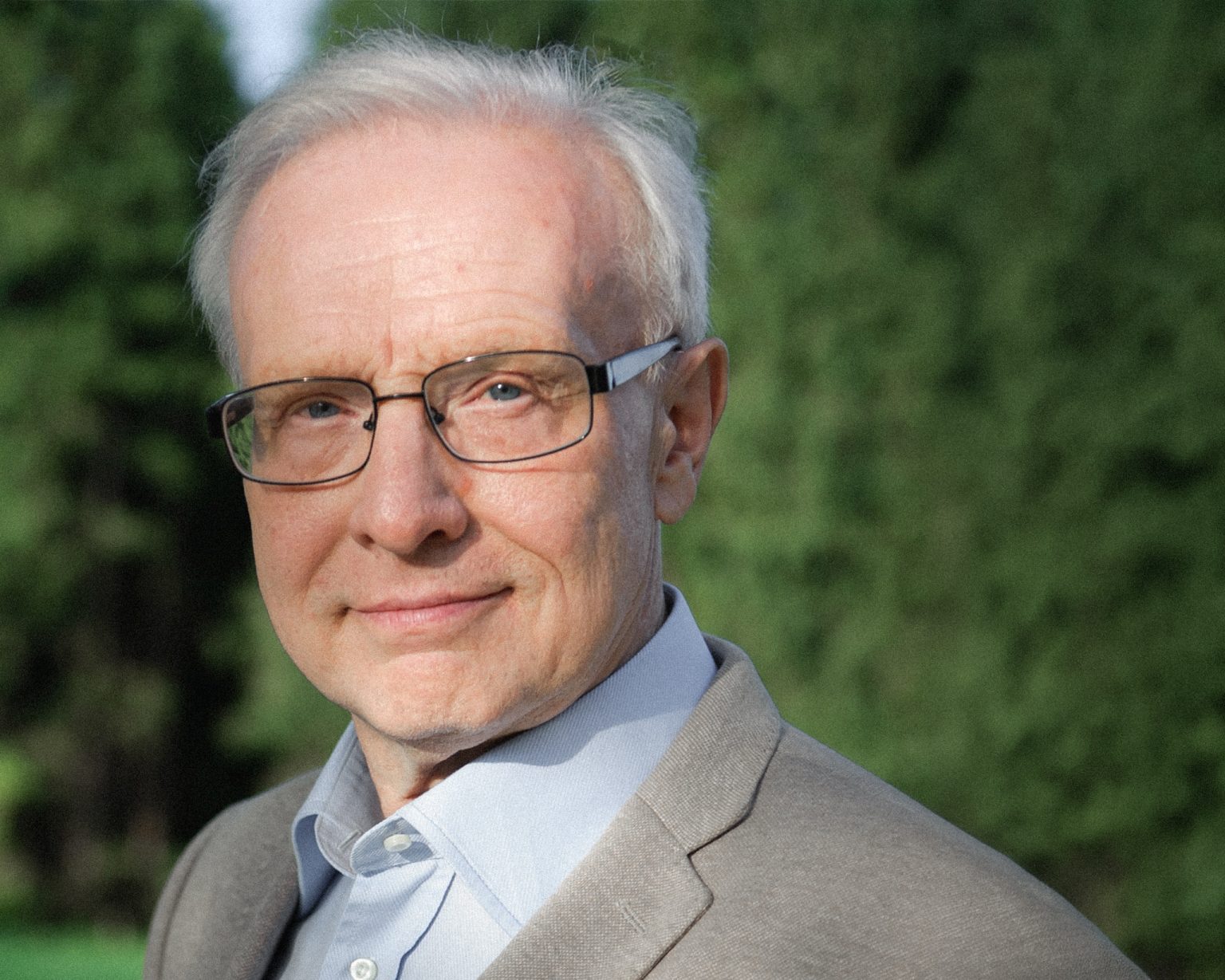
Gerd Ganteför calls for a more measured approach to the climate debate. Photo: ggantefoer.com
|
It was a book, of all things, that turned renowned physics professor Gerd Ganteför into a pariah in 2010. In a lecture series, he had examined climate change and critically discussed the theories behind it. He later turned the lectures into a book whose title stated his conclusion plainly: Klima – Der Weltuntergang findet nicht statt (Climate – the end of the world is not happening).
Speaking to Statement, Ganteför argues that climate change is real and should be taken seriously, but that panic, apocalyptic rhetoric and radical decarbonization demands have pushed parts of the debate beyond what science can support.
Gerd Ganteför grew up in Dortmund. He began studying physics at the University of Münster in 1977 and graduated in 1984 with a degree in astrophysics. In 1989, he completed his doctorate at the University of Bielefeld.
From 1991, he worked at Forschungszentrum Jülich, where he completed his habilitation on nanoparticles in 1996. From 1997 until his retirement in 2022, he was a professor at the University of Konstanz. From 2008 to 2011, he held a research professorship at Johns Hopkins University, and from 2011 to 2018 he taught energy and climate at the Thurgau University of Teacher Education.
He also explored his research field, nanoparticles, in the popular science book Alles Nano oder was? For the book, he received the Literature Prize of the German Chemical Industry Fund in 2014.
Gerd Ganteför lives in Landschlacht, part of the Swiss municipality of Münsterlingen. He is a member of Netzwerk Wissenschaftsfreiheit, the Network for Academic Freedom. Alongside his teaching and research, he has published numerous scientific and popular science works, as well as many videos on YouTube.
Statement: Professor Ganteför, you take a critical view of the climate debate. Where do you personally draw the line between justified climate concern and climate panic?
Gerd Ganteför: It is easy to see that it is getting warmer by looking at the glaciers in the Alps. Calculating a global average temperature is complicated, but the result is clear: it is getting warmer. I also accept that CO₂ is the main cause. There is methane and there are other greenhouse gases, but CO₂ is decisive because of the enormous quantities involved.
For me, the line is crossed when we ask how bad it will get. That is where the exaggeration becomes excessive, especially with so-called tipping points. We are told that from 1.5C, the Gulf Stream will stop, Greenland will suddenly thaw and sea levels will rise by several meters. Panic-driven claims like that do not withstand sober scientific scrutiny.
Statement: Climate change is real, but the communication around it is distorted?
Gerd Ganteför: Exactly. The main report by the Intergovernmental Panel on Climate Change is very long, technical and difficult to understand. In the summaries for policymakers, in which politicians and non-governmental organizations are involved, statements are presented more sharply. Uncertainties are turned into certainties and risks into scenarios of doom.
One example is warm-water corals. It is claimed that at 1.5C of warming, almost all warm-water corals would die. If you look at the Earth’s history, corals also existed in much warmer periods. There are adaptation problems, but the blanket panic claim is not scientifically sound.
My line is crossed where science is instrumentalized to enforce political goals. When “It is getting warmer, we are contributing to it and we must act sensibly” suddenly becomes “We need a fundamental transformation of society”, then science is being misused.
The Problem With Worst-Case Scenarios
Statement: One issue in the climate debate was the worst-case scenario RCP8.5. It is now regarded as unrealistic and is no longer treated as a central reference point in Intergovernmental Panel on Climate Change reporting. Where is the difference between modeling and a crystal ball?
Gerd Ganteför: Scenarios are entirely legitimate. You have to make assumptions about how humanity, the economy, technology, energy consumption and politics will develop. No one can know with certainty what will happen in China, India, Africa or the US.
That is why there are different scenarios. One assumes that humanity becomes very reasonable and sharply reduces emissions. Another assumes that almost nothing happens and fossil fuels continue to be massively expanded. RCP8.5 was an extreme case.
The problem is that the scenario was controversial even when it was introduced. It assumed CO₂ concentrations and fossil fuel consumption that were too high. In my view, it was never realistic. Oil and gas are not available in unlimited quantities. At some point, they become more expensive and uneconomical.
Statement: Yet RCP8.5 was used publicly.
Gerd Ganteför: Yes, and that is exactly what I criticize. As I understand it, RCP8.5 was originally a test case for climate models. What happens if we assume extremely high CO₂ levels? What temperatures do the models then calculate?
As a stress test, that may make sense. But in the media, in politics and sometimes in schools, it was treated as if it were the most likely future.
That produced images of sinking cities, extreme sea-level rises and apocalyptic scenarios. It creates fear. But it is not serious risk communication when an unlikely extreme model is presented as the normal case.
What Nature Can Absorb
Statement: You emphasize the role of natural CO₂ sinks. What role do oceans and plants play?
Gerd Ganteför: A very large one. It can be measured relatively easily. Roughly speaking, about half of the CO₂ emitted remains in the atmosphere, while the other half is absorbed by oceans and plants.
Plants benefit from several factors. More CO₂ promotes growth. A warmer atmosphere contains more water vapor. Heat and moisture are good conditions for plants. That is why we see greening in some regions. China and India have large reforestation and greening programs.
Through photosynthesis, plants absorb CO₂ and bind it in biomass. That accounts for a substantial share of natural absorption. The other large store is the oceans, where CO₂ dissolves in water. Everyone knows the principle from sparkling water, which we can make ourselves at home: CO₂ is forced into the water under pressure. In the atmosphere, the partial pressure of CO₂ has risen. As a result, the oceans are also absorbing more CO₂.
Statement: How reliable is this sink capacity in the long term?
Gerd Ganteför: I am cautious when it comes to plants. They do not keep growing better and better without limit. At some point, an equilibrium forms between growth and die-off. With the oceans, I see greater long-term capacity. They can absorb enormous quantities of CO₂. Of course, that depends on temperature, mixing and chemical equilibria.
The oceans will continue to play an important role. We should not be moving ideologically toward absolute zero. Instead, we should aim for a balance between emissions and natural absorption capacity.
Statement: Many people are relying on technical solutions such as CO₂ capture and storage. Do you regard carbon capture and storage technologies, or CCS, as a global solution?
Gerd Ganteför: No, not on the scale we are talking about. You can, for example, capture CO₂ from the exhaust streams of coal-fired power plants. Then you can press it underground, into old deposits, for instance. Technically, some things are possible.
Globally, we are talking about around 40 billion tons of CO₂ a year. CCS projects, by contrast, operate in the range of millions of tons. You might improve the emissions balance of an individual power plant and then announce in the press that it is operating as carbon-neutral. But as a global solution, that is not realistic. I like to compare it to a child turning up with his piggy bank when the family is half a million euro short of building a house. It is well meant, but the order of magnitude is wrong.
The Meaning of Net Zero
Statement: How realistic is net zero as a goal?
Gerd Ganteför: In Europe, net zero is often understood as meaning that absolutely everything has to go to zero. But net zero actually means a balance between emissions on one side and absorption by nature or technology on the other. If nature today absorbs about half of our emissions, then halving emissions would be a realistic and sensible step.
Many companies can save 50% or 60%, for example through more efficient processes. The demand for total decarbonization can destroy companies. Radical demands would overburden the economy. A society can make large savings without destroying itself. Absolute decarbonization at any price would be a suicide program.
Statement: China and India continue to build coal capacity. Does that make Western net-zero strategies unrealistic?
Gerd Ganteför: China has different priorities. The first goal is for the population to reach a minimum level of prosperity: housing, schools, healthcare and infrastructure for everyone. For that, the country needs as much energy as possible.
China is building solar parks and wind turbines, investing in nuclear energy, in modern reactors and possibly in fusion. But it is also building coal-fired power plants because it quickly needs baseload-capable energy. From China’s perspective, that is rational.
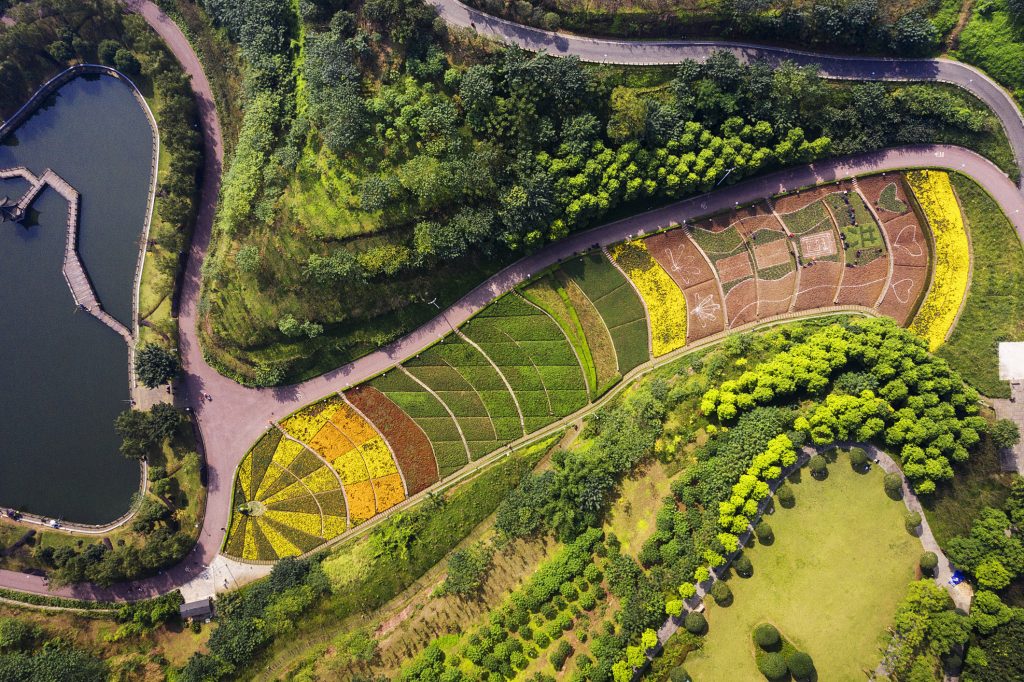
China is proud of its greening program. Pictured here is Chongqing Central Park, one of the largest open public urban parks in China. Photo: Getty Images
Many poorer countries face existential problems. They need energy, roads, hospitals and schools. As long as the world population is growing and many regions remain poor, drastic global emissions reductions are hard to imagine.
But when prosperity rises, birth rates fall and environmental awareness increases. We can see that in Asian countries. That is why I consider development a central part of climate strategy. Those who reduce poverty stabilize population and the environment in the long term.
Germany’s Energy Gamble
Statement: What role should nuclear energy, synthetic fuels, new technologies and artificial intelligence play?
Gerd Ganteför: We have to remain technologically open. It is very difficult to predict the future over decades. At the beginning of the 20th century, people worried about too much horse manure in big cities. Then cars arrived, and the problem disappeared. In the same way, there may be new technologies in the future that we cannot yet take into account.
Nuclear energy is an important building block here. Artificial intelligence will also play an enormous role. Without energy, there is no AI, but with AI we may be able to achieve technological breakthroughs. That applies especially to the development of functioning fusion reactors or new materials.
A country that does not take part in these developments will fall behind. The US and China are pushing AI forward. Europe, and Germany in particular, risks taking itself out of the race.
Statement: You are especially critical of Germany. Why?
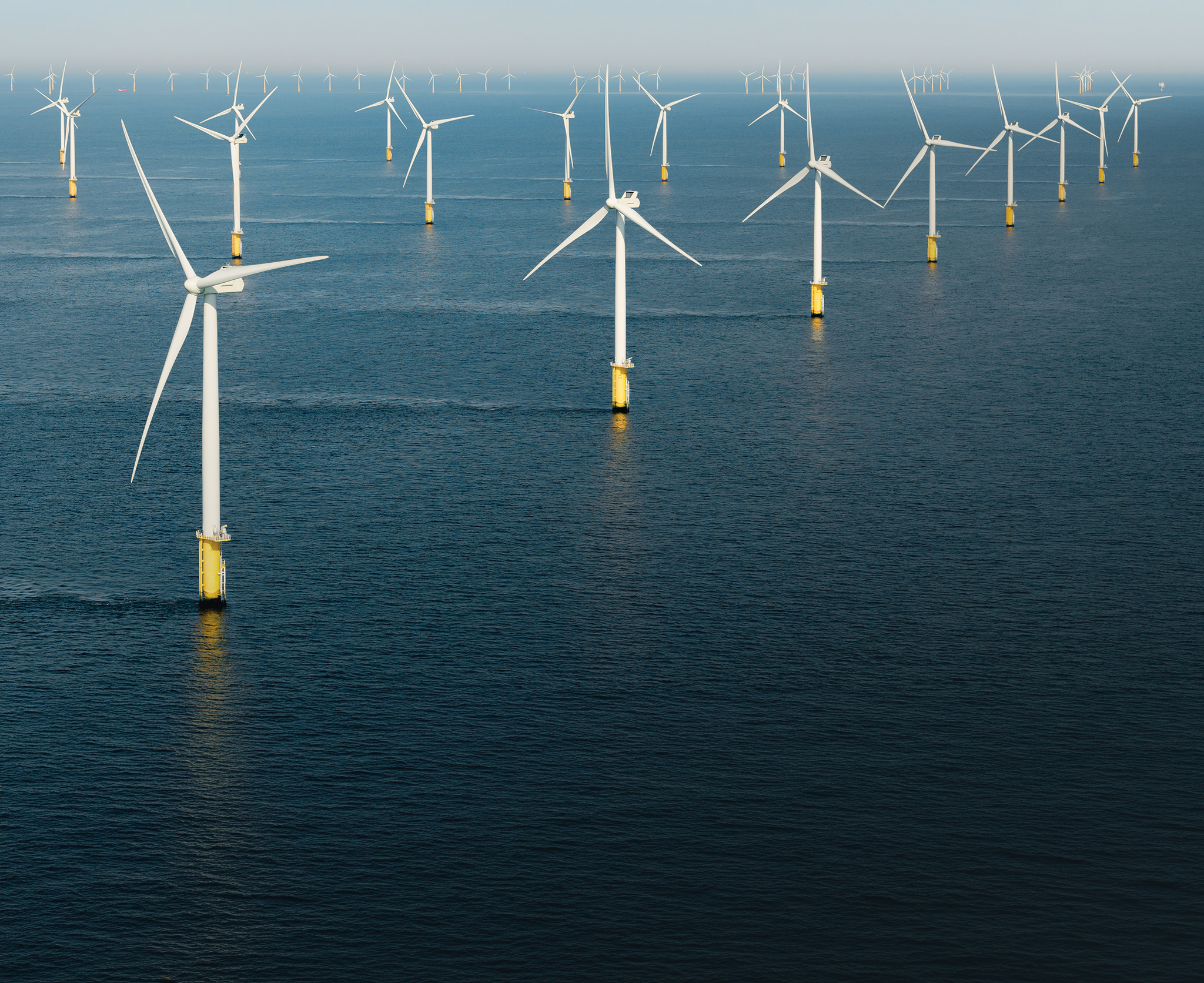
Gerd Ganteför: Germany believes it can supply itself with wind and solar power alone. At the same time, nuclear power plants were shut down. When you talk about that in the US or Asia, people ask why we are destroying ourselves.
Germany was never a model country for climate policy. In solar research, there was strong science. Because of high subsidies, manufacturers lacked pressure to become more efficient. China had that pressure and the will to act. It wanted to escape poverty, and that created enormous industrial momentum.
https://www.youtube.com/watch?v=rsak0bWa-fs
You can see it with electric cars. China has massively advanced battery technology and electric drives. Europe, meanwhile, has politically damaged its own combustion engine technology. That is not a sign of strategic strength.
Statement: You often speak about education and critical thinking. What does that have to do with climate policy?
Gerd Ganteför: A great deal. I have worked in education and research all my life. I wanted to teach young people critical thinking. Today, I have the impression that critical thinking is increasingly disappearing in Germany.
On climate, the pandemic and other issues, dissenting opinions are quickly condemned on moral grounds. People no longer ask critical questions. Instead, they adopt the political line. Europe’s advantage was the Enlightenment, meaning the ability to question authority. If we lose our capacity for criticism, we also lose our technological and economic future.
Statement: How do you view Germany’s energy transition, especially wind power and solar energy?
Gerd Ganteför: Wind and solar power can make a contribution, but they cannot carry the energy supply of an industrial country alone. If wind turbines are built in Germany even where there is little wind, it becomes irrational. It is a mania. People keep building because they believe in the solution, not because the site makes sense. The same applies to solar roofs that will never pay for themselves. They are of no use. When an ideology damages a country’s industrial base, it becomes dangerous.
A Climate Policy Guided by Reason
Statement: What would a sensible climate course look like in your view?
Gerd Ganteför: First, we have to acknowledge that climate change is real and that CO₂ is a major cause. Second, we should end panic and exaggeration. The third point would be to reduce emissions realistically, wherever that is economically and technically feasible. The fourth point is to strengthen natural sinks, for example through reforestation, better land use and the protection of ecosystems. Ultimately, we must remain technologically open. We need nuclear energy, new power plants, storage, synthetic fuels, AI and nuclear fusion.
We have to consider prosperity, energy supply and climate protection together. A climate policy that impoverishes societies will not work globally. Poor countries will not follow it, and rich countries will destroy their own capacity to act. Fear does not help. Our task is to find a viable path through science, technology and reason.
Statement: Professor Ganteför, thank you for the interview.
Placeholder For Topreaded Placeholder For Topreaded
Placeholder
Placeholder
Placeholder For Topreaded Placeholder For Topreaded
Placeholder
Placeholder
Placeholder For Topreaded Placeholder For Topreaded
Placeholder
Placeholder
Placeholder For Topreaded Placeholder For Topreaded
Placeholder
Placeholder
Placeholder For Topreaded Placeholder For Topreaded
Here is placeholder for Article excerpt Here is placeholder for Article excerpt Here is placeholder for Article excerpt Here is placeholder for Article excerpt
Here is placeholder for Article excerpt Here is placeholder for Article excerpt Here is placeholder for Article excerpt Here is placeholder for Article excerpt
Here is placeholder for Article excerpt Here is placeholder for Article excerpt Here is placeholder for Article excerpt Here is placeholder for Article excerpt
Welcome to the comments section of the Štandard daily. Please take note of our guidelines, comments are moderated by us. You can contact the moderators at [email protected].
Participate in the discussion
Comments are available to subscribers only. If you'd like to join the discussion, choose a subscription starting at €6.72 per month.
All comments 0
Register
Comments are available to registered users only. If you'd like to join the discussion, register here.