
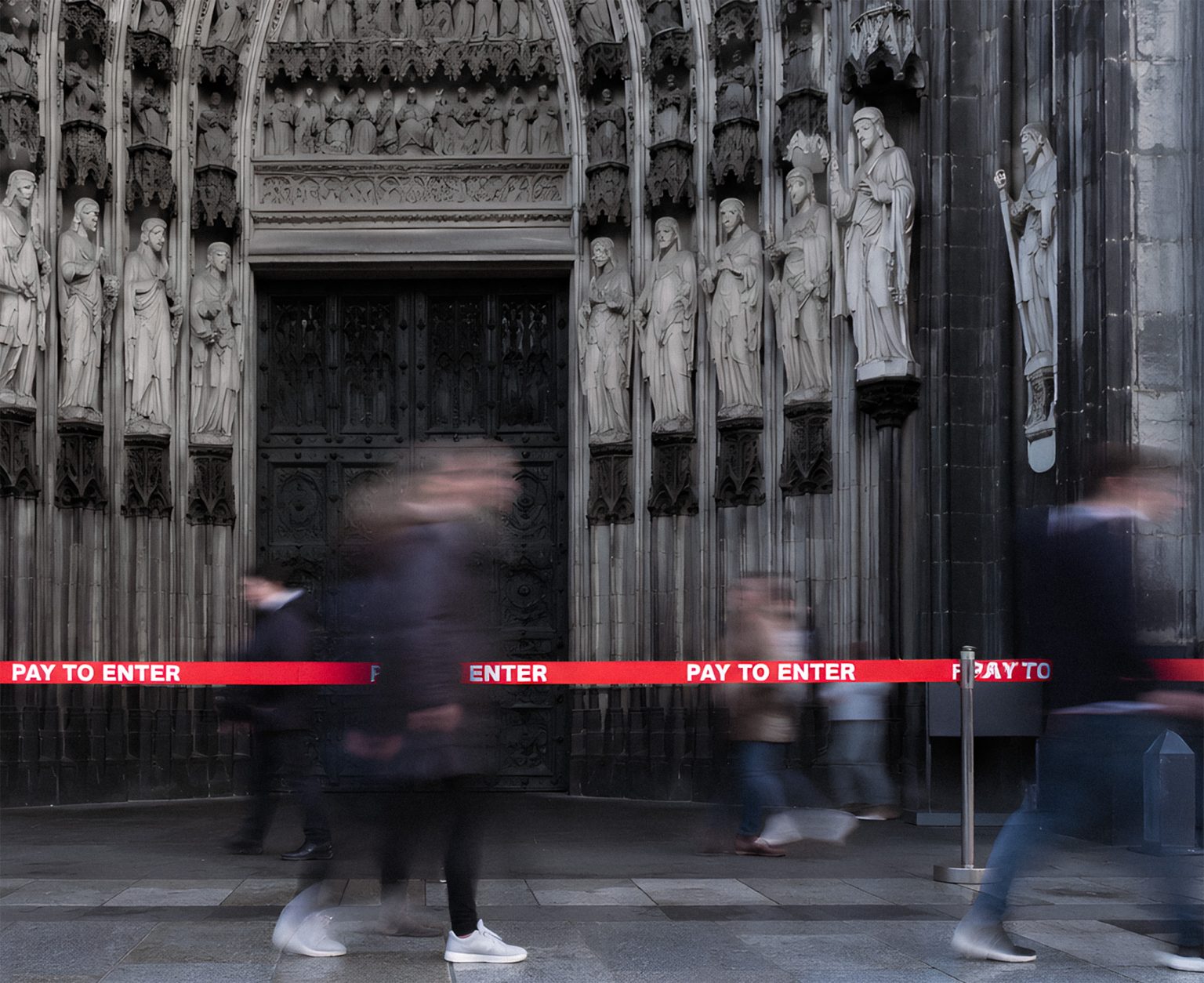
Cologne Cathedral is Germany’s most frequented church, drawing about six million people a year, or roughly 16,000 to 20,000 on an average day. According to the Metropolitan Chapter, maintaining the building costs about €50,000 ($58,000) daily. From 1 July 2026, admission will therefore be charged for sightseeing. Adults will pay €12 ($14), children aged 14 and older €6 ($7), while those under 14 will enter free of charge.
Critics say the decision reduces the cathedral to a museum. In truth, it has been one for quite some time. On many days, especially Sundays and holidays, crowds move noisily through the cathedral in such numbers that its character as a house of God is barely recognizable. Anyone who comes there to pray will struggle to find a quiet place.
The Strangeness of a Church
In a dechristianized society, as Germany has long since become in many respects, a church appears as a museum-like relic from another age. To secular eyes, the cathedral stands on a par with pagan temples. Those with some cultural memory may still recognize its beauty and value. To others, it is simply a huge old building that may be worth seeing once. And one can take good selfies in front of it.
For a Christian and professing Catholic, the measure taken by the Cologne Metropolitan Chapter can only be painful. A church is the house of God, a place of prayer and reflection where the sacraments are received. Every stone of the cathedral shares in its purpose: to point man toward his eternal home with God. The whole building breathes the prayers of those who, over the centuries, brought their praise, gratitude, worries and grief before the Almighty.
Four to Six Kölsch
Having to pay in order to see the cathedral not only with one’s eyes, but also with the soul, is anything but good. And yet the decision is understandable. If tourists enter in noisy crowds, without respect for the character of the place, they should at least make a material contribution to preserving it. In an age ruled by materialism, the old saying applies with particular force: what costs nothing is worth nothing.
Beyond helping to pay for the cathedral’s upkeep, the new charge is also likely intended to limit numbers to some degree. The sum is roughly equivalent to five Kölsch, the famous pale top-fermented beer that, for many people, is almost as good a reason to visit the city as the cathedral itself. For one or two of them, that may become an argument against going inside.
Can the Cathedral Do That?
The plans of Cologne Cathedral’s clergy have caused bewilderment in Germany. Catholic canon law, the Codex Iuris Canonici (CIC), is somewhat unclear on the matter. There is no explicit ban on charging admission to church buildings, but Canon 1214 guarantees the faithful free access to worship.
Canon 1220 requires that everything incompatible with the holiness of the place be kept away from the house of God. According to the majority interpretation, commerce, including the sale of admission tickets, falls into that category. Read together with Canon 843 §1, which obliges sacred ministers to administer the sacraments, the rules are taken by many canon lawyers to imply an inherent ban on charging admission to churches. There is, however, no binding statement from the Holy See on the matter.
Et Hätt Noch Immer Jot Jejange
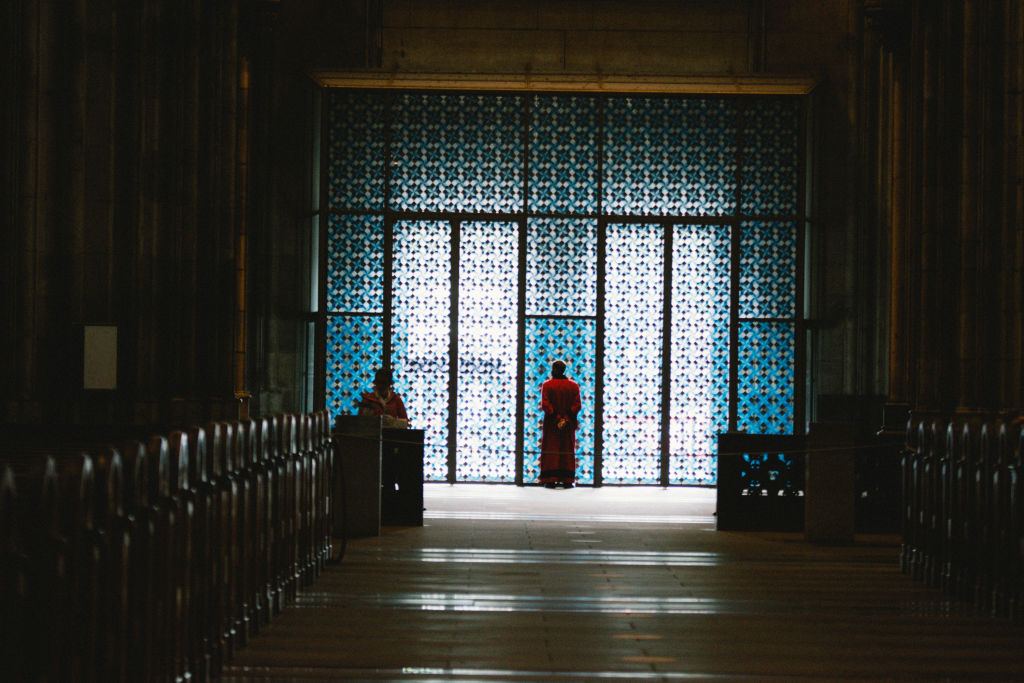
The Metropolitan Chapter, as the cathedral’s legal representative, has decided that free access will in future be limited to prayer and church services. Anyone wishing to light a candle at the Marian altar or pray before the Blessed Sacrament in the Chapel of the Sacrament may enter through the north-side entrance. That provides a pragmatic solution likely to comply with canon law.
Elsewhere, admission fees have long been common even in Catholic churches. Anyone wishing to visit the church of the former imperial abbey at Corvey on the Weser is charged €5 ($6). A visit to the Sagrada Familia in Barcelona, the famous basilica by the Catalan architect Antoni Gaudí, costs €26 ($30). Milan Cathedral charges €13 ($15).
Among Protestants, charging for church entry is far more common. Germany’s largest Protestant church, Berlin Cathedral, charges €15 ($17). St Mary’s Church in Lübeck is fairly inexpensive at €3.50 ($4). In London, admission to Westminster Abbey costs £30 ($40), while St Paul’s Cathedral can be visited for £26 ($35).
By comparison, Cologne Cathedral almost looks like a bargain. To put it in Kölsch, the city’s local dialect: Et hätt noch immer jot jejange – things have always worked out in the end.