Gender, Climate and Queer Issues Shape Germany’s Katholikentag
Germany’s Katholikentag is dominated by themes far removed from traditional Catholic concerns. In Würzburg, the country’s Catholic establishment is playing the woke card, while core questions of faith, family and life are pushed to the margins.
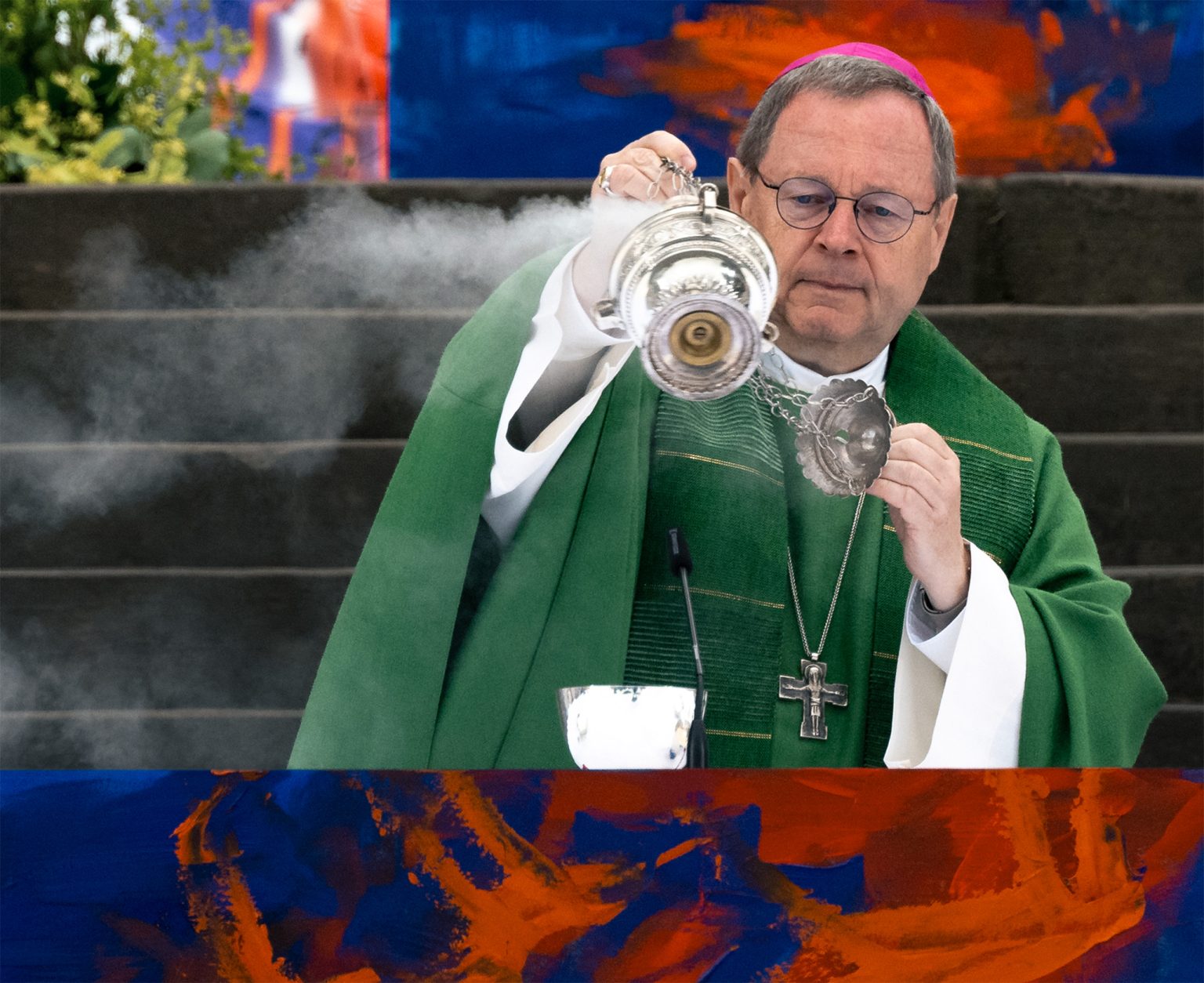
Georg Bätzing, former chairman of the German Bishops’ Conference, incenses the Eucharistic gifts during the service. Photo: Hendrik Schmidt/picture alliance via Getty Images
|
The German Katholikentag, which takes place from 13 to 17 May 2026 in Würzburg, is one of the most important large-scale Catholic events in Germany. It is organized by the Central Committee of German Catholics (ZdK), a lay organization recognized by the German bishops as the official representative body of Catholic laypeople, but largely made up of functionaries.
The Katholikentag can still surprise those unfamiliar with Germany’s functionary Catholicism. Gender, queer, climate and migration issues visibly shape the gathering.
Postcolonial criticism of Holy Scripture appears alongside queer church services, the exhibition area includes a stand called “BDSM and Christianity”, and feminist calls for women’s ordination feature elsewhere in the program. All of this is part of the program of a major Catholic event in Germany, which 21 German bishops are due to attend, according to the official booklet.
Core Themes at the Margins
Classic Catholic themes such as the Eucharist, confession, evangelization, catechesis, marriage, family and the protection of life are still present. Yet they are not necessarily at the center, and certainly not at the center of public, let alone international, perception.
The overall picture may therefore require some explanation for outside observers. The organizing ZdK supports women’s ordination, advocates a new sexual morality and calls for a stronger opening toward queer ways of life. It also backs forms of lay participation in decision-making that are not envisaged in the Church.
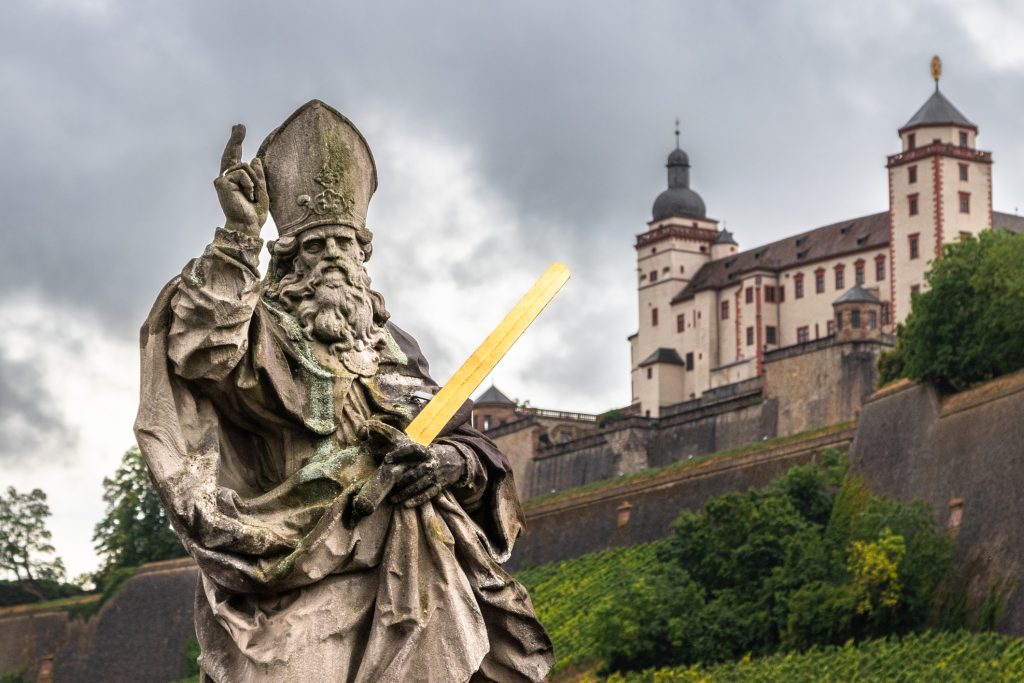
Under the watchful eye of Saint Kilian, the first Bishop of Würzburg, a rather unusual Catholic Day is taking place. Photo: iStock / Getty Images Plus
In Rome’s understanding of synodality, lay participation is limited to consultation. The ZdK, by contrast, seeks decision-making power for laypeople in the Church. The committee is therefore often in tension with current Roman Catholic teaching, something clearly reflected at the Katholikentag.
The Synodal Path’s Grip on Germany’s Church
German Catholicism has for years been shaped by the so-called Synodal Path. The project was backed by the German bishops and the ZdK. In its documents, it calls for far-reaching changes to power structures, sexual morality, the role of women in church offices and the Church’s approach to gender and homosexuality. The Vatican has repeatedly warned against national special paths and has intervened.
The Katholikentag is therefore not merely a gathering of faith, but also a showcase for the German reform agenda.
The program in Würzburg shows this imprint clearly. Alongside church services, Bible studies and spiritual offerings, there are numerous events on gender, climate, migration, queer identity and postcolonial theology. Titles such as “God, Gender, Justice”, “Gender-Sensitive Language in the First Testament”, “Reading the Bible Queerly” and “Reading the Bible Postcolonially” point to a theology that approaches biblical texts largely through present-day questions of identity and power.
A Rainbow Center
The contrast with Catholic teaching is especially clear in the area of sexuality. The Church teaches that every person has an inalienable dignity and must not be unjustly discriminated against. At the same time, it maintains that sexual communion belongs within marriage between a man and a woman.
The Katholikentag, by contrast, gives visibility to queer ways of life and seeks to place them in a church context. Alongside events on rainbow families and queer people in the Church, this includes a so-called queer church service.
Since 2016, a separate "Rainbow Center" has become a fixed part of the event, hosting events, gatherings and liturgical activities on LGBT themes.
The “Ecumenical Working Group on BDSM and Christianity” has a stand in the event’s exhibition area. The group links Christian identity with sadomasochistic sexual practices. Catholic sexual morality, by contrast, understands sexuality as an expression of marital self-giving, bound up with love, fidelity and openness to life. BDSM touches on questions of power, submission, pain and erotic performance.
Women’s Ordination
The question of women’s ordination is also central. The ZdK has for years called for women to have access to church offices, including the priesthood. In the program, related themes appear in the context of feminist reform debates.
Roman teaching is clear on this point. Pope John Paul II declared that the Church had no authority to confer priestly ordination on women. Rome regards this teaching as definitive. The Katholikentag nevertheless gives space to voices calling for admission to ordained ministry regardless of sex.
Another focus is postcolonial biblical interpretation, which examines colonial history, power relations and European interpretive authority. Such approaches are common in academic theology. From a Catholic perspective, a certain tension arises when the Bible appears less as the Word of God in the life of the Church than as a text to be reread primarily through political and cultural categories of power. The same applies to queer biblical interpretation, which interprets biblical texts under the sign of sexual identity. That, too, features at the Katholikentag.
The German Climate Church
Climate and migration also take up considerable space. Responsibility for creation and concern for migrants belong to Catholic social teaching. The difference lies in the weighting. In church teaching, these themes are linked to God, the human person, sin, conversion and the common good. In the Katholikentag program, they often appear as questions of political transformation. Terms such as climate justice, diversity, integration and social change set the tone across much of the program.
Past Katholikentag gatherings have at times attracted more than 100,000 participants, including in Mainz in 1998 and Hamburg in 2000. Numbers have been falling steadily since then, with around 30,000 visitors expected in Würzburg.
Welcome to the comments section of the Štandard daily. Please take note of our guidelines, comments are moderated by us. You can contact the moderators at support@statement.com.
Participate in the discussion
Comments are available to subscribers only. If you'd like to join the discussion, choose a subscription starting at €6.72 per month.
All comments 0
Register
Comments are available to registered users only. If you'd like to join the discussion, register here.