
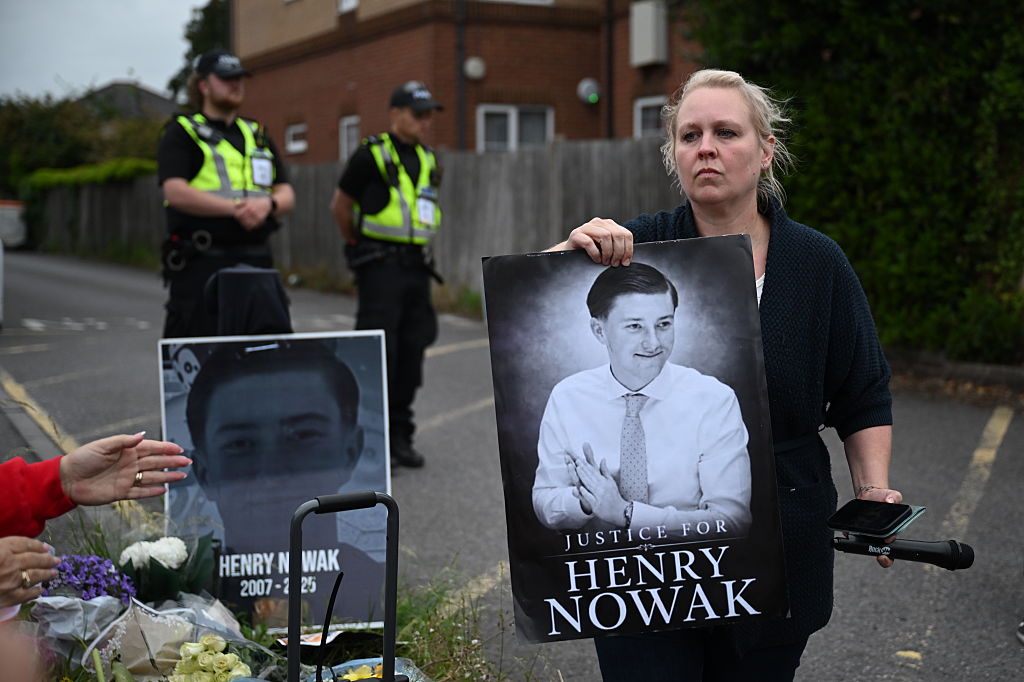
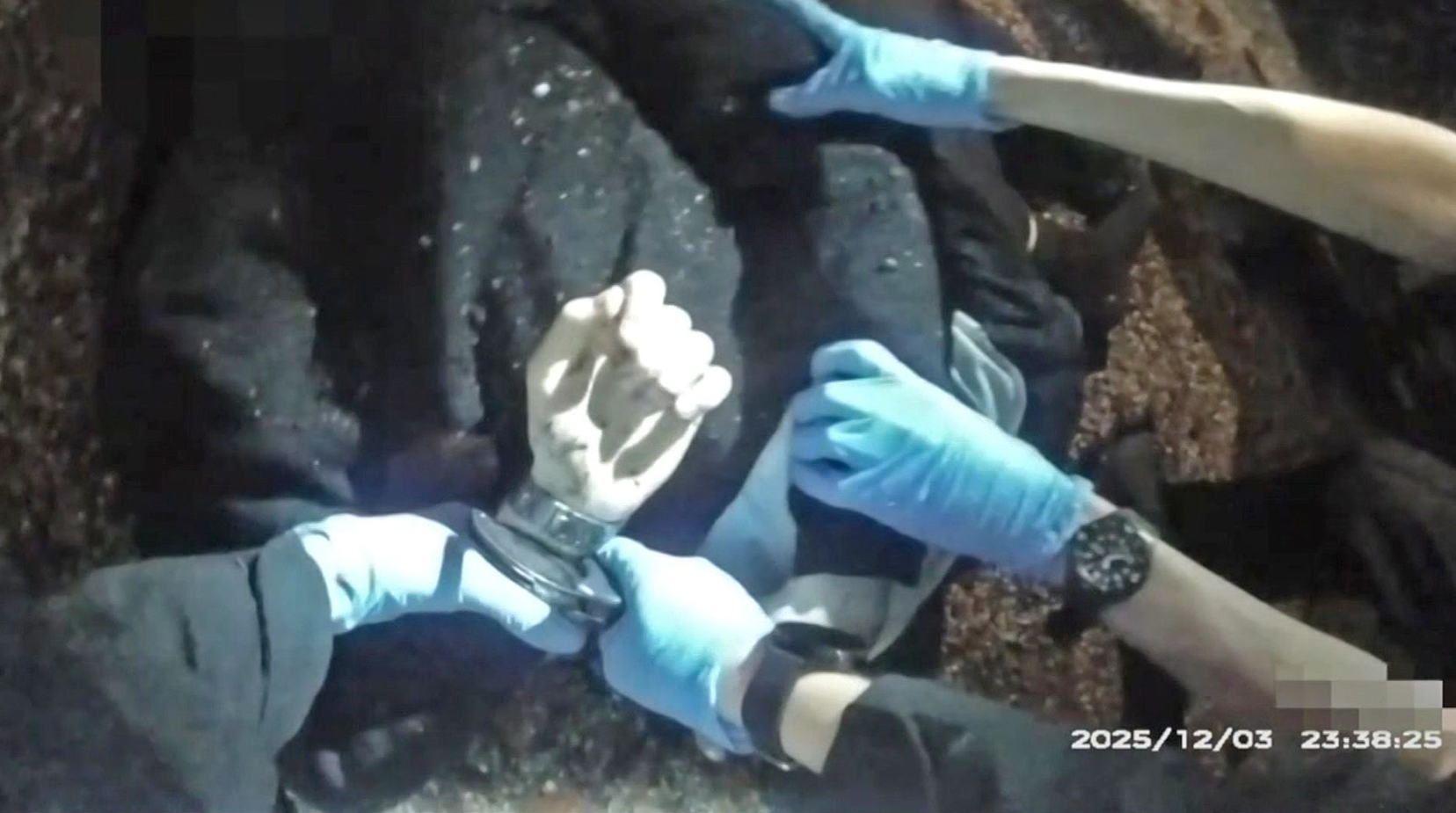
The killing of Henry Nowak has already been reported in detail. The 18-year-old student was stabbed in Southampton by Vickrum Digwa, who falsely claimed that Nowak had racially abused him. Police officers who arrived at the scene handcuffed the bleeding victim, even as he told them he had been stabbed and could not breathe. Digwa has since been sentenced to life in prison for murder.
The unanswered question is no longer what happened in the street. It is why officers responded in the way they did.
The official investigation will have to establish whether individual officers failed in their duty of care. Yet the case also points to a broader problem in British policing. Over recent years, police leaders in England and Wales have adopted documents and training frameworks that do not simply call for racism to be rooted out. They encourage officers to understand policing itself through the lens of racial disparity.

From DEI Strategy to Police Practice
The shift did not begin with the Nowak case. In its Diversity, Equality and Inclusion Strategy 2018–2025, the National Police Chiefs’ Council said that “embedding diversity, equality and inclusion into all that we do” was “an essential ingredient for success”. The strategy also said policing must work with partners to “reduce and ultimately seek to eliminate disparity wherever it lies”. DEI was not presented as an internal side issue, but as a guiding principle for policing itself.
If one wanted to argue in the officers’ defense, one could say that they were acting within the moral climate created around them. British police have spent years being told that minority communities are over-policed, that unequal outcomes may point to institutional bias and that a supposedly “color blind” approach is not enough.
Critics argue that the result is not equality before the law, but a hierarchy of suspicion, sensitivity and protection. In Southampton, that logic appears to have reached its most grotesque form. A white stabbing victim lay handcuffed on the ground, while the man who had attacked him was initially treated as the complainant. All it took was an allegation of racism.
Police Documents Reject Color-Blind Policing
A key document is the Police Anti-Racism Commitment for England and Wales. It developed from the Police Race Action Plan, which set out to create “an anti-racist police service that is trusted by Black people”.
The commitment states that policing should work toward racial equity. That sounds harmless enough until the document explains what it means. Racial equity, it says, does not mean “treating everyone the same” or being “colour blind”. Instead, police are expected to respond to individuals and communities according to their specific needs, circumstances and experiences.
In plain terms, the document rejects the old principle that the state should treat people without regard to race. It says that equal treatment is not the goal. Different communities are to be understood differently, approached differently and policed differently.
Supporters would argue that this is not discrimination, but an attempt to correct historic injustice and unequal outcomes. Yet the practical danger is obvious. Once policing is framed around racial equity rather than equal treatment, every operational decision can become infected by racial calculation.
Who is believed first? Who is seen as vulnerable? Who is viewed as a threat? Who must be handled with particular caution? Who can safely be doubted?
The Henry Nowak case forces those questions into the open.

When Disparity Becomes Evidence
The Police Race Action Plan: Improving Policing for Black People seeks to improve trust and confidence in policing among Black communities. Its focus is not simply on misconduct by individual officers. It seeks long-term institutional change in culture, outcomes and behavior.
The plan speaks of racial disparities across policing, including stop and search, arrest rates, use of force, internal culture and trust. The central problem is that disparity itself is treated as a kind of moral evidence. If one group is stopped more often, arrested more often or imprisoned more often, the system is assumed to require correction.
The awkward question is pushed aside: whether some disparities may reflect crime patterns, location, gang activity, repeat offending or other objective factors.
No serious police force should ignore racism. If officers act unlawfully or target innocent people because of race, they should be disciplined, dismissed or prosecuted. But that is not the same as making statistical imbalance the foundation of policing policy.
The doctrine turns outcomes into accusations. If police activity produces figures that look racially uneven, policing itself becomes suspect. The pressure then falls not only on officers who behave improperly, but on enforcement that produces politically uncomfortable data.
That is how anti-racism can become a force against ordinary justice. It does not need to order officers to ignore victims. It only needs to create a climate in which they know that some mistakes are career-ending, while others are merely tragic.
The Perverse Logic of Over-Policing
One of the most important terms in the new policing vocabulary is “over-policing”. The concept suggests that some communities, especially ethnic minorities, are subjected to excessive police attention.
The phrase is powerful because it changes the moral meaning of enforcement. A stop, a search, an arrest or a questioning is no longer judged only by whether it was justified in the circumstances. It can also be seen as part of a wider pattern of racial oppression.
That creates a perverse incentive. In areas with high crime, more police activity will naturally produce more stops, more arrests and more prosecutions. If the relevant community is a minority community, those figures can then be cited as evidence of over-policing.
The solution becomes restraint. Officers are told, directly or indirectly, to be more careful, more sensitive and more aware of the racial implications of action. Yet in policing, excessive caution can be dangerous. The decision not to intervene, not to search, not to challenge, not to disbelieve and not to act can also have victims.
In the Nowak case, the allegation of racism appears to have carried immediate force. The claim came from the attacker, but it changed the frame through which officers viewed the scene. The man bleeding on the ground was not treated first as a possible stabbing victim. He was treated as a suspect in a racially aggravated incident.
That is the lethal danger of racialized policing. It does not merely protect minorities from bias. It can also teach officers to rank human beings according to the political risks attached to them.
When Equity Overrides Justice
The same institutional logic appeared in the recent Sentencing Council controversy in England and Wales. The council proposed guidance that would have required courts to take the backgrounds of offenders into account before sentencing, with particular attention to groups over-represented in the criminal justice system.
The argument was familiar: Black, Asian and minority ethnic offenders are statistically more likely to be imprisoned and to receive longer sentences than white offenders. Once again, disparity was treated as proof of injustice.
Equality before the law asks what a person did. Equity asks which group the person belongs to and whether the outcome adds to a pattern that institutions find embarrassing. The difference is fundamental.
Britain has already seen where fear of racial accusation can lead. In the grooming gangs scandal, police, local authorities and politicians failed to protect vulnerable girls with the seriousness they deserved, in part because many of the perpetrators were Pakistani men and officials feared being branded racist.
The Nowak case is not the same scandal. But it belongs to the same moral universe. In both, the authorities appear to have been less afraid of failing victims than of being accused of racism.
That is what makes the matter so dangerous. The public can forgive police error more easily than an apparent reversal of victim and suspect. It can accept that officers sometimes arrive late, misread a scene or fail under pressure. It is much harder to accept a culture in which fear of the wrong accusation appears to outweigh the life of the person dying in front of them.
Henry Nowak was killed by a man with a knife. But the scandal does not end there.
His death exposed a system of policing in which progressive anti-racism has turned into its opposite: a racially conscious hierarchy of credibility, suspicion and protection. In Southampton, that hierarchy may have helped decide who was believed, who was handcuffed and who was left to die.