The Quotation at the Center of the Dispute
Kirchner had written on Facebook: “Let us never forget the murdered children for whom the old parties’ illegal and uncontrolled immigration is responsible. It can happen to anyone in Germany, anytime and anywhere!” He also called for voters to remove from office those “who have the victims’ blood on their hands and who are responsible for these conditions”.
Saxony-Anhalt’s domestic intelligence agency assessed the statement in the report as an example of “xenophobic agitation”. According to the interior ministry, the problematic core does not lie in mourning the victims, but in the alleged sweeping insinuation against asylum seekers and migrants. The statement, it said, portrayed them as culturally incompatible and inclined to commit the most serious crimes.
The AfD has been under observation by domestic intelligence authorities for years. Several state branches have been classified as confirmed right-wing extremist organizations. At the federal level, a possible ban on the AfD is repeatedly discussed. Numerous politicians from different parties have openly called for the party to be banned.
The more broadly authorities collect political statements by AfD figures as supposed evidence of extremist thinking, the greater the risk that criticism of the government and, above all, of migration policy will be treated as blanket proof of extremism. Ordinary citizens who make similar arguments could also find themselves in the sights of the authorities.
Michael Kyrath Made the Case Public
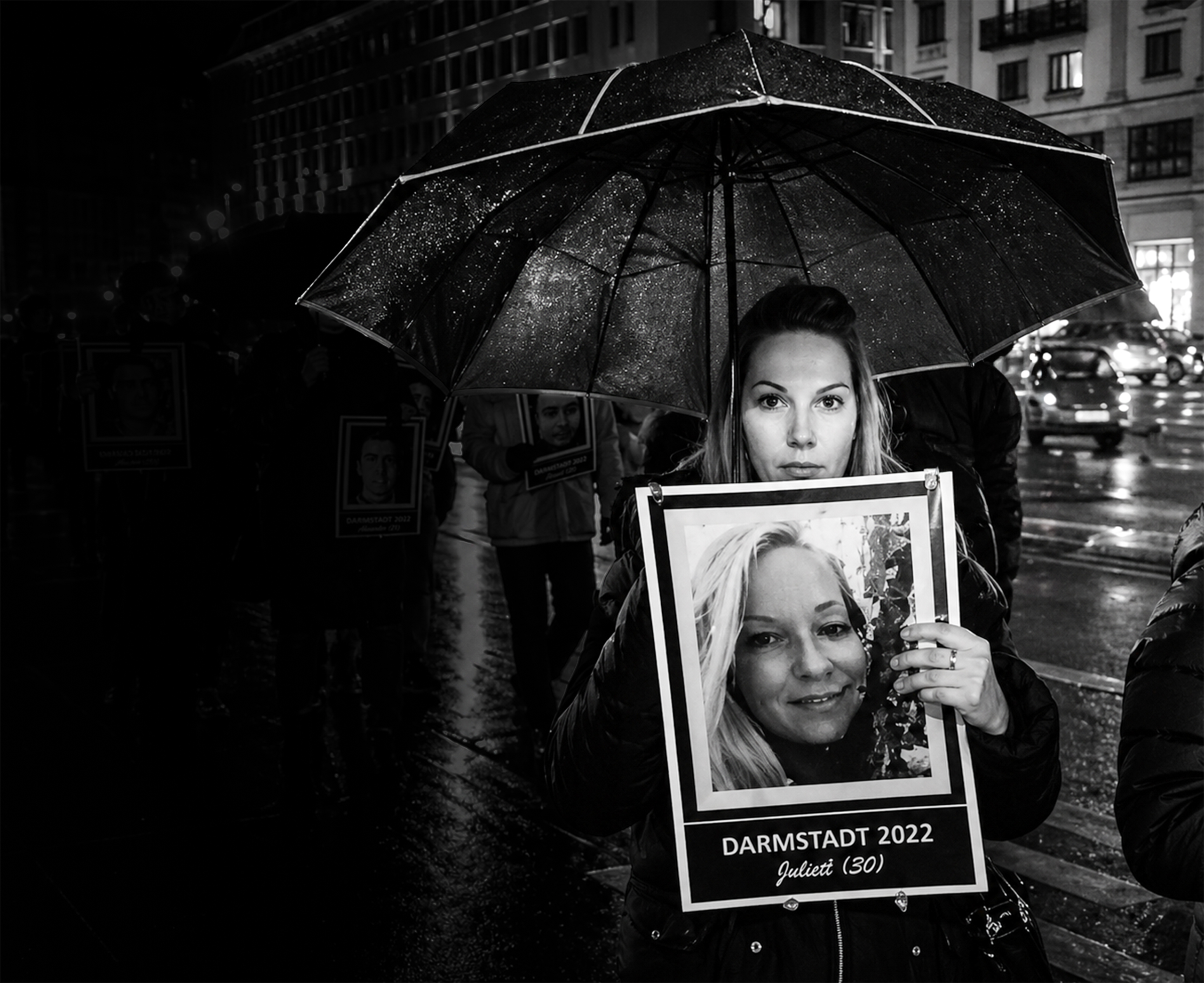
The case became widely known through Michael Kyrath, who reacted to details in the domestic intelligence report after they were reported by the media outlet Apollo. Kyrath’s daughter Ann-Marie was killed on 25 January 2023 on a regional train near Brokstedt. Her boyfriend Danny also died. The perpetrator, Ibrahim A., a stateless Palestinian and rejected asylum seeker, was sentenced to life in prison for two counts of murder and other offenses.
His criticism was this: if a politician’s statement of that kind was used as evidence of right-wing extremism, the question arose of what that meant for the many relatives who publicly remember their murdered children and hold migration policy responsible.
That is precisely where the political significance of the affair lies. It is not only about the AfD. It touches on whether victims’ relatives, citizens’ initiatives and opposition politicians may openly say that certain perpetrators were able to commit violent crimes only because they were still in the country, or because they were in the country at all, after deportations failed, authorities failed or borders remained open.
The interior ministry now insists that grief is not being criminalized. Yet the subsequent revision of the report indicates that the original text at least attempted to do exactly that.
Dangerous Shift
The case shows how sensitive the role of Germany’s domestic intelligence service has become. Its task is to protect the free democratic basic order, not narrow political debate. It is supposed to observe extremism, not cast every sharp criticism of migration, parties or government policy as anti-constitutional activity.
Of course, a statement can be sweeping, polemical or exaggerated. That is part of democratic argument. It becomes dangerous when such statements are no longer merely criticized, but collected by authorities as material on extremism and thereby criminalized. The result is a climate in which citizens may feel that anyone who mourns the wrong victims, names the wrong people responsible or supports the wrong party may attract official scrutiny.
That is decisive, especially in the debate about a possible AfD ban. A party ban is the harshest intervention a democracy can make against a political movement. If the path toward it is paved with ever broader restrictions on political speech, trust in the neutrality of the state is damaged.
The case from Saxony-Anhalt therefore shows more than a controversial passage in a domestic intelligence report. It highlights a development in which the domestic intelligence agency, which reports directly to the interior ministry, is increasingly turning into an actor in the political struggle. That is dangerous, regardless of where one stands on the AfD.
If even the remembrance of murdered children can fall under suspicion of extremism, then it is no longer the constitution that is being protected, but only the government narrative.