A brutal knife attack in Belfast has exposed more than the savagery of one crime. It has laid bare a political and media culture that still refuses to name what Europeans can see with their own eyes.
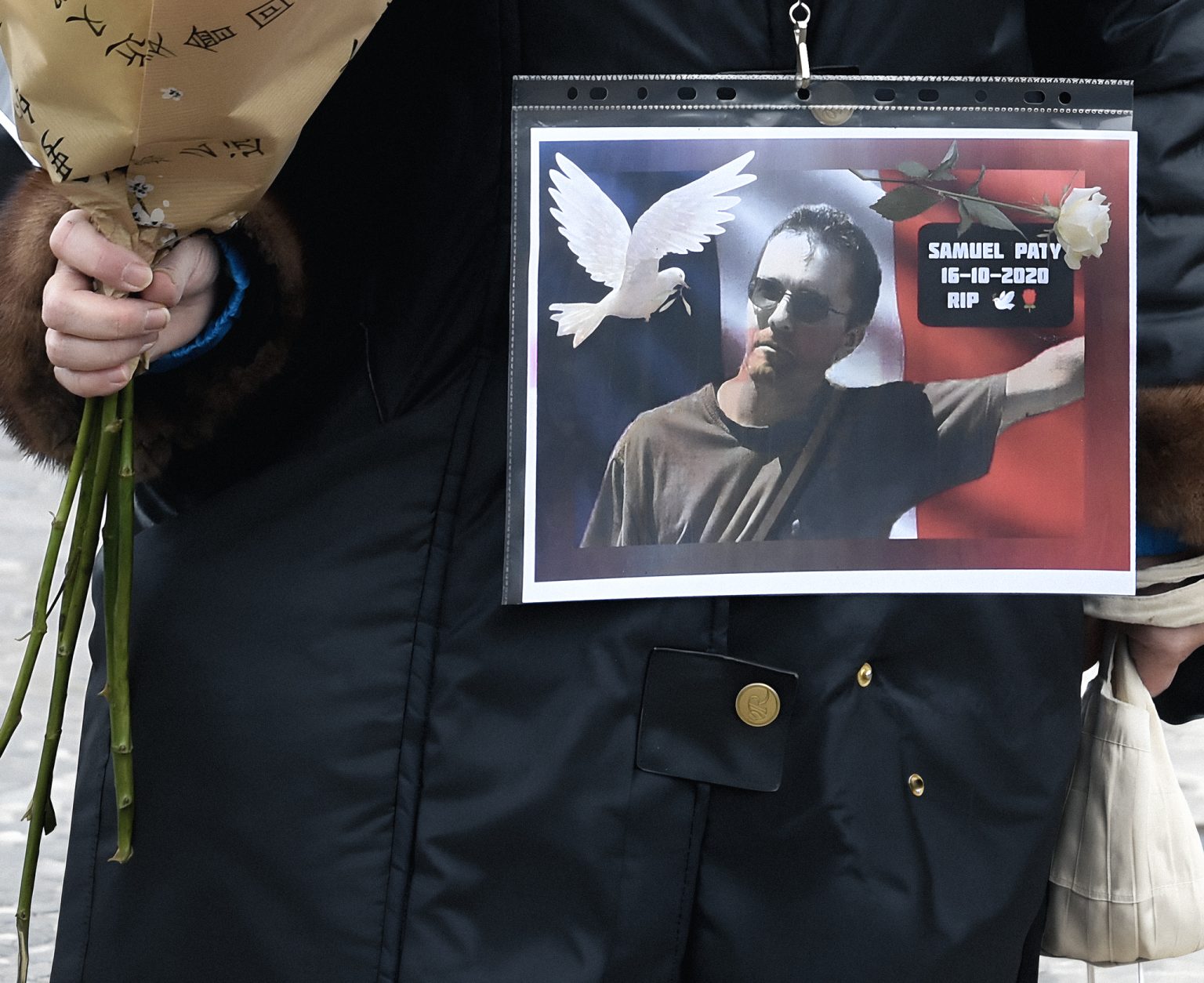
A woman holds a picture of Samuel Paty at Place de la Liberte in Lille on 18 October 2020, two days after the history teacher was beheaded by an attacker who was later shot dead by police. Photo: Francois Lo Presti/AFP/Profimedia
|
The beheading of a human being with a knife is not a “normal” murder, to the extent that the word normal can be used at all in the context of killing another person. It is a form of execution practiced by Islamists around the world to do more than kill their enemies. It is intended to mutilate, humiliate and slaughter them like animals.
Beheading is something we in the 21st century associate above all with Islamist butchers, such as the Islamic State terrorists who publicly beheaded 21 Coptic Christians on a beach in Libya in 2015 to proclaim their dominion over Christianity.
Until now, when heads rolled in Europe, the phrase was a harmless figure of speech for someone losing a post or a job. France once used the guillotine to rid itself of unwanted citizens and aristocrats. Anne Boleyn, Thomas More and Queen Mary Stuart also fell victim to it. Such things belonged in history books.
Now, in Europe, the phrase has to be taken literally again.
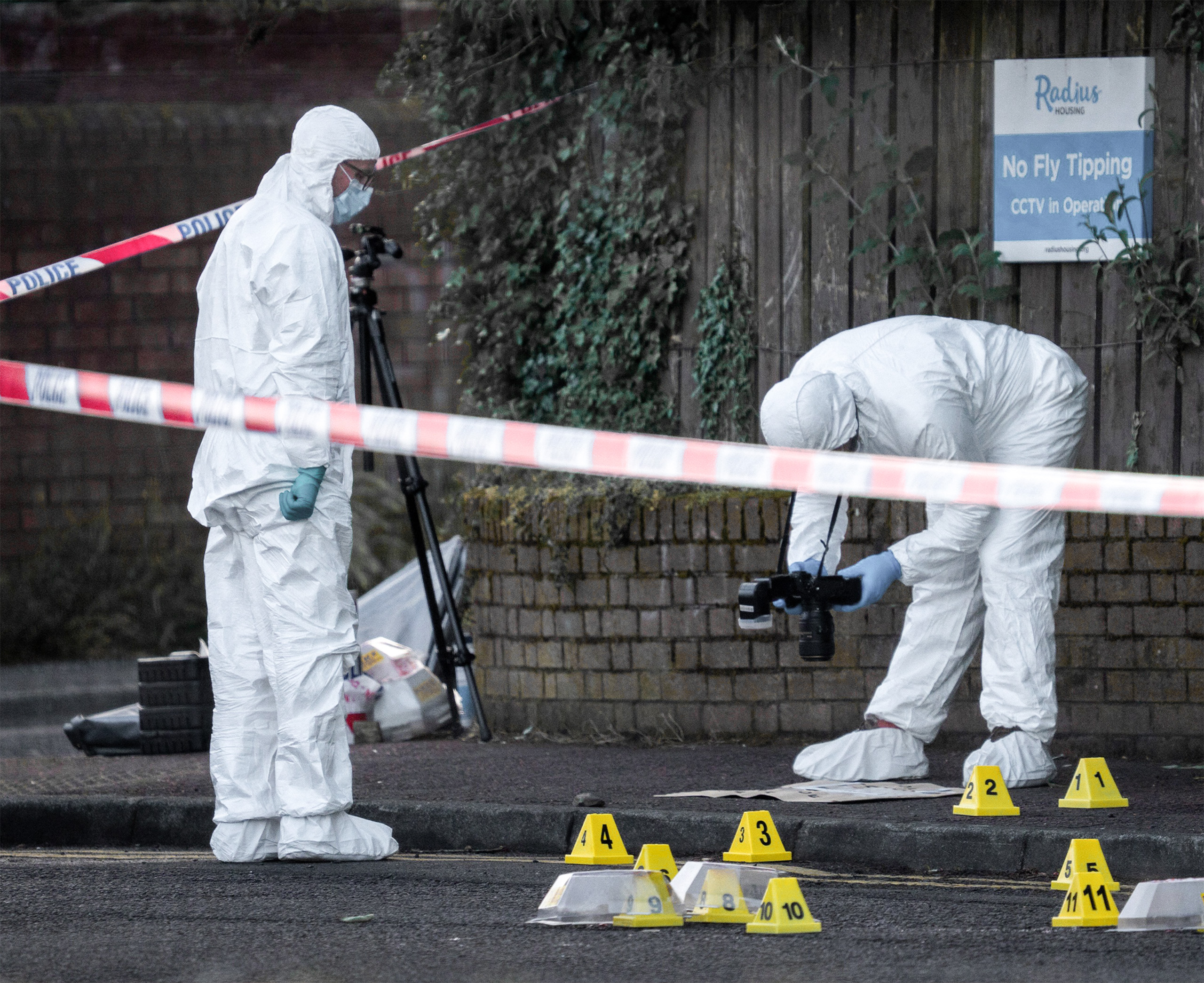
In Belfast, a Sudanese man was arrested after what appeared to be an attempted beheading on a public street on Monday night. Numerous British newspapers described the attack as a “stabbing”. Prime Minister Keir Starmer, in his dutiful statement of condolence on X, wrote of cruel and abhorrent scenes of violence. He avoided words such as beheading, knife and Sudanese. Someone who had not heard of the attack would not know from the post what had happened, let alone who was the victim and who was the perpetrator. That is not an entirely insignificant distinction, as we know at least since the Henry Nowak case.
To deplore an unspecified act of violence is simply too mild, because what can be seen in video footage filmed by passers-by goes far beyond a knife attack. The attacker appeared to be attempting a barbaric execution. The scene drags on in agonizing detail.
The footage is horrific and shows an attacker trying to slaughter a man in a way we would not even kill an animal. The victim was taken to the hospital in serious condition with significant injuries to his face, neck and back. Brave men who witnessed the attack intervened, striking the attacker with what appeared to be a hurling stick to separate him from the victim before he could complete his “work”.
The Evidence Europe Must See
The attack had barely happened before police were already calling on people not to share the video further on social media out of respect for the victim and the pain of his family. That sounds humane and understandable, but here I argue for the opposite. People need to watch it. Not out of voyeurism, but to grasp the nature of the imported violence Europe is now facing.
It is not the first beheading, or attempted beheading, of Europeans in their own countries by migrants. The cases show a pattern. The perpetrators come from outside Europe, often from countries south of the continent, and the attacks are usually carried out by Muslims against critics of their religion or, just as readily, against Christians.
The Politics of Not Naming
The media and political class have helped keep coverage of these cases as limited as possible, because the facts do not fit the narrative of the welcome stranger who seeks nothing in Europe except happiness and work.
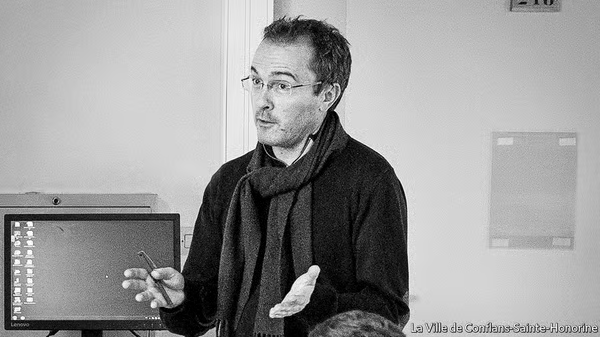
Samuel Paty was only 47 when he was beheaded after teaching pupils about French secular values. Photo: Ville de Conflans-Sainte-Honorine
It is time to remember Samuel Paty again. The French history teacher from Conflans-Sainte-Honorine, near Paris, was beheaded on 16 October 2020 by an 18-year-old Islamist from Chechnya because he had dared to discuss the Muhammad cartoons published by the satirical magazine Charlie Hebdo during a lesson on freedom of expression. He paid for it with his head.
In 2016, a 15-year-old Muslim attacked a Jewish teacher in Marseille with a machete in an attempt to behead him. The victim survived with serious injuries.
That same year, two IS fanatics stormed into the church in Saint-Etienne-du-Rouvray during Mass, took hostages and slit the throat of the 85-year-old Catholic priest Father Jacques Hamel.
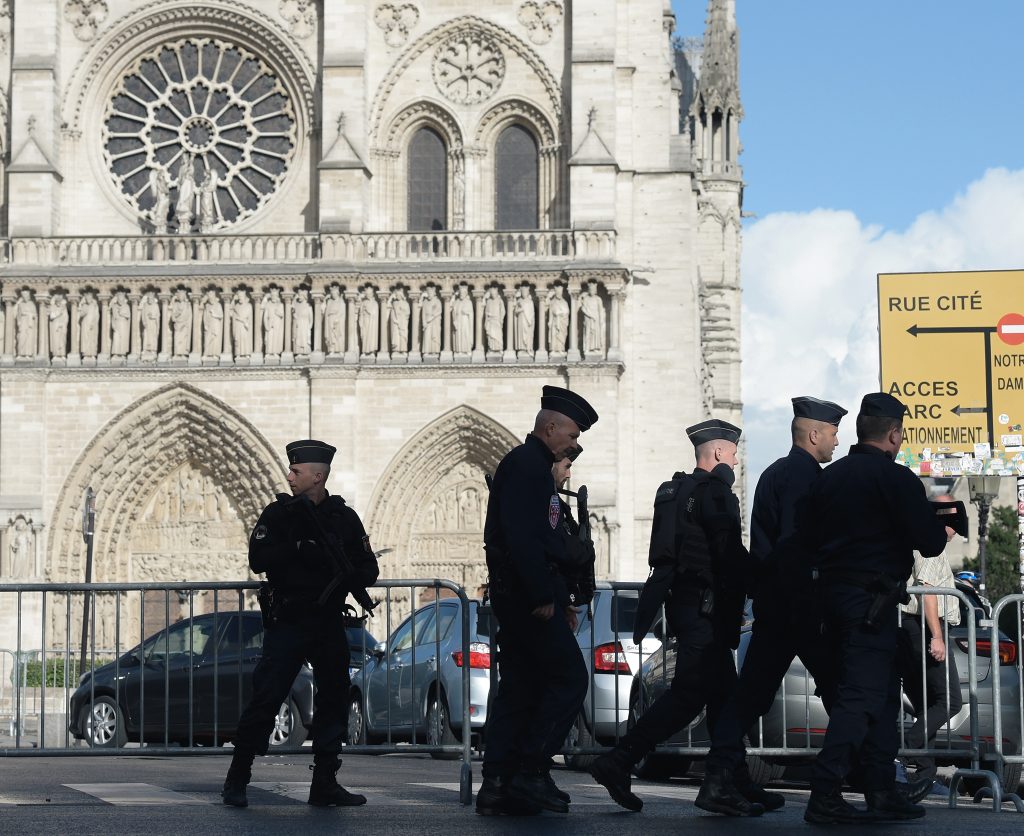
The same pattern surfaced again in Nice on 29 October 2020 in the Basilica of Notre-Dame. There, too, an Islamist attacker stormed in while people were at prayer. He killed three people. Nadine Devillers, 60, was almost completely beheaded.
Notre-Dame neighbourhood in Nice is surrounded by police after the islamistic attack; Photo: Pascal Le Segretain/Getty Images
When “Enough” Becomes Politics
The Belfast attack may become the trigger for new unrest. The mood is already tense in light of the current Henry Nowak case. This could be the spark. Calls are already circulating on social media for people to gather and prepare for street battles and arrests by police.
“Enough”, Restore Britain leader Rupert Lowe posted. Just that one word.
He is the same man who made his name by securing a hearing for the victims of the grooming scandals that had been covered up for years in England, at last dragging these crimes by Pakistani men against British girls into the glaring light of public view. The testimony of the young women about what was done to them, often over years, is harrowing. It bears witness to the same will to cruelty that lies behind the beheading of a human being: the victim is made to suffer because the suffering is the point.
Enough. Yes, it has been enough for a long time. The streets of Europe must be made safe again. No country needs or wants such barbarians. And one can understand anyone across Europe who, after more than 10 years of rising numbers of knife attacks, beheadings, rapes and terrorist atrocities, votes for parties that promise to close borders, order deportations and expulsions and bring these conditions to an end.
What can no longer be understood is how prominent figures in established parties across Europe, faced with surging violence against natives, against women, men, daughters and sons, still believe that the greatest problem is not these imported, violence-prone men, but those who name the problem. They prefer to fight virtual violence and hate speech online rather than bloody crimes against real people on real streets.
This is Belfast, but it could also be Berlin, Stuttgart, Marseille, Milan or Oslo. This is a stranger’s victim, but the bitter truth is that it could be any one of us unless something changes soon.
Welcome to the comments section of the Štandard daily. Please take note of our guidelines, comments are moderated by us. You can contact the moderators at support@statement.com.
Participate in the discussion
Comments are available to subscribers only. If you'd like to join the discussion, choose a subscription starting at €6.72 per month.
All comments 0
Register
Comments are available to registered users only. If you'd like to join the discussion, register here.