ISIS Out: Beheading Attempt Threatens to Inflame Northern Ireland
In Northern Ireland, where tribal tensions run high already, a viral video of an ISIS-style beheading attempt on the streets of Belfast threatens to turn to widespread violence.
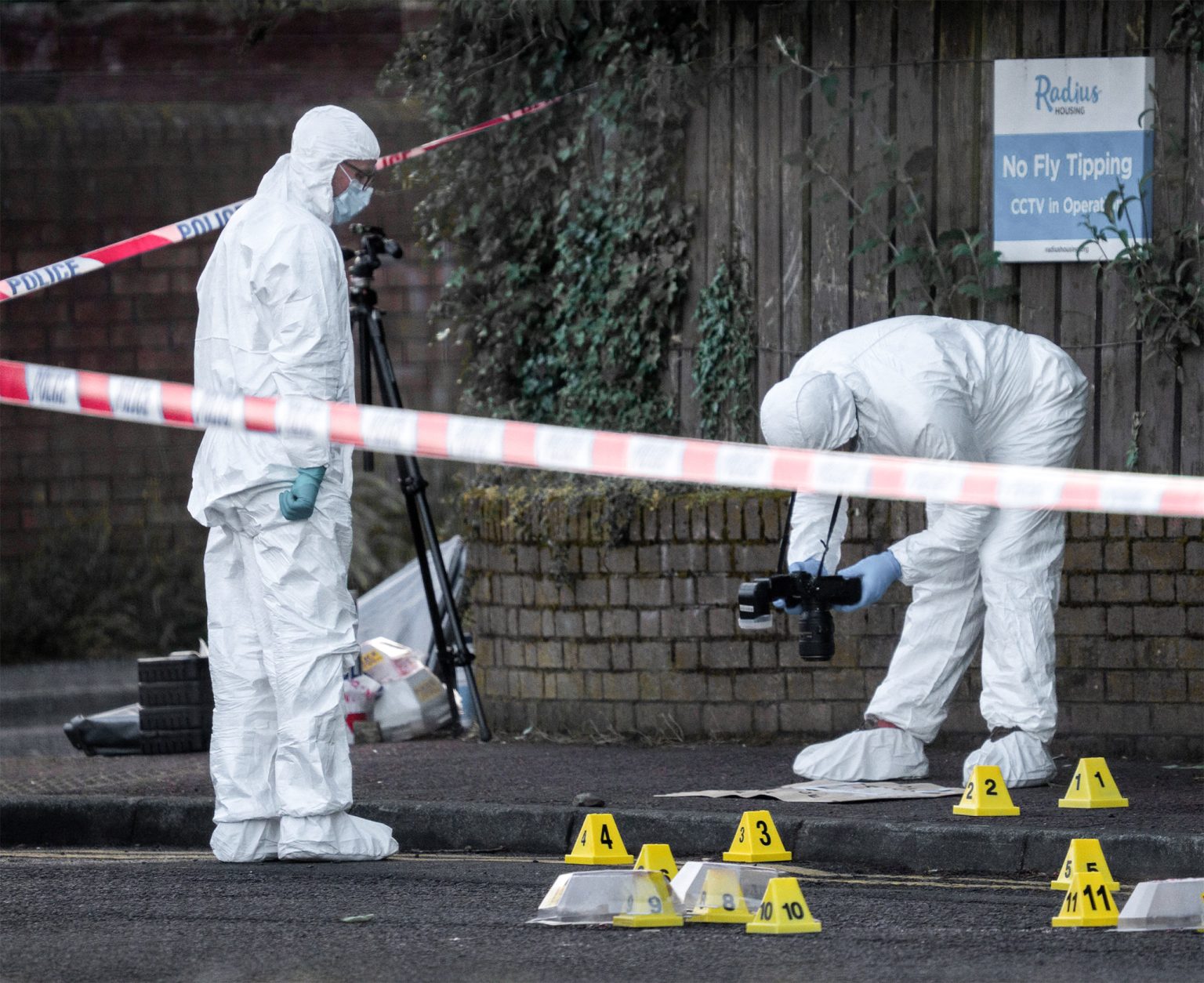
Police officers at the cordon on Kinnaird Avenue in north Belfast, where the stabbing has heightened fears of further unrest. Photo: Aodhán Roberts/Alamy/Profimedia
|
On Monday night, there was an apparent attempt at an ISIS-style beheading on the streets of Belfast in Northern Ireland. The video – which Statement is not publishing but which is easily accessible on social media platforms – has circulated online since the incident, which happened shortly after 10:30 p.m. and leaves the viewer with no doubt about what took place.
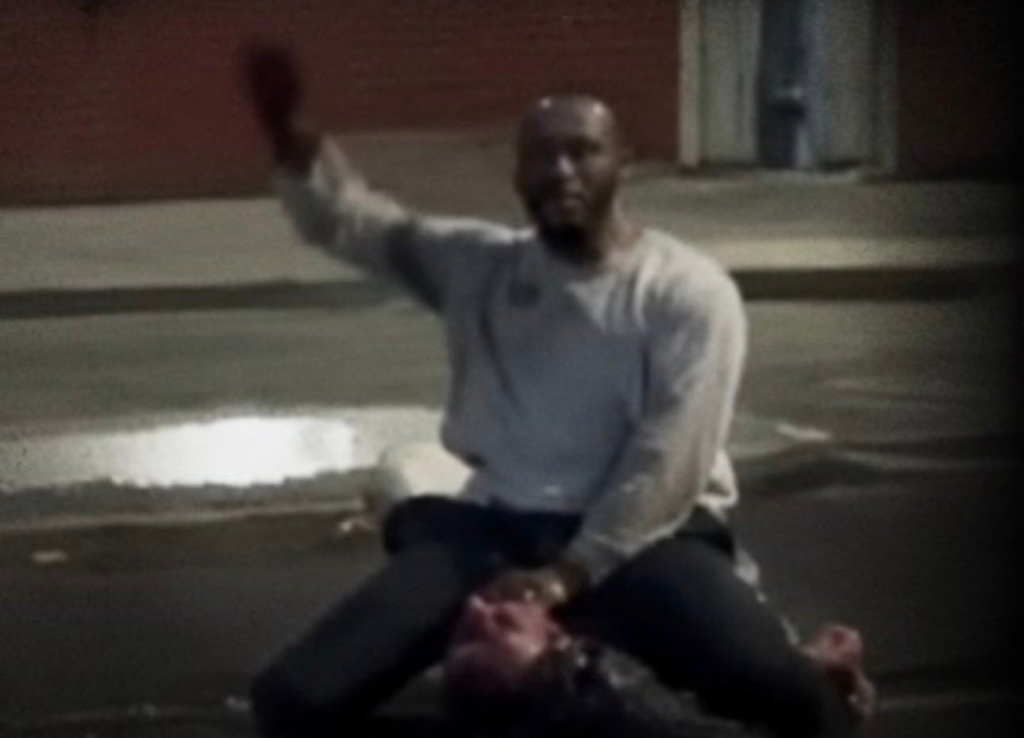
In the footage, a man, later identified by police as Sudanese after an initial mistaken identification as Somali, sits astride his victim’s chest and makes repeated stabbing and slashing attacks at his neck area. Brave bystanders intervened, and the victim – a man in his 40s – remains alive but with grave injuries.
As is often the case with such events, an enormous gulf has emerged between media coverage of the incident and reaction to the raw footage circulating online. Official news channels refer, in muted terms, to the arrest of a man after a “stabbing incident”. Online, fury is building and plans are circulating to “close down Northern Ireland” this evening. The controversial activist Tommy Robinson has been sharing plans for mass roadblocks and warnings to businesses to close their doors early. The Police Service of Northern Ireland is preparing for riots.
A Tinderbox of Public Concern
The incident has all the ingredients necessary to ignite a tinderbox of public concern about immigration in Northern Ireland. The alleged assailant is evidently a migrant and his victim evidently a local. It is not only that the alleged attacker is foreign, but that the mode of his attack is also foreign: Northern Ireland is a troubled place not long emerged from decades of sectarian violence between the majority Protestant and unionist community and the minority Catholic community, who desire reunification with the Irish Republic – but even that three-decade conflict, with all its horrors, did not witness attempted beheadings. If the Provisional IRA were not bad enough, many in Belfast now feel that state policy has left them exposed to the tactics of ISIS.
Nor is Northern Ireland unused to immigration as a spark for mass discontent: almost exactly one year ago, riots and disorder broke out across the province after the alleged rape of a teenage girl in Ballymena, County Antrim, in which the alleged attacker was a teenage boy who required a Romanian interpreter in court. What followed was close to a pogrom: Romanian-owned homes were attacked and migrant families told to leave their housing by Northern Ireland’s still-active loyalist paramilitary groups. Over 100 people were arrested across Northern Ireland. Meanwhile, the rape charges against the alleged assailant were later withdrawn as police cited “significant evidential problems”.
Migration Is a Very Sensitive Subject in Northern Ireland
Migration is a significant source of tension in Northern Ireland for reasons that many across Europe will understand, but also for reasons unique to the region. Despite a lasting peace between unionists and nationalists, the political conflict over whether Northern Ireland should be British or Irish remains live, with nationalists who favor unity with the Irish Republic pushing hard for a referendum on the question. The influx of many residents without a tribal allegiance in that dispute has introduced uncertainty over how they might vote, and how they might tip the fragile sectarian and political divide in the country.
Further, Northern Ireland has become a flashpoint for both British and Irish migration concerns: Brexit, in which one part of Ireland is in the European Union and another is not, has been compounded by the open and free border between the Republic of Ireland, which is in the EU, and Northern Ireland, which is British. The province is therefore a key hub of migrants moving between the United Kingdom on one hand and the European Union on the other. Being born in Northern Ireland conveys benefits almost unique in Europe: it is the one place on earth where being born makes you both a citizen of the United Kingdom and also a citizen of Ireland, and therefore the EU, by right.
All of these factors have led to a high transient population of immigrants, living somewhat uncomfortably between two tribes of native residents who eye each other warily and with open hostility. Yet in their discomfort with migration, working-class elements on both sides of the sectarian divide have found something that unites them: in working-class estates of both unionist and nationalist hue, anger about perceived favoritism towards migrants in housing and social welfare allocations is a reliable source of outrage.
Local Politicians Powerless
There is little that politicians in Northern Ireland can do. Immigration policies are controlled from London by the Labour government, with border controls subject to influence exerted by the European Union through Dublin. Local politicians have precisely zero power over their own borders and can do little other than issue toothless appeals for calm when tensions over migration rise.
Monday night’s attack took place in a country where working-class communities still feel, regularly, under siege: unionists from the sense that they are a narrow majority in the province but a small minority on the island of Ireland overall, and nationalists from the sense that they are oppressed by a small British community in what they see as their own country. In both communities, there is a long history of paramilitarism and hostility to perceived threats from outside the community.
Meanwhile, the media – desperate as ever to tamp down any story that links immigration to crime or violence – is already trying to recast the story as being less about the alleged attempt at a beheading, and more about the risk of “far-right” elements weaponizing the crime. As is so often the case, this appears to be backfiring, with mounting anger developing online about a perceived attempt at a media “cover-up” of the incident.
Photo: A still from a video circulating on social media shows the attacker kneeling over his victim.
Meanwhile, Northern Ireland’s police force prepares for a night of trouble. While that trouble cannot be endorsed, it will come as no shock to those who have seen the video that sparked it and understand the degree to which uncontrolled immigration is causing distress in Northern Ireland. Northern Irish voters do not want ISIS-style beheading attacks on their streets. Yet there is nothing they can do at the ballot box, of any kind, to change their immigration laws. In that context, perhaps an undemocratic reaction is inevitable.
Welcome to the comments section of the Štandard daily. Please take note of our guidelines, comments are moderated by us. You can contact the moderators at support@statement.com.
Participate in the discussion
Comments are available to subscribers only. If you'd like to join the discussion, choose a subscription starting at €6.72 per month.
All comments 0
Register
Comments are available to registered users only. If you'd like to join the discussion, register here.