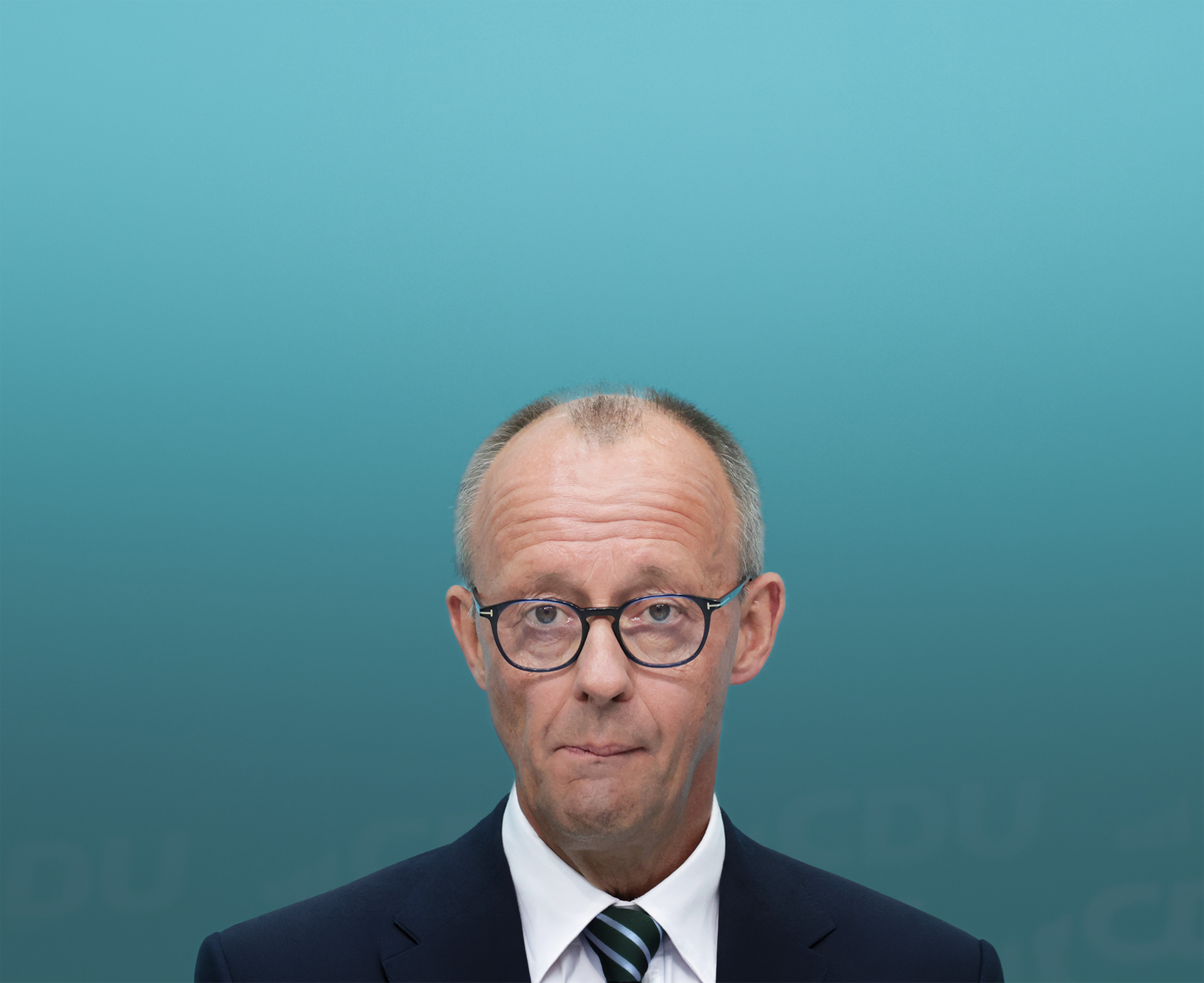
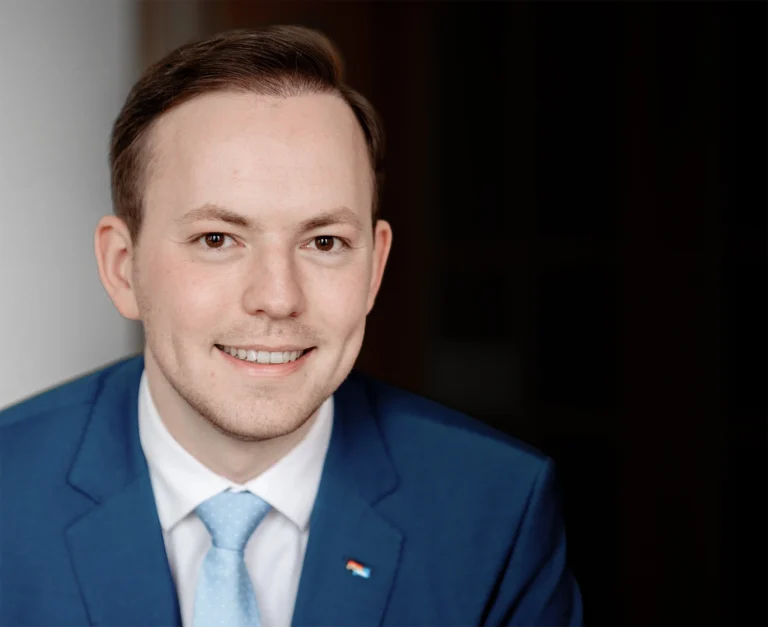
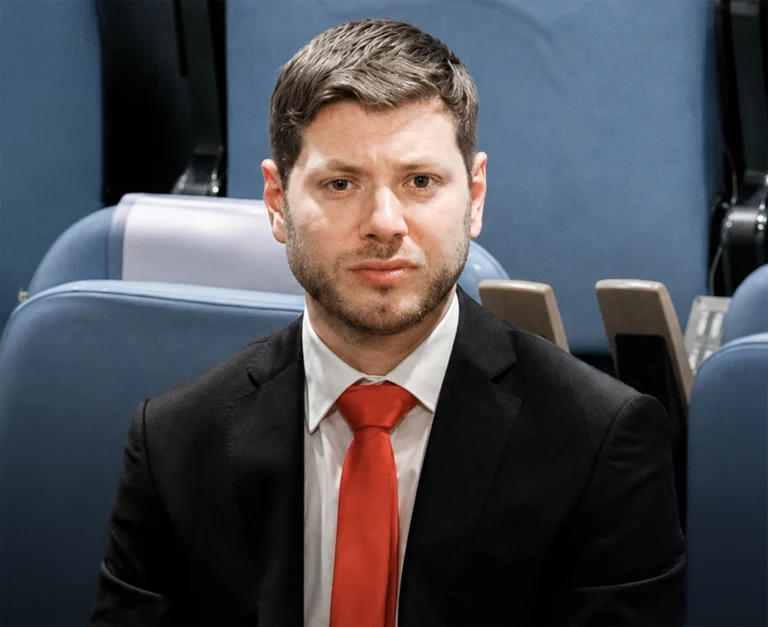
Rumors of a chancellor swap are spreading through Berlin. Friedrich Merz is deeply unpopular, the CDU is drifting behind the AfD, and the man most likely to succeed him could move the party even further to the left.
A summer of discontent awaits Chancellor Friedrich Merz. Political Berlin will soon disappear into the parliamentary recess. The permanent political din usually subsides at that point, but the whispers become all the more audible. For several weeks, the subject being quietly discussed inside the Christian Democratic Union (CDU) has been replacing the chancellor. However hard his aides try, they have not managed to smother the talk, no matter how often they dismiss it as a “phantom debate”.
First, there are few things Berlin journalists love more than such speculation: it allows them to display their insider knowledge. Second, the various scenarios for replacing the chancellor after just over a year have not come out of nowhere. Much of it may be fictional. That does not make the idea pure fiction.
According to the latest polls, 77% of voters are dissatisfied with his performance as head of government. No chancellor has polled so badly since 1949. In the popularity ranking of Germany’s 20 most important politicians, Merz is in 20th place. There is nothing to suggest that his numbers will improve any time soon.
The Federal Republic is in the deepest structural crisis in its history. A chancellor with ratings like his cannot even lift the country’s spirits. On the contrary, he has become the face of the permanent malaise. As party leader, he is dragging down the CDU, which is now languishing eight percentage points behind the Alternative for Germany (AfD).
There is also one factor for which Merz bears no responsibility, but which matters in the overall calculation for the younger generation in a party: age. Nobody expects the CDU to go into the next federal election with a hopelessly unpopular 70-year-old.
Would it not therefore be better to position his successor now and place him directly in the center of power?
The term “chancellor swap” suggests a technical exercise, like castling in chess. In reality, a German head of government cannot be replaced quite so easily. That is especially true if he does not want to go.
In Berlin’s government district, Merz is said to be driven by an almost panicked fear of serving for an even shorter period than his predecessor Olaf Scholz, and thus ending up among the “minor chancellors” of German history. Yet he remains a long way off even the tenures of Ludwig Erhard, who served for 1,141 days, and Kurt-Georg Kiesinger, whose chancellorship lasted 1,059 days.
The issue is not merely how long he stays in office, but even more what record he leaves behind.
Twice in postwar German history, the governing party really did carry out a chancellor swap: first in 1966, when the CDU replaced Ludwig Erhard, unsuccessful as head of government despite his earlier stature, with Kiesinger; and again in 1974, when Herbert Wehner, the powerful Social Democratic Party (SPD) parliamentary leader, coolly used an espionage affair and rumors about Willy Brandt’s affairs to put the younger and more energetic Helmut Schmidt in his place.
In both cases, the men pushed aside accepted their fate for one reason: after his successful years as economics minister, Erhard was regarded as the father of the economic miracle. Brandt, for his part, could point to his years as mayor of walled-in West Berlin and to the policy of détente toward the Eastern Bloc that he later initiated. For both men, their place in the history books had already been secured when they resigned.
For now, Merz would go down in history only as the chancellor who finally led a Germany that had previously been at least reasonably solid in fiscal terms into Europe’s debt club. His entire hope rests on the possibility that some unforeseen, and unlikely, hour of greatness might yet grant him a little historic stature. Until then, he is clinging to his office with all his strength.
If a chancellor does not want to go, the only theoretical option would be to bring him down through a constructive vote of no confidence, a mechanism under which the Bundestag can remove the head of government by electing a successor at the same time. His own party would then have to initiate and carry out the move.
Regicide in full public view does not suit the staid CDU. Such a maneuver would also alienate many of the remaining CDU voters. Even those who regard Merz as the wrong man for the job would not automatically cheer on the substitute.
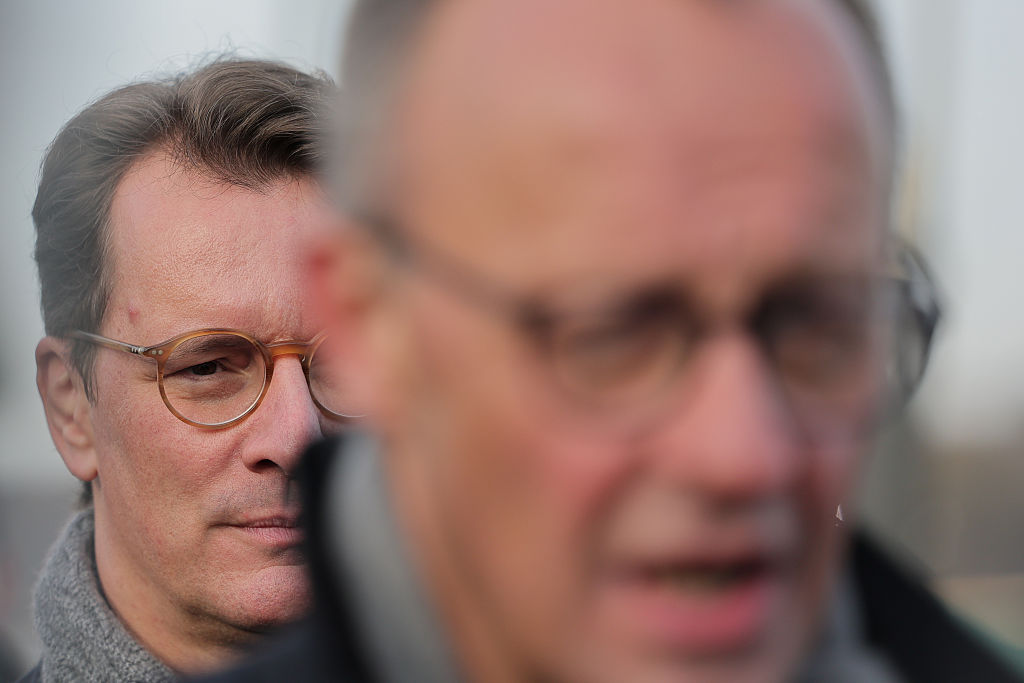
Which brings us to Hendrik Wüst, the minister-president of North Rhine-Westphalia and currently the only possible successor.
Hendrik Wüst stands behind Friedrich Merz at the opening of the Rahmedetal Bridge in North Rhine-Westphalia, with Berlin already whispering about who might one day stand in front. Photo: Rolf Vennenbernd/dpa/picture alliance via Getty Images
The Man Waiting in the Shadows
The ambitious 50-year-old is treated gently by the more left-leaning media. The Greens, with whom he governs in Düsseldorf, make a show of praising him. In short, he embodies the ideal politician for all those who would never dream of voting CDU. While Merz at least campaigned on a mildly bourgeois-conservative program, which he then threw overboard for an exclusive alliance with the SPD, the younger Wüst dispenses with such baggage from the outset. Between him and the Greens there is no dividing line, only a blur.
In his state, the government set up so-called “reporting offices” for citizens’ remarks that are not criminal, but not welcome either. He denounces the AfD as a “Nazi party”, although that did not prevent the party’s municipal election successes in his state. He is also energetically pushing ahead with the “decarbonization” of the former economic powerhouse of North Rhine-Westphalia in lockstep with the Greens: under his coalition’s plan, the last coal-fired power plants there are to be taken off the grid as early as 2030, rather than in 2035 as in the rest of Germany.
The expensive gas-fired power plants that are then supposed to take over exist so far only on paper. There is little of substance on the other side of the ledger. Germany’s most populous state depends on equalization payments from the still relatively strong southern states, above all Bavaria.
The unemployment rate in former working-class cities such as Gelsenkirchen and Duisburg is in double digits. The steel, car and pharmaceutical companies that once generated prosperity there are withering away. New industries are not emerging. Yet no demand for an end to the green “transformation” can be heard from Wüst.
With him as a replacement for Merz, the Greens would not only sit in the federal government. They would also have one foot in the Chancellery. That is, if the dire SPD numbers still allowed a three-party coalition of the CDU, SPD and Greens at all. As the leading figure, Wüst appeals above all, as noted, to the editorial writers of major newspapers, but to only a few potential CDU voters in the south and east of the country.
In one respect, however, the man from Düsseldorf resembles the luckless Merz. For him, only one conviction really counts: the conviction that he belongs at the top. If necessary, he would even strike a pact with the neo-communist Left Party. That would be the end of the CDU.
But it could also be the beginning of a Wüst chancellorship. Ever since the replacement debate began, he has been eyeing Friedrich Merz: a shadow man waiting for his moment.
Welcome to the comments section of the Štandard daily. Please take note of our guidelines, comments are moderated by us. You can contact the moderators at support@statement.com.
Participate in the discussion
Comments are available to subscribers only. If you'd like to join the discussion, choose a subscription starting at €6.72 per month.
All comments 0
Register
Comments are available to registered users only. If you'd like to join the discussion, register here.