Oxford Professor Cancels Lectures After Pro-Trans Protests
A case of cancel culture at Oxford University has reignited debate over the threat groupthink poses to academic freedom.
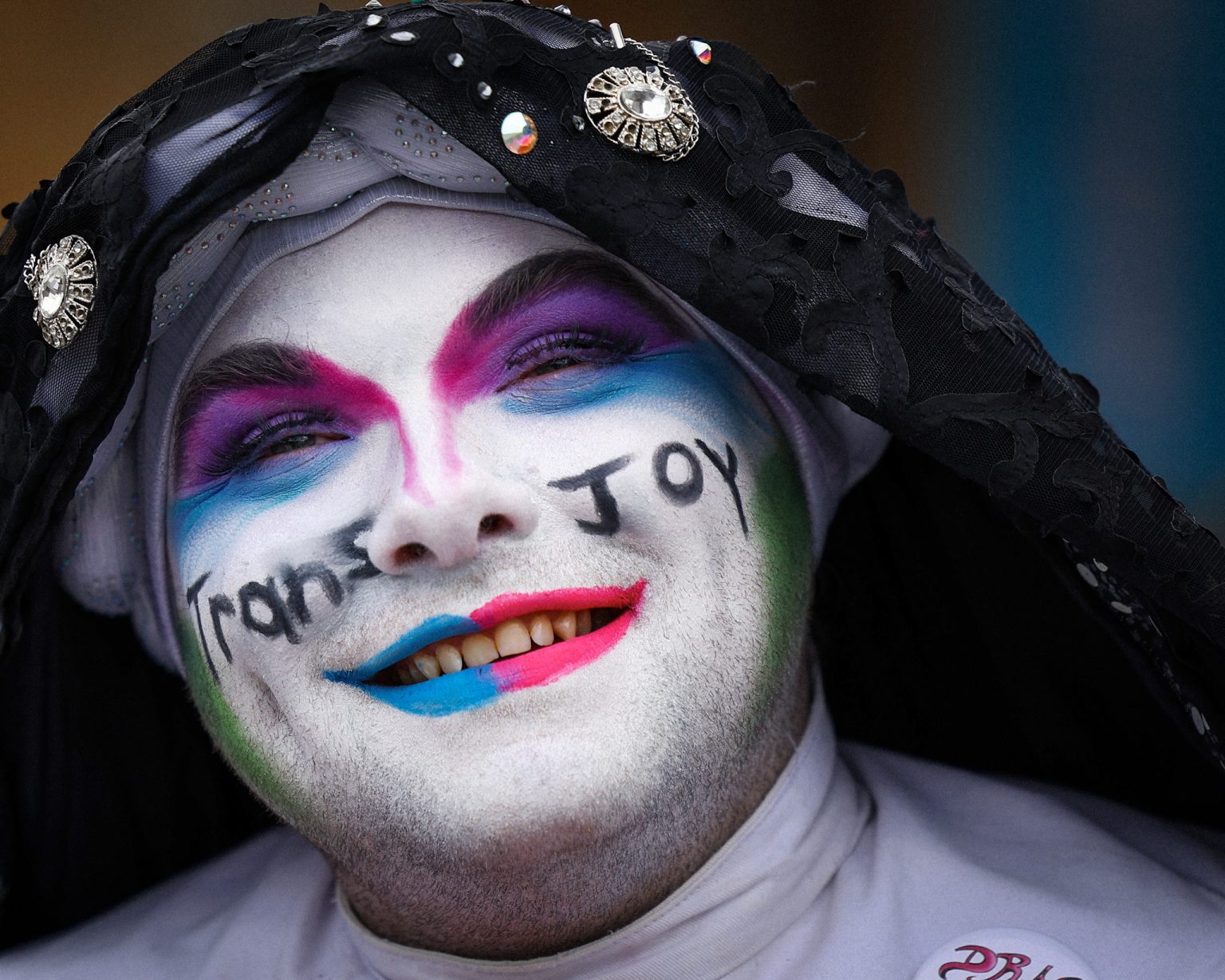
Disruptive trans protesters led to lectures at one of England’s most prestigious universities being canceled. Photo: Jeff J Mitchell/Getty Images
|
A professor at the prestigious Oxford University in England has canceled a lecture series on sex and gender identity due to “disruptive” pro-trans protests, he announced on 7 June.
The case has cast a spotlight on the difficulties facing rigorous academic debate in colleges and universities, at a time when polls suggest the prestige of third-level education is declining.
Professor Michael Foran was set to give a series of open lectures on the topic of sex, gender identity and the law at Oxford, one of England’s oldest universities. The lectures were voluntary, not mandated by any course, and open to the public.
However, Foran said in a post on X that after the first two talks in the series saw “escalating disruptive protests” that were tolerated by the university’s authorities, he had decided to cancel the remaining lectures.
Students should not face “bullying or harassment” when attending academic events, Foran said, accusing the protesters of choosing “disruption over intellectual engagement” grounded in “academic charity and rigour”.
Videos of the protesters show them standing beside Foran’s lectern, claiming that he “masks his transphobia behind a thin veneer of academia” and calling him a “bigot”.
Foran is a gender-critical academic who treats sex as a serious legal category and argues from that basis. His work was cited in the influential UK Supreme Court ruling last year that transgender women are not legally women for the purposes of the Equality Act 2010.
The Irish professor is not the first to run into trouble with cancel culture on a university campus in the United Kingdom. Prominent academics such as Nigel Biggar and Richard Dawkins have seen speaking engagements in the UK and Ireland repeatedly canceled, while philosophy professor Kathleen Stock resigned from her post at Sussex University in 2021 after sustained protests by students regarding her views on gender identity.
The protests have reignited debate around the challenges such actions pose to academic freedom in universities, with a number of prominent academics defending Foran.
Fellow Oxford University Professor Jon Pike highlighted the issue of academic freedom, calling for action from the university leadership, while Professor Dawkins wrote in a post on X that at university “all opinions are up for debate” and that if you cannot defend them rationally, “either they are indefensible or you are too stupid to defend them”.
The latest case highlights the challenge to rigorous academic study posed by attempts to shut down debate by, as Dawkins put it, forcing opinions on students and lecturers.
A comprehensive US study released earlier this month adds important detail to the debate, indicating the degree to which “ideological values” have been allowed to “distort the objective pursuit of knowledge” in these fields.
The study from Vanderbilt and Washington University examines the “state of scholarship” in the humanities and social sciences, seeking to answer the question: why has support for the humanities seen “dramatic erosion”?
As noted above, the imposition of ideology is one driving factor. While the authors reject this complaint in its “bald form”, every field they studied showed “some signs of the pathologies” already described.
The report calls for “institutional openness to a range of ideas”, saying it is an “indispensable condition” for serious scholarship. It pushes back against the predominantly, but not solely, left-wing ideologies that see academic work as being subordinate to political ends.
It gives the example of a claim put forward by the president of the American Anthropological Association that anthropology is a political project that challenges the “dominant commonsense of capitalist consumerism”.
The authors conclude that if the pursuit of disinterested inquiry is compromised, it “strikes at the very foundation on which a university should be based”, stressing the urgency of addressing this issue to safeguard the future of third-level education.
The degree to which disinterested inquiry may already be compromised is highlighted by recent surveys from American colleges and universities, which show the high level of self-censorship reported by lecturers.
At Yale, one of America’s most prestigious universities, almost a third of faculty said they avoid contentious topics in class. Meanwhile, a survey across Iowa’s public universities found that 32% of faculty did not feel their institution provides an environment for free expression of ideas.
The Yale study suggests the results highlight the challenges posed by the political climate since Donald Trump’s 2025 presidential election. However, a nonpartisan think tank that defends open inquiry, the Heterodox Academy, pushed back against such claims, noting that the surveys confirm a “troubling trend” that has been “gaining traction for years”.
A spokesperson for the academy suggested that the pressure stems not only from “external right political forces”, but also from “internal left homogeneity”. They said that both are “corrosive” to higher education’s purpose and require long-term solutions.
Confidence in universities is already declining rapidly, both in the UK and abroad. In Britain, the latest British Social Attitudes (BSA) survey released on 1 June found the proportion of people who believe a degree is not worth the time and money has jumped from 14% in 2005 to 34% in 2025.
Meanwhile, in the United States, polling from Gallup last year found that the value Americans place on college education has dropped sharply in the past 15 years. The percentage of polled Americans who view it as very important has dropped from a high of nearly 80% in 2010, down to 35% in 2025, while almost a quarter (24%) believe it is not too important.
Regardless of its cause, the clear decline in the value placed on education is not going to be helped by the scenes at prestigious colleges like Oxford, where open engagement with controversial ideas is allowed to be shut down by a small group of what have been described as “bullying” protesters.
Welcome to the comments section of the Štandard daily. Please take note of our guidelines, comments are moderated by us. You can contact the moderators at support@statement.com.
Participate in the discussion
Comments are available to subscribers only. If you'd like to join the discussion, choose a subscription starting at €6.72 per month.
All comments 0
Register
Comments are available to registered users only. If you'd like to join the discussion, register here.