Catholic Women’s Group Turns Against Protection of Unborn Children
A leading Catholic women’s association in Germany has issued a position paper on abortion that places the lives of unborn children at the disposal of others and attacks the pro-life movement. It is not the first time Catholic bodies in Germany have challenged Church teaching on the issue.
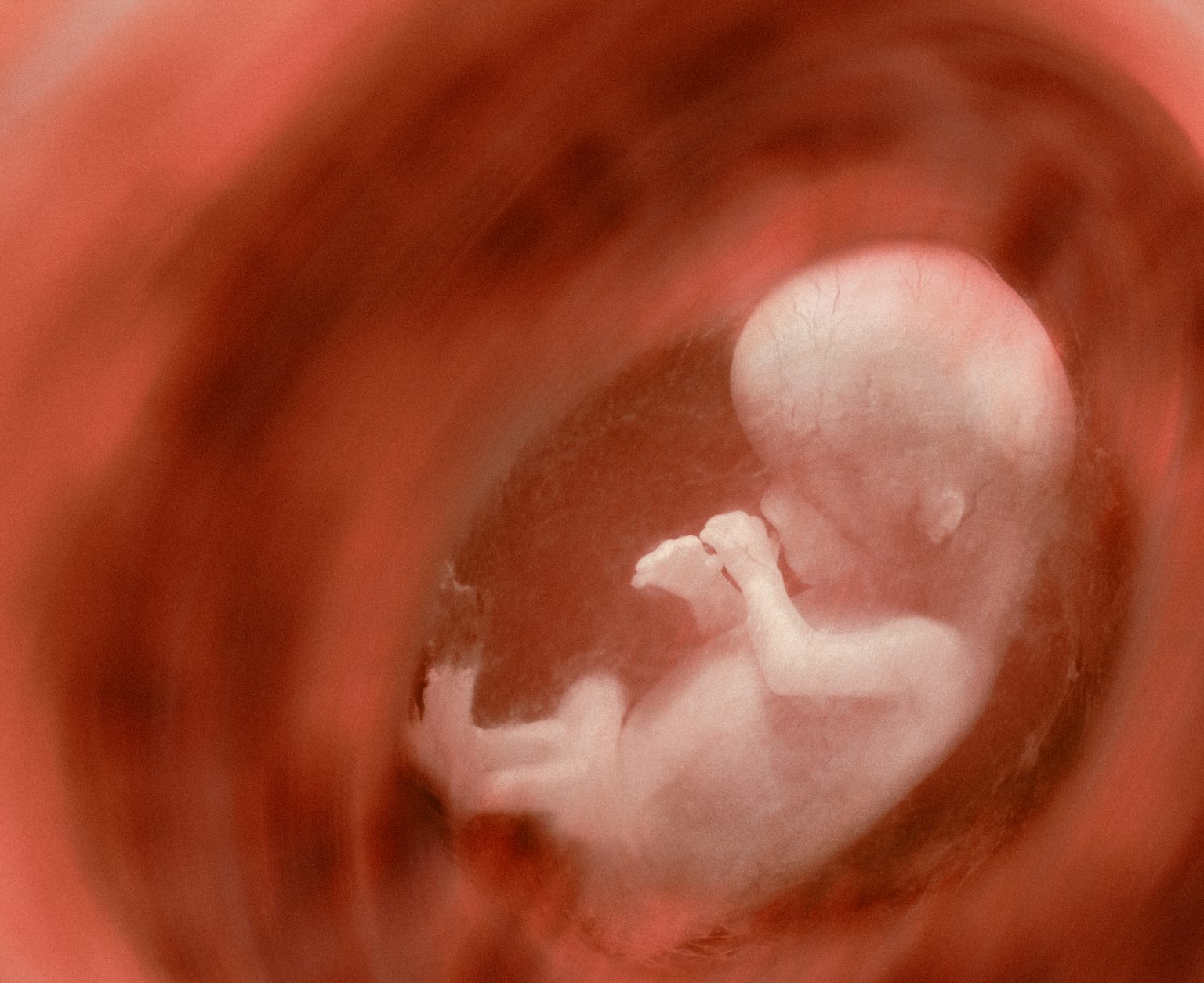
At 10 weeks, the unborn child is already visibly human. Photo: Getty Images
|
A few days ago, the federal assembly of the Catholic Women’s Association of Germany (kfd) adopted a new position paper on Section 218 of the Criminal Code, which governs abortion in Germany. According to its own figures, the kfd is the country’s largest Catholic women’s association, with 265,000 members. While the paper emphasizes the value of unborn life, it also calls for greater weight to be given to a woman’s right to self-determination in such situations.
The kfd even avoids referring to unborn children. Instead, it speaks in very general terms of “unborn life”. It is a small but substantively significant shift in language, one that diverts attention from the uniqueness and full humanity of the child already in the womb.
The linguistic shifts continue elsewhere in the document. The Catholic Church describes abortion in principle as a grave moral wrong. The kfd, however, prefers to speak of a woman’s “difficult personal conflict decisions” that must be respected. In effect, it calls for the mother’s final decision to be recognized as the new standard.
A Different Moral Framework
This is not merely a linguistic nuance, but a different moral framework, one that stands in clear conflict with Church teaching. Within the kfd, questioning Church teaching on abortion is not new. For years, members of the association have discussed further decriminalization or liberalization of abortion. What is new is that the association has now officially and publicly adopted the position as its own.
The document sets out far-reaching demands that would also affect numerous Catholic institutions and are barely distinguishable from positions long familiar from feminist or even far-left extremist groups. Contraceptives, it says, should be accessible to all, freely available and free of charge. Abortions should also be carried out in Catholic hospitals.
In addition, the performance of abortions should become a mandatory part of training for medical staff. The paper also calls for compulsory medical training and continuing education on abortion. The list of demands shows no regard for the conscientious decisions of Catholic doctors, midwives or nurses who refuse to take part in abortions.
The Alleged Shortage of Abortion Services
The association also calls for nationwide provision, meaning unrestricted local access to abortion services in Germany. It argues that any such shortage endangers the physical and mental health of women with unwanted pregnancies and must urgently be addressed.
This is misleading because the criticism rests on the claim that access to abortion is not guaranteed. In fact, Germany provides a state-backed list of more than 1,000 facilities and doctors that perform abortions.
Nor did the supposed shortage prevent abortion figures in Germany from rising again last year. The paper also demands that abortions be paid for by statutory health insurance. In practice, this already happens in the billing process, after which the health insurance funds are reimbursed by the state. The financing is therefore already secured by the taxpayer.
The demand for abortion to be treated as a “health insurance benefit” serves another purpose. The aim is to elevate abortion to the status of a perfectly normal “medical service”. Obstetrics and abortion would then both become mandatory services that all doctors and hospitals would have to provide, including Catholic ones. This demand, too, is familiar in Germany, but it is usually advanced by radical abortion advocates in the pro-choice lobby, not by Catholic women’s associations.
An Attack on the Pro-Life Movement
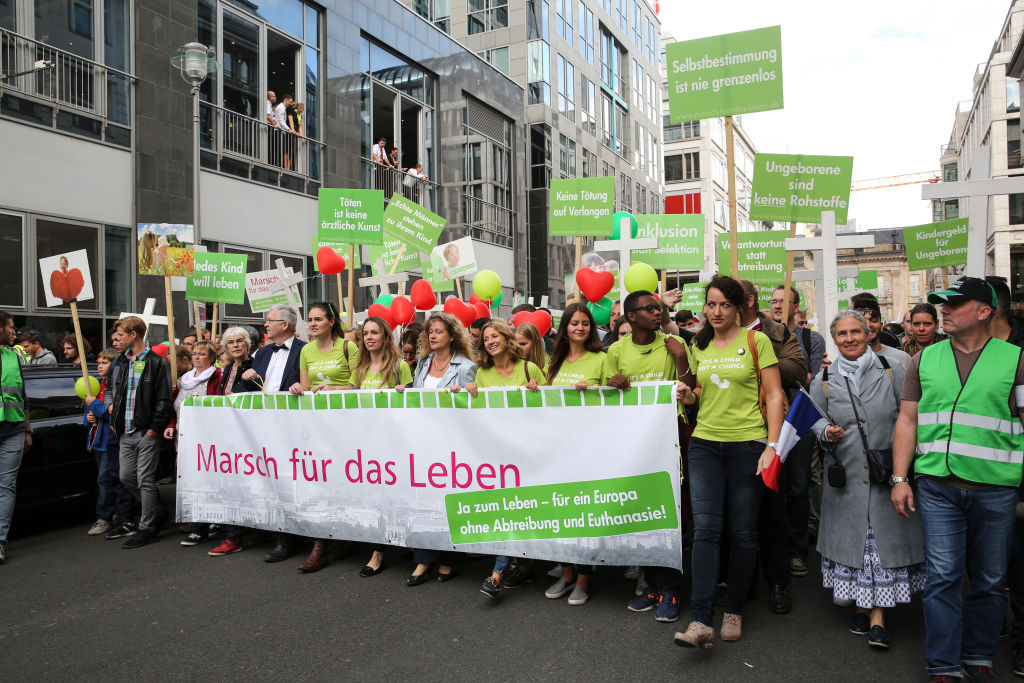
The kfd sharply attacks the pro-life movement and criticizes the annual “March for Life” as loud and aggressive. It alleges that “radical right-wing forces and religious fundamentalists question and attack sexual and reproductive rights” there. The association also writes that far-right and religious fundamentalists, associations and campaign groups of the “so-called pro-life movement” use every debate to restrict social freedom and the rights of women and marginalized groups.
Year after year, pro-life activists stand up for unborn children. The kfd now casts the movement as a threat. Photo: Po-Ming Cheung/ullstein bild via Getty Images
The attack is accompanied by accusations that the pro-life movement is waging a culture war against gender-political liberalization, defending a rigid sexual morality and resisting the right to physical and sexual self-determination.
A Hard-Won Compromise
In the Federal Republic of Germany, abortion is a criminal offense governed by Section 218 of the Criminal Code. The current law is the result of a hard-won political compromise. Under it, a woman may have an abortion in the first three months of pregnancy without facing punishment if she has first received counseling. Pope John Paul II prohibited Church counseling centers from issuing the certificate required for this purpose. Since then, they have continued to provide counseling, but do not issue the certificate.
Although the compromise is poor from the perspective of protecting life, even critics currently defend it because any change would worsen the status quo. This is clear because the narrow consensus is repeatedly challenged, politically and socially, by forces that want to legitimize abortion completely.
A Catholic association has now joined this circle of campaigners against the right to life.
A Persistent Challenge to the Protection of Life
Shortly before the end of its term, the federal government that was voted out of office in 2025 made the most recent attempt to legalize abortion.
The kfd paper now carries the same dispute into German Catholicism. In its newly published position paper, the women’s association takes a view of so-called crisis pregnancies that runs counter to the Church’s customary insistence on protecting human life in every phase, from conception to natural death.
The kfd is not alone within German Catholicism. Since the founding of the Catholic association Donum vitae in 1999, the papal ban on issuing counseling certificates has been circumvented. Donum vitae receives broad support from the Central Committee of German Catholics, the bishops’ recognized representative body for Catholic laity, which thereby sets itself against Church teaching on abortion.
When the Death of the Child Becomes an Option
The introduction suggests that carrying a child to term is of great value. The association’s officials describe pregnancy as a profoundly human event. The paper also states that, for the kfd, life begins with the fertilization of the egg. This carefully softened introduction, however, is completely contradicted by the hard positions and demands against life cited above. The kfd gives priority to the woman’s autonomous decision of conscience in a way that may, in an individual case, result in the deliberate death of the child.
Such a position is incompatible with Church teaching. The Church, too, defends women’s self-determination as an important element. Yet according to Church teaching, it must never be regarded as higher than the unborn child’s right to life.
There has so far been no official reaction from the Catholic Church in Germany to the document.
With its new position paper on abortion, the kfd remains on a familiar course of confrontation. In numerous doctrinal and moral questions, the association has already put itself in considerable tension with Church teaching. For example, the women’s association supports the view, erroneous according to Church teaching, that women can be ordained to the priesthood. On contraception, too, it takes a fundamentally different position from the Church.
Placeholder For Topreaded Placeholder For Topreaded
Placeholder
Placeholder
Placeholder For Topreaded Placeholder For Topreaded
Placeholder
Placeholder
Placeholder For Topreaded Placeholder For Topreaded
Placeholder
Placeholder
Placeholder For Topreaded Placeholder For Topreaded
Placeholder
Placeholder
Placeholder For Topreaded Placeholder For Topreaded
Here is placeholder for Article excerpt Here is placeholder for Article excerpt Here is placeholder for Article excerpt Here is placeholder for Article excerpt
Here is placeholder for Article excerpt Here is placeholder for Article excerpt Here is placeholder for Article excerpt Here is placeholder for Article excerpt
Here is placeholder for Article excerpt Here is placeholder for Article excerpt Here is placeholder for Article excerpt Here is placeholder for Article excerpt
Welcome to the comments section of the Štandard daily. Please take note of our guidelines, comments are moderated by us. You can contact the moderators at [email protected].
Participate in the discussion
Comments are available to subscribers only. If you'd like to join the discussion, choose a subscription starting at €6.72 per month.
All comments 0
Register
Comments are available to registered users only. If you'd like to join the discussion, register here.