
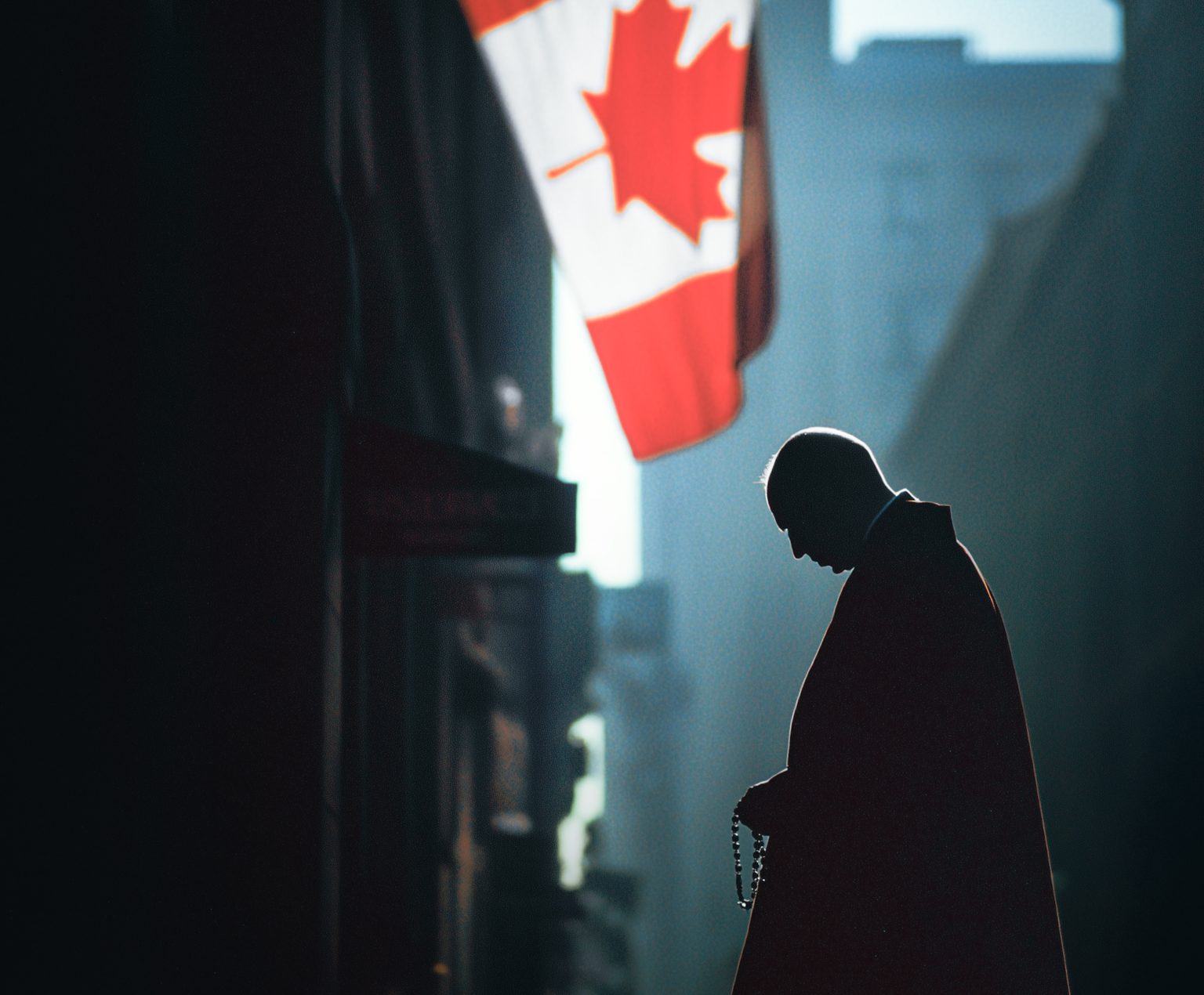
A new Canadian bill aimed at combating hate crimes would repeal a specific defense for opinions expressed in good faith on religious subjects or based on religious texts. Critics warn that the change could seriously undermine religious freedom.
The state is obliged to protect both the rights of sexual minorities and freedom of religion.
Bill C-9 would amend the Criminal Code by introducing new offenses targeting hate speech and hate crimes.
The Liberal government is broadly centrist but has significant progressive elements, particularly on cultural and social issues, minority protection, climate policy, reproductive rights and hate speech.
Mark Carney, leader of the Liberal Party of Canada, has served as prime minister since March 2025. The Liberals’ platform explicitly emphasizes equality and protection against discrimination based on sexual orientation, gender identity and gender expression. It also calls for additional funding for the LGBTQI+ International Assistance Program, support for people facing persecution abroad and an expansion of the Rainbow Refugee Assistance Partnership.
The Liberals currently hold 174 seats in Canada’s House of Commons. Bill C-9 has passed the House and was subsequently amended by the Senate. It is now back before the House for consideration of those changes.

In addition to creating new hate-related offenses, the version passed by the House introduces a relatively vague definition of hatred, which is central to the proposed criminal provisions.
Under the bill, hatred means “an emotion of an intense and extreme nature that is clearly associated with vilification and detestation”.
Defining such an abstract concept for the purposes of criminal liability is extremely difficult, if not impossible. The wording leaves considerable uncertainty over where courts will draw the line between extreme vilification and severe moral or religious condemnation.
Religious Freedom at Risk
The Canadian anti-hate bill directly infringes on freedom of religion.
In certain hate speech cases, the version passed by the House would repeal a specific defense for opinions expressed in good faith on religious subjects or based on religious texts, including the Bible, Quran and Torah.
The Criminal Code currently provides that a person may not be convicted if, in good faith, he expressed an opinion on a religious subject or one based on belief in a religious text.
If a person refers to his faith or religious texts when discussing a polarizing subject such as abortion or issues concerning sexual minorities, and prosecutors allege that the expression willfully promoted hatred, the speaker would no longer be able to rely on the specific religious defense.
The version passed by the House explicitly states that nothing in the relevant provisions may be interpreted as prohibiting statements on matters of public interest, including educational, religious, political or scientific statements made during a discussion, publication or debate, provided that they do not willfully promote hatred against an identifiable group.
The problem lies precisely in determining when religious expression crosses that boundary.
If, during a religious ceremony, a clergyman preaches passionately about preserving marriage between a man and a woman, the prohibition of abortion, certain sexual practices or inappropriate public conduct, while referring to religious texts, he would no longer be able to rely on the specific defense if accused of willfully promoting hatred.
Such statements may offend members of sexual minorities, but offense alone would not make them criminal under Bill C-9. If the threshold of willfully promoting hatred were met, however, the defense based on religious belief would no longer be available.

Religious Freedom Is Constitutionally Protected
The crux of the problem is that no one can predict where the legitimate protection of minority dignity ends and the criminal punishment of religious belief begins.
Religious freedom protects more than private belief. It also protects the right to express, teach, preach, explain and apply that belief to social issues. The Canadian Charter guarantees freedom of conscience and religion, as well as freedom of thought, belief, opinion and expression.
The bill risks telling believers that they may believe whatever they wish but must be cautious about stating publicly that their faith regards a particular sexual or family model as morally wrong.
They would lose one specific legal safeguard: the ability to argue that their speech was a good-faith opinion on a religious subject or was based on a religious text.
Although religious speech would remain protected by the Charter and other defenses, the change may have a chilling effect on preachers, teachers, parents, religious schools and church communities.

The Supreme Court Has Already Ruled on Hate Speech
Canadian case law requires particular caution when religious texts are cited in hate speech cases.
In the Whatcott case, which concerned Saskatchewan’s human rights legislation rather than the Criminal Code, the Supreme Court of Canada emphasized that the mere reading or publication of a religious text could objectively amount to hate speech only under unusual circumstances and in a specific context.
In the same ruling, the court rejected the overly broad wording “ridicules, belittles or otherwise affronts the dignity of”.
The bill’s ambiguous wording risks encouraging self-censorship, with speakers avoiding contentious subjects for fear that their words might be labeled hateful. Religious groups in Canada, including Catholic bishops, have raised precisely that concern.
Religious freedom is not merely the freedom to pray in private. It also includes the right to express publicly a moral doctrine that may be uncomfortable for the majority culture.
A democratic state must tolerate strong religious opposition to progressive social policies concerning sexual minorities, whose way of life may conflict directly with religious teaching.
The Canadian bill reflects the progressive mindset of politicians who seek to criminalize as hate speech any expression that does not align with their established ideology.
According to their vision, society must broadly tolerate parades in which naked people dance in front of children, yet refuse to tolerate religious beliefs that regard such conduct as immoral and unacceptable in public.