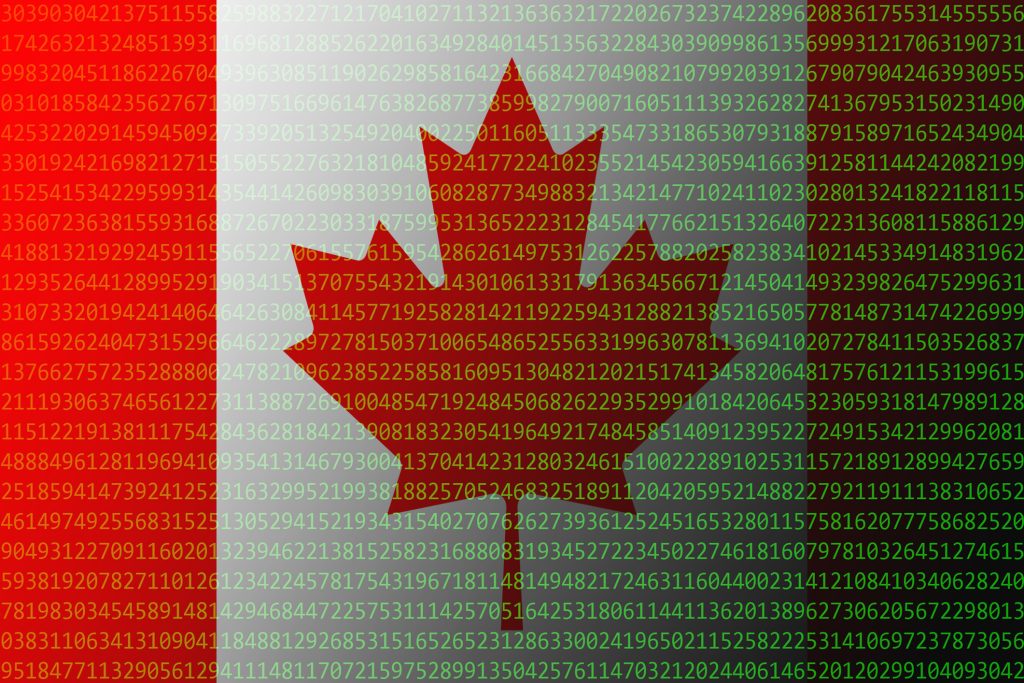
The Canadian state is moving to track and classify social media comments about members of parliament. The measure fits a wider pattern of digital laws built around control, surveillance and state direction, all wrapped in liberal-sounding security rhetoric.
Canada was long seen as a liberal model and as the opposite of the world’s totalitarian states. The rule of law, minority protection and civil rights were taken for granted.
More recent developments in the country give cause for concern. The danger is not that Canada is becoming a dictatorship. It is that a democratic state is beginning to treat freedom as an administrative matter, to be managed and negotiated. What was a fundamental right yesterday is already a risk today. What was public criticism yesterday may become a sensitive dataset tomorrow. A selection of recent legislative initiatives points to a clear trend against freedom.
The Canadian House of Commons is currently seeking to collect online statements about members of parliament and sort them by categories such as tone and identity-related content. The web portal Reclaim The Net reported on a database in which public posts about elected representatives are monitored and classified. When a parliament systematically catalogs statements about parliamentarians, it shifts the relationship between citizen and state. In a free democracy, citizens scrutinize their representatives. Not the other way around.
Security Matters, But It Is Not Everything
Canada has real security problems. In that respect, it is no different from other countries. Politicians are threatened. That is not new. Foreign influence campaigns exist. Nor is that an invention of the 21st century. Digital platforms can amplify hatred and intimidation. Yet in many cases, what is branded in such terms may simply be legitimate opinion.
The Canadian government has pointed to a Chinese Spamouflage campaign in which large numbers of comments were allegedly placed on the accounts of Canadian members of parliament. That is deeply irritating and should prompt a sharp diplomatic response. Anyone who instead calls for control over his own citizens has fundamentally failed to understand the concept of freedom.
A similar pattern was visible in Bill C-63, the failed Online Harms Act. The government presented it as a tool to combat child abuse, hatred and serious online harms. The official legislative entry shows that Bill C-63 was also intended to change criminal law and aspects of human rights law. Ottawa said platforms should bear greater responsibility for harmful content.
Civil liberties groups warned that the bill would open the door to sweeping regulation of legal speech. The British Columbia Civil Liberties Association (BCCLA) was especially critical of the criminal law provisions and warned against excessive penalties.
When One Bill Fails, the Next Quickly Follows
The fact that Bill C-63 stalled in parliament in early 2025 is not a final victory for free speech. It is more of a pause in the battle, since the government is considering a new version or revival of its online harms policy. The disastrous basic idea therefore remains alive.
Ottawa clearly does not merely want to prosecute criminal content. It wants to order and supervise the digital public sphere and subject it to new authorities. That is precisely where the danger lies. Not every regulation is censorship, but every regulation of free speech requires extreme restraint and tact out of respect for the citizens. That is especially true when terms such as hatred, harm or security are used to create political power over language.
Another example is Bill C-11, the Online Streaming Act. Officially, the law is intended to strengthen Canadian and indigenous content. The Canadian Radio-television and Telecommunications Commission (CRTC) says online streaming services must contribute to the Canadian broadcasting system. That is meant to sound culturally harmless.
The decision to influence digital visibility through regulation touches on free speech. When officials decide which content should be promoted, given greater visibility or financially favored, the state reaches into the architecture of attention. In a platform world, visibility is power.
Planned Economies Simply Do Not Work
The point is even clearer in the case of the Online News Act, Bill C-18. Here, the government wanted to force large platforms to negotiate with media outlets over payments. The supposed aim was to support journalistic work.
The result was an information disaster. Meta blocked news on Facebook and Instagram in Canada. During the 2023 wildfires, that made it harder to spread local information. Misleading clickbait on Facebook and Instagram continued to increase unchecked. Because planned economies do not work in the media sector either, the very law that was supposed to save journalism helped ensure that citizens found less reliable news on central platforms.
Other bad examples include Bill C-2, the Strong Borders Act. The government presented it as a security law against organized crime, border risks and money laundering. The bill could have made it easier to access online subscriber data, in some cases without a court order. Bill C-26 shows the same reflex.
Canada’s digital security laws are raising growing concerns over civil liberties. Photo: Anton Petrus via Getty Images
Cybersecurity is important. Critical infrastructure must be protected. All of those are legitimate concerns. Yet the protection of civil rights in the digital age is no less important.
Here, Canada stands out as the most prominent negative example in the Western Hemisphere. The National Security and Intelligence Review Agency (NSIRA) found that the Canadian Security Intelligence Service (CSIS) had not acted fully in accordance with the law in its handling of datasets and had retained Canadian information from foreign datasets as well as other database-like information.
That is no small matter. Data collection is a constant temptation. Purpose limitation and oversight can all too easily break down. If state authorities are given ever more digital powers, one must expect that their limits will not be observed cleanly.
Canada Leads, Many Follow
Canada is taking a path that many Western democracies are also following. At first glance, the justifications are always plausible. Protect children. Fight hatred. Curb disinformation. Promote culture. Save the media. Secure borders. Protect networks.
Yet taken together, they produce a different internet - an internet in which officials control and steer platforms, prioritize content, reshape news markets, gain easier access to user data and monitor political speech. The public becomes a managed public. Democracy becomes managed democracy. The citizen is turned from a political subject into an object of surveillance.
The danger does not lie in any single law. It lies in the pattern. Canada increasingly treats freedom as a security problem. The citizen no longer appears first as a free political actor, but as a source of risk, a producer of data and a case for moderation.
That is the quiet authoritarianism of good intentions. It does not come in boots. It comes with committees, guidelines, safeguards, databases and a great deal of morality and goodwill. A free society is not only permitted to prosecute crime and protect children. It is obliged to do so.
Yet it has an equal duty to protect free speech, especially uncomfortable, unruly, harsh and politically disruptive speech. Canada is now at a point where liberal rhetoric and state practice are drifting apart. If the country stays on this course, it will not suddenly become unfree. It will become less free step by step.
The German politician Guido Westerwelle once said that freedom always dies inch by inch. Canada is now offering a live demonstration of what that looks like.
Welcome to the comments section of the Štandard daily. Please take note of our guidelines, comments are moderated by us. You can contact the moderators at support@statement.com.
Participate in the discussion
Comments are available to subscribers only. If you'd like to join the discussion, choose a subscription starting at €6.72 per month.
All comments 0
Register
Comments are available to registered users only. If you'd like to join the discussion, register here.