But this is exactly where things get complicated. Catholic social teaching does not orbit a single moral issue. It spans the protection of unborn life, yes, but also the dignity of migrants, care for the poor, workers' rights, social justice, peace, international solidarity, the protection of creation and service to the common good.
That is why many Catholics could embrace Trump's record on protecting life while harboring serious reservations about nearly everything else he stood for. This tension is real, and it cannot be dissolved by uncritical loyalty or by blanket rejection.
The Stranger at the Border
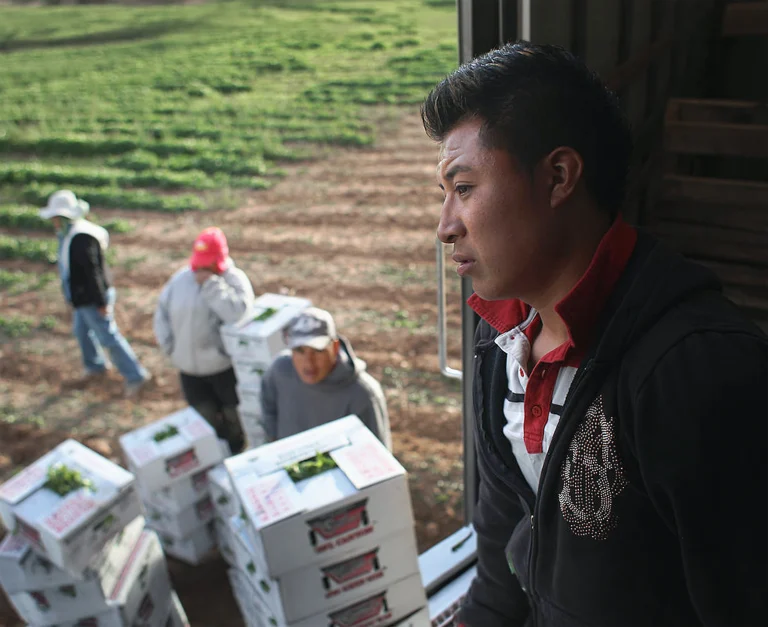
Migration policy throws this tension into sharpest relief. The Catholic Church recognizes a state's right to secure its borders, regulate migration and protect the common good. But it draws a hard line against any language or practice that strips migrants of their human dignity, tears families apart or paints every refugee as a threat.
Pope Francis made this explicit in his letter to the American bishops in February 2025. He reminded them that people and families living in fear of deportation must not be treated first as a problem, but recognized first as individuals with inalienable dignity.
Catholic criticism here is not partisan. It is anthropological. It is not really about politics at all. It is about the human person.
Who is a stranger? Who is poor? Who is vulnerable? Who needs protection?
Trump's instinct runs to national security and practical benefit. The Church's instinct runs to the dignity of the person.
These two lenses need not collide. A state can demand compliance with the law, restrict illegal immigration and protect its citizens. But the moment security curdles into contempt for the human person, the Church has to speak.
In the biblical imagination, a stranger is never just an administrative problem. Israel is commanded to love the stranger, for it too was once a stranger in a foreign land. And Christ goes further still, identifying himself with the stranger: "I was a stranger, and you welcomed me."
Here lies one of the sharpest fault lines between national self-preservation and Christian ethics.
The state asks, "Who belongs to us?" The Gospel asks, "Who is my neighbor?"
Peace, Power and the Cost of Victory
We find the same tensions playing out in peace and international relations. Trump speaks the language of power, deterrence, negotiation and the deal. Catholic teaching on peace stands on different ground entirely. It recognizes the right to self-defense, but it warns sharply against turning military power into an idol.
Peace is not simply the absence of war. It is the fruit of justice, truth, law and reconciliation.
Nowhere is this clearer than in Russia's aggression against Ukraine. Trump has repeatedly claimed he could end the war quickly. He has cast himself as the dealmaker who knows how to bend conflicts to his will through force and negotiation.
But the Christian tradition draws a sharp line between peace and a mere truce. Both St Augustine and St Thomas Aquinas defined peace as the "tranquility of order", a just arrangement of relations, not simply a halt to the fighting.
That raises an uncomfortable question: can a peace be called just if it rewards the aggressor and forces the victim to surrender its rights?
Ukraine did not start this war. It was attacked. Millions have been driven from their homes, tens of thousands have died, and entire regions lie in ruins. This is exactly why many Christians in Eastern Europe greet promises of a quick peace with skepticism, when that peace comes at the cost of truth and justice.
The same tension surfaces in the Middle East. Trump leans on strength, pressure and deterrence. The Christian tradition acknowledges the legitimate power of the state, but it remains deeply skeptical that strength alone can ever build a lasting peace.
Trump asks, "How do you earn respect?" The Church asks, "How do you build peace?"
These are not the same question.
America First, World Second?
Trump's view of humanity surfaces just as clearly in his economic policies.
The slogan "America First" is not just a foreign policy posture. It is an economic creed, a pledge to put national interest above all else. Under this logic, tariffs, trade restrictions and economic pressure become legitimate weapons for defending the country.
Many Americans welcome this. After decades of globalization, plenty of workers felt left behind. Factories shuttered, jobs drifted overseas, and entire regions watched their industrial base hollow out.
Trump gave these people a voice. That, too, is a key part of his success.
Catholic social teaching, however, pushes the question further. It accepts a nation's right to defend its own interests, but insists, just as firmly, that the economy exists to serve people, not the reverse.
Paul VI spoke of the obligations wealthier nations owe to poorer ones. John Paul II warned against a system that recognizes only winners and losers. Benedict XVI stressed the ethical stakes of globalization itself.
Trump thinks in terms of the nation. Catholic social teaching thinks in terms of the world. Trump asks, "What is good for America?" The Catholic tradition asks something larger: "What is good for the entire human family?"
In a globalized world, that question only grows more urgent. No country, after all, stands alone. Wars, migration, economic crises, climate change and energy security all spill across national borders.
The Church, in turn, reminds us that human responsibility does not stop at the edge of one's own country.
Attention as Power, Truth as Casualty
Perhaps the greatest challenge of Trump's presidencies has little to do with economic or foreign policy. Perhaps it runs deeper still: into his relationship with the truth itself.
Christianity never judges politics by results alone. It judges politics by its truthfulness. The biblical prophets were not strategists, campaign advisors or power brokers. Their calling was to speak the truth to kings, whatever the cost. Much of the criticism leveled at Donald Trump circles back, again and again, to exactly this point.
Even conservative observers who applaud some of his political decisions voice unease about his relationship with facts, institutions and public communication. Trump reads the logic of modern media better than almost any politician of his generation. He treats attention itself as a form of power. Provocation outpaces reasoned argument nearly every time. Exaggeration, oversimplification and confrontation have become the tools of his trade.
His supporters call it authenticity. His critics call it a threat to our shared grip on the truth.
The Christian tradition leaves no room for ambiguity here. St Augustine names truth as one of the pillars of a just order. St Thomas Aquinas counts truthfulness among the moral virtues. In his encyclical Caritas in Veritate, Benedict XVI warns that love without truth collapses into sentimentality, and truth without love hardens into cruelty.
A society can survive political mistakes. It can claw its way back from economic crisis. It can even survive war. What it cannot survive, in the long run, is the collapse of shared trust in truth itself.
From a Christian perspective, then, political decisions cannot be judged on usefulness alone. They must be judged on truthfulness too.
Two Popes, One Reckoning
Seen this way, it becomes easier to grasp why Donald Trump's relationship with Pope Francis, and later with Pope Leo XIV, spills well beyond the bounds of ordinary political friction. The roots of these clashes run deep, into fundamentally different understandings of the human person, society and the very nature of political power.
Pope Francis built his entire worldview from the periphery inward. His gaze stayed fixed on migrants, refugees, the poor, the victims of war, the marginalized, on everyone that political or economic competition shoves to the edges.
His criticism of walls and isolationism was never political naivety. It was rooted in the Gospel itself. For Francis, a migrant was never a symbol of lost control, but a living test of Christian love for one's neighbor.
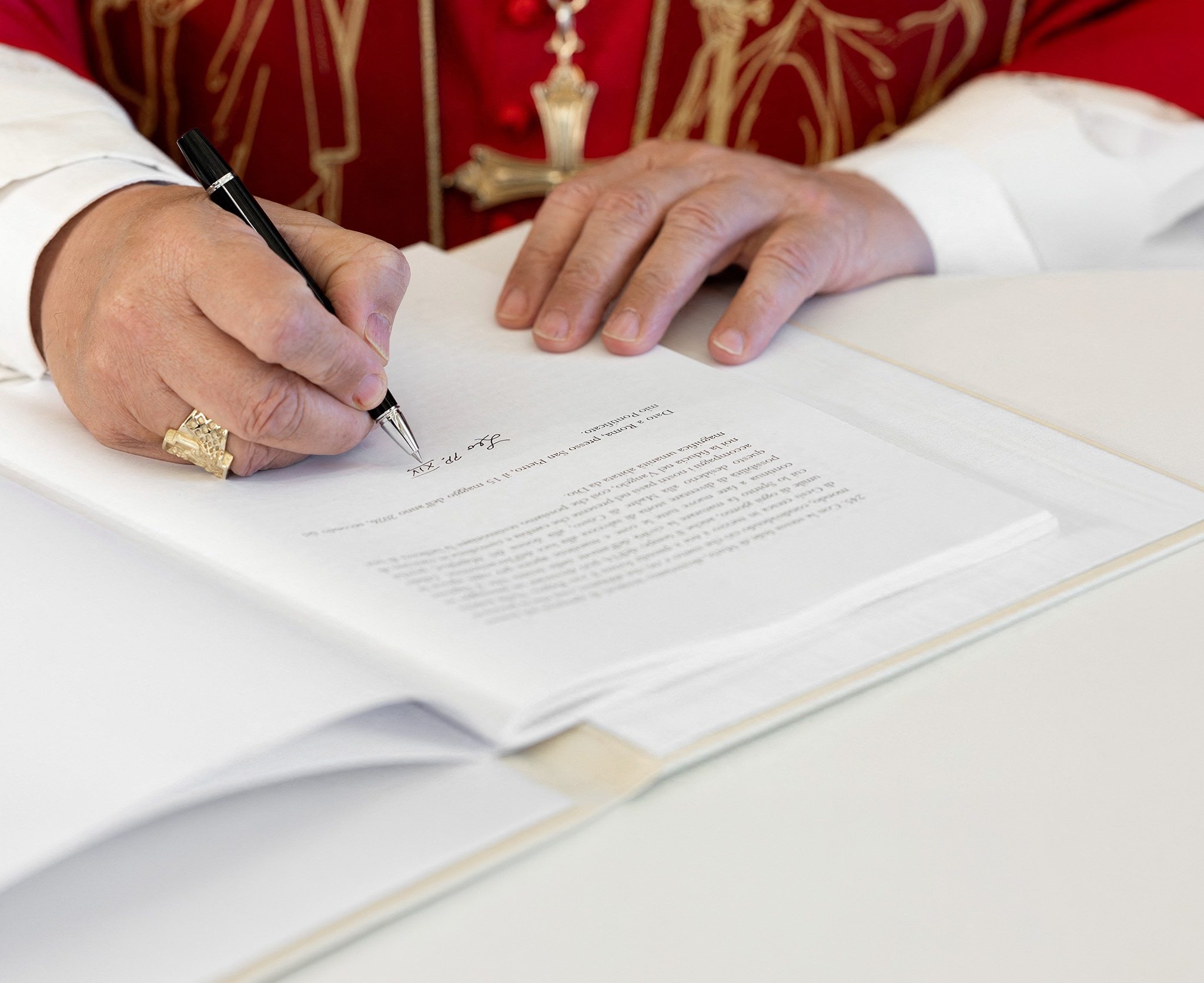
With Leo XIV, the debate takes on an entirely new charge. For the first time in history, an American pope sits across from an American president. That alone sharpens the dispute considerably. Leo XIV knows the religious culture of the United States from the inside out, its strengths as well as its temptations.
His very first words after his election, "Peace be with you!", already signaled where his pontificate was headed. In his message for the World Day of Peace 2026, he spoke of an "unarmed and disarming peace".
Leo XIV embodies a vision of the Church that refuses nationalism in favor of the universal. For him, the Church is not a religious amplifier of national power, but a sign of unity, a voice for peace and a defender of human dignity.
And here the contrast with Trump comes into full view. Trump often treats religion as fuel for national self-affirmation. Leo XIV treats the Church as the conscience that interrogates all power, including his own.
Trump speaks of power. Leo speaks of peace. Trump mobilizes identity. Leo insists on universality. Trump demands loyalty. The Church demands an examination of conscience. Trump tends to sanctify political leadership. The Gospel humbles all earthly power.
When Loyalty Replaces Faith
But it would be a mistake to see Donald Trump merely as the cause of today's problems. He is also a symptom of them. His rise lays bare a deeper crisis already running through Western Christianity.
Millions of Christians have come to feel culturally, socially and politically displaced. Many sense that their values, beliefs and traditions no longer have a foothold in public life. Churches were emptying out. Religious practice was fading. Traditional family structures were buckling. Moral certainties were unraveling. Into this vacuum, Trump stepped forward as a defender of a world many Christians felt was slipping away.
These reactions are understandable. But they demand a harder question: Is defending a culture, on its own, a Christian witness?
Christianity is not a culture war movement. It is not a political ideology. It is not a national identity. Above all else, it is the proclamation of the Gospel.
Church history keeps relearning the same lesson: Christians are forever tempted to mistake political power for the Kingdom of God. The temptation surfaced as early as the Constantinian era. It surfaced in the religious wars. It surfaced in the nationalisms of the 19th and 20th centuries. And it surfaces again today.
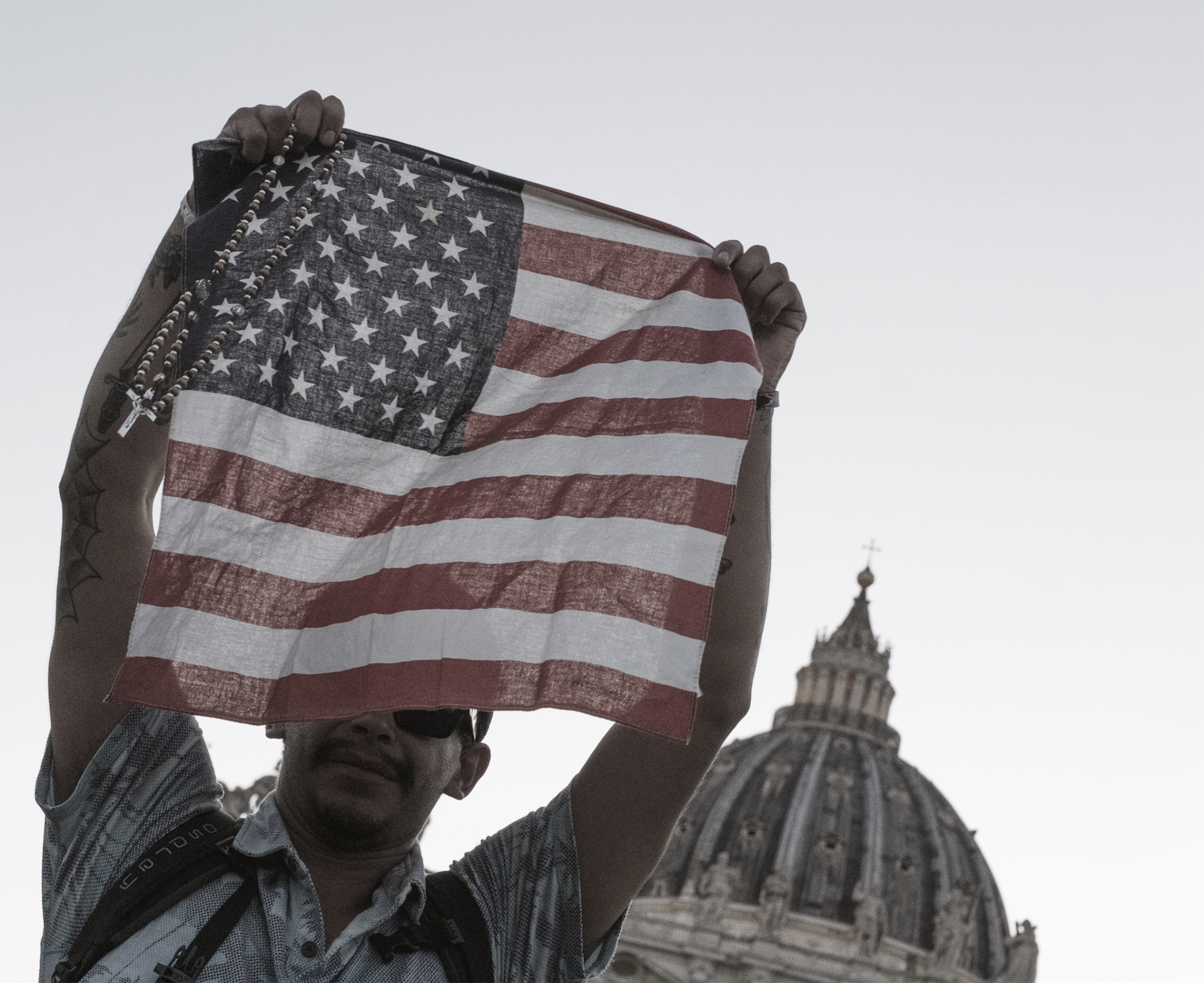
The danger is not Christians entering politics. The danger begins the moment they confuse political loyalty with faith itself. At that point, criticism becomes impossible.
The political leader turns untouchable. The Gospel turns into a tool of political convenience.
This is exactly why Trump poses a genuine test for Christianity. He forces believers to decide what matters more: cultural influence or the credibility of the Gospel? Political victory or spiritual truth? The grasp for power or the act of bearing witness?
Political compromise is unavoidable. Every democracy runs on it. But Christianity forfeits its soul the moment it mistakes power for salvation.
No President Is a Messiah
This reflection does not end with the question of whether Donald Trump is a Christian. After all, no historian, no political scientist and no theologian can settle that question for good. That answer belongs to God alone.
The real question cuts differently: Does the way he wields power meet the standard of the Gospel?
The answer has to hold both sides at once.
Trump has made several political decisions many Christians have, for good reason, welcomed: strengthening protections for unborn life, defending religious freedom, pushing back against aggressive secularism and giving voice to groups who felt culturally sidelined.
At the same time, his governing style and significant stretches of his policy raise hard Christian-ethical questions: a tendency to polarize society, an uneasy relationship with the truth, national interest placed above the common good, religious symbols turned into political props, contradictions in his approach to the war in Ukraine, the harshness of his immigration policy, his fixation on power and strength, and a worldview that flattens politics into mere victory or defeat.
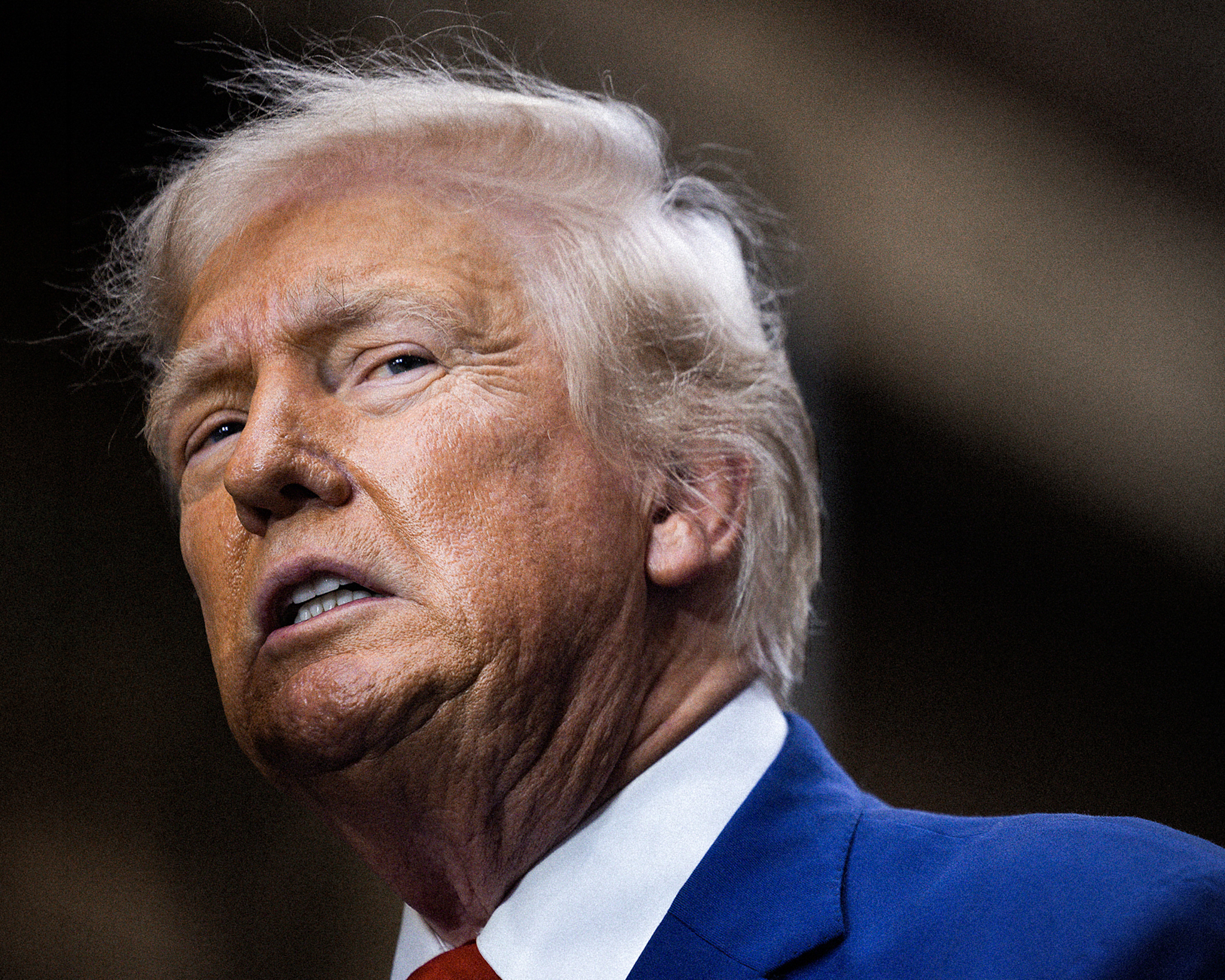
Trump, then, is neither a Christian hero nor a demonic figure. He is something closer to a touchstone, a test of how Christians judge politics itself. A test of whether their criteria come from the Gospel or from the culture war. A test of whether the Church will measure every form of power, even the power closest to it, against the standard of the Gospel.
For Christianity recognizes no political messiah. It recognizes no president, emperor or leader capable of delivering salvation. It recognizes only the crucified Christ.
And it is precisely from the vantage of the cross that all power is cut down to size. There, what decides is not the triumph of the strong, but God's love for the wounded, the lost and the humiliated.
The ultimate authority is not the state. Nor the nation. Nor success. Nor victory. The ultimate authority is God's truth.
The first part of the essay is titled Donald Trump: A Touchstone for American Christianity.
First published on DoKostola.sk, a Slovak Catholic website.
Archimandrite Dr Andreas Abraham Thiermeyer is a German Roman Catholic priest and scholar of the Eastern Churches, best known as the founding rector of Eichstätt’s Collegium Orientale, which he led from 1998 to 2008.