The Damning UN Report Mainstream Media Will Never Show You
For mainstream media in the West, the UN is an incorruptible font of wisdom, goodness and noble intent. In reality, it is as crooked as any other institution, a new report reveals.
When Francesca Albanese, the UN’s special rapporteur on the Palestinian territories, traveled to Australia and New Zealand in November 2023, the official story left out something that most people might have considered rather important.
According to a new UN Watch investigation, the United Nations covered her international flights. But the hotels, internal travel, meals, events and the rest of the visit? That appears to have been bankrolled by partisan pro-Palestinian advocacy groups – and never properly declared by Albanese or recorded in the official UN file.
In any normal institution, this would trigger basic questions. Who paid? What did they get for their money? Was there a conflict of interest? Did the official disclose it? Indeed, if this reporter were to take a trip to a conflict zone, funded by one party to the conflict, and then not disclose it to his readers or superiors, one might expect him to be in trouble. At minimum, serious questions would be asked.
At the United Nations, the process is simpler: nothing much happens. Nobody cares.
Extreme Views the Norm
Of course, Albanese’s views on the Middle East are so extreme that one might expect them to be identical regardless of who paid for her trip. But even then it surely says something about how much perceived value Palestinian groups derive from her existence that they are willing to fund her. Again – not a question that appears to trouble the UN.
That small example captures the bigger scandal documented in From Watchdogs to Ideologues, UN Watch’s new report on the Special Procedures system – the network of “independent experts”, special rapporteurs and mandate-holders who are routinely presented to the public as neutral voices of international human rights authority.
Kofi Annan once called these roles the “crown jewel” of the UN human rights machinery. Yet the report takes the shine off that jewel, presenting to many of us what we already knew: that the roles are politicized, unaccountable, financially opaque and most often used as a vehicle for anti-Western and anti-Israel activism.
There are currently 59 Special Procedures mandates – 46 thematic and 13 country-specific. The people who hold them are technically unpaid volunteers, yet they enjoy UN staff support, travel funding, official press releases, access to governments and courts and, above all, the authority of the UN brand. Their findings are not legally binding, but they are cited by judges, governments, universities, NGOs and media outlets as if they were objective statements of fact.
That is what makes the problem serious.
TikTok Activism Masquerading as Expertise
A random activist on social media can say what he likes, but with little by way of global impact or authority. By contrast, the UN special rapporteur can take the same claims, run them through the UN machine and hand them back as “United Nations findings”. UN Watch calls this the “evidentiary laundering effect”. Unverified, politically partisan claims go in one end; media-friendly institutional credibility comes out the other.
In essence, the whole process is designed – per the report – to turn the wildest ideas of far-left radicals into concrete fact, which is then reported as such by the media. “A UN report has found…”, and so on. The plebeians at home are to understand that they are reading the words of learned experts drawn from the global academic elite, with no partisan agenda beyond the truth.
But the image is a lie.
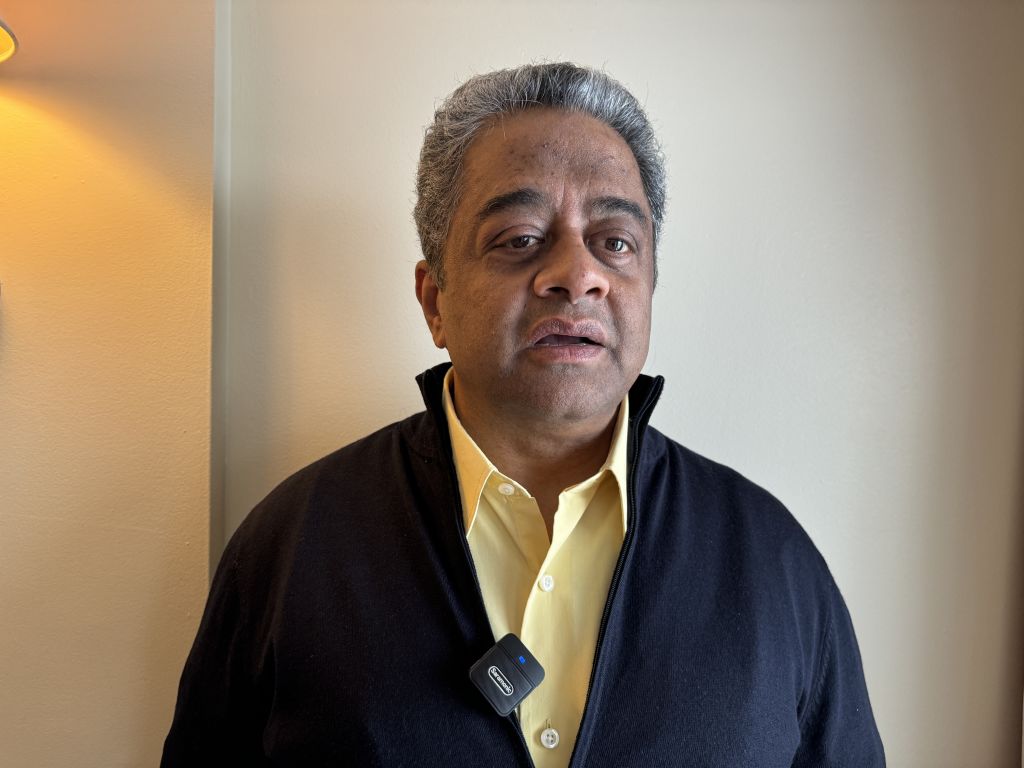
UN housing rapporteur Balakrishnan Rajagopal has described America as a “rogue state”. Photo: Muhammet Ikbal Arslan/Anadolu/Getty Images
The report profiles 13 mandate-holders. Its conclusions are on one level unsurprising and yet, on another level – due to the sheer scale – entirely shocking. Many of the profiled mandate-holders display a pervasive pattern of anti-Western ideological bias, marked by hostility to democratic states and a striking lack of curiosity about the crimes of authoritarian regimes. The United States and Israel sit at the center of their moral universe. China, Russia, Iran, Cuba, Venezuela and North Korea receive something between gentler treatment and outright admiration, depending on the individual.
Some of the language is almost comic, were the consequences not so serious.
Ben Saul, special rapporteur on counterterrorism and human rights, has called the United States a "dystopia” and a “gangster state”. Balakrishnan Rajagopal, the housing rapporteur, has described America as a “rogue state”. Gina Romero has compared Guantanamo Bay to a Nazi concentration camp. Tlaleng Mofokeng, special rapporteur on the right to health, falsely accused the United States of occupying Haiti.
This is the language of the most tiresome kind of student politics and far-left activism wearing a UN badge.
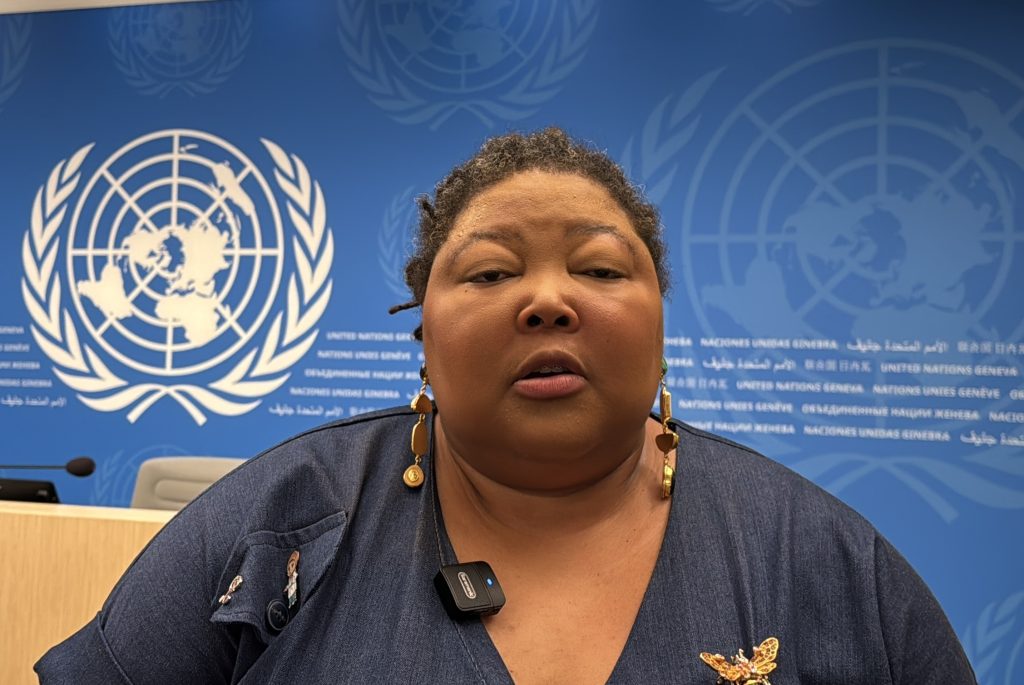
UN health rapporteur Tlaleng Mofokeng has faced scrutiny over her online conduct and anti-Israel activism. Photo: Muhammet Ikbal Arslan/Anadolu/Getty Images
Mofokeng is a particularly striking case. She has used her social media accounts to refer to people as “that hoe” and a “disgusting elder”, and told a vaccine critic to “shove it up your a**”. South Africa’s Health Professions Council found her guilty of misconduct for abusive and inappropriate online behavior. The UN did nothing. In fact, it showered her in typically glutinous praise.
Her comments on Israel are no better. She has endorsed BDS, called for arms embargoes against Israel, used the slogan “from the river to the sea” alongside a map that erases the Jewish state, and stated that Hamas fighters “are not terrorists”.
This is not some blue-haired TikTok activist with a nose ring and Mao posters on her bedroom wall. She is a United Nations special rapporteur.
The Money Trail of Woe
The funding picture is equally damning. The entire premise of these offices is independence. Yet outside donors – governments, foundations and NGOs – can and do fund specific mandates, projects, travel, staff or research. The UN itself has recognized the risk for years. The Human Rights Council has called for transparency. The UN Board of Auditors warned as far back as 2011 against individual mandate-holders taking money from interested public or private donors.
The practice continues anyway.
Between 2015 and 2023, the Ford Foundation provided more than $6m in external funding to several mandate-holders. George Soros’s Open Society Foundations contributed around $3m. In one documented case, Open Society publicly admitted that a 2017 donation helped steer a special rapporteur’s choice of topic for her annual thematic report.
In any normal public body, this would be recognized immediately as a problem. At the UN, it is treated as business as usual.
Perhaps the most egregious example is Alena Douhan, special rapporteur on unilateral coercive measures – UN-speak for Western sanctions on dictatorships. Her office received $979,997 from China, $265,000 from Russia and $50,000 from Qatar – more than $1.3m in total – with no proper public disclosure of how the money was spent.
Her mandate was created in 2014 by a resolution pushed by Iran on behalf of the Non-Aligned Movement, over Western objections. Unsurprisingly, Douhan portrays China, Iran, Syria, Cuba, Venezuela and Zimbabwe as victims of Western oppression while showing little interest in corruption, repression or authoritarian mismanagement inside those countries.
The result is a system in which dictatorships can effectively help fund the offices of UN experts who then produce reports blaming the West for the consequences of dictatorship.
UN Watch’s recommendations are as sensible as they are certain to be entirely ignored. It says that democratic states should form a proper accountability coalition, publicly assess these rapporteurs, reform the appointment process, ban earmarked external funding, require full disclosure of all external support and stop treating deficient UN reports as authoritative in international litigation. All very noble and worthy, but it may as well propose the creation of flying pigs.
Media Worship of the UN
The implausibility of their recommendations being adopted aside, UN Watch does valuable work precisely because so few others are willing to do it. Most international NGOs and media treat the UN human rights system as a kind of priesthood. Most journalists, even those who know the truth, present UN special rapporteurs as neutral, impartial experts. Most governments, even democratic ones, are too timid to confront the system directly, and besides, take what they like from its recommendations and ignore the rest: almost every state – democratic or otherwise – simply cites the UN when it suits them, and ignores it when it does not. Therefore, there is little interest in, or impetus for, reform.
The public should understand what is actually happening. A UN title does not magically convert an activist into an impartial expert. A UN report does not automatically become truth. A UN press release is not evidence. And a human rights system that disproportionately targets democracies while giving dictatorships an easier ride is not a human rights system worthy of the name.
In Europe, where UN pronouncements on Israel and Palestine are often treated by parts of the political class and media as near-gospel, this matters. These are not neutral arbiters. They are participants in a contest, and the funding trails and the track record show which side many of them are playing for. A smidgen more healthy skepticism would not go amiss.
Yet one thing is certain: while this report by UN Watch is devastating, it simply will not be covered in the mainstream press of most Western countries, where there is precisely zero interest in treating the United Nations as anything less than the world’s incorruptible moral guardian.
Welcome to the comments section of the Štandard daily. Please take note of our guidelines, comments are moderated by us. You can contact the moderators at support@statement.com.
Participate in the discussion
Comments are available to subscribers only. If you'd like to join the discussion, choose a subscription starting at €6.72 per month.
All comments 0
Register
Comments are available to registered users only. If you'd like to join the discussion, register here.