Given Germany's history, this caution is understandable. The legacy of National Socialism has left German institutions particularly sensitive to movements that emphasize ethnic identity or exclusion. Few churches elsewhere in Europe carry the same historical burden.
Yet many practicing Christians who support the AfD reject the suggestion that they are motivated by extremism. Some are protesting against mainstream politics, others worry about migration, cultural cohesion or economic insecurity. Whether those concerns are well founded or not, many insist they deserve engagement rather than moral condemnation.
Different European Approaches
Germany is not the only country confronting this dilemma, but its response is among the most uncompromising. Elsewhere the picture is more varied.
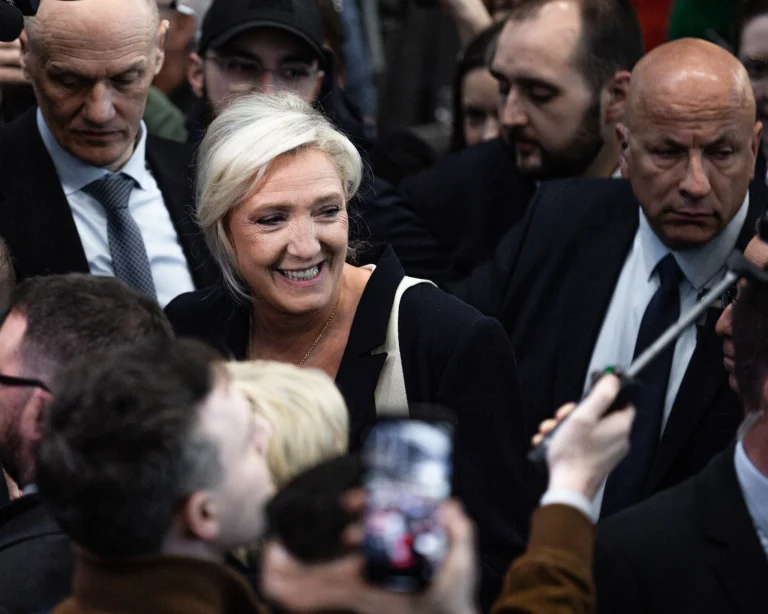
French bishops have generally preferred dialogue, seeking first to understand Catholics who vote for nationalist parties before explaining where political positions conflict with the Gospel. Austrian bishops have likewise maintained contact with the Freedom Party while warning against attempts to use Christianity as a political instrument.
In parts of southeastern Europe, Orthodox churches have traditionally maintained closer ties to national identity. Even there many church leaders had to distinguish between legitimate patriotism and extremist nationalism.
These different approaches illustrate that there is no single European model. The common challenge is finding a way to oppose exclusionary politics without closing the door to believers who feel increasingly alienated.
A Growing Pastoral Problem
Many conservative Christians believe that their concerns receive less sympathy than those of other groups. They see churches speaking passionately about inclusion, dialogue and listening while showing less willingness to engage with anxieties over migration, family life or cultural continuity.
Whether this perception is entirely justified is almost beside the point. It exists, and it is influencing the relationship between many believers and church institutions.
Long-term exclusion rarely moderates people. More often it deepens resentment and strengthens protest movements. That does not excuse radicalization, but it helps explain why some Christians increasingly look outside traditional church and political structures for representation.
The Church's Responsibility
Christianity is universal. It transcends nationality, ethnicity and political allegiance. Yet Christianity has never required believers to abandon love of country, language or historical tradition. Throughout history churches have prayed for their nations while insisting that no nation can take the place of God.
The crucial distinction is therefore between patriotism and nationalism. Love of one's homeland is compatible with Christian teaching. The absolutization of national identity is not.
That distinction is becoming harder to maintain in an increasingly polarized political climate. Migration, identity and national sovereignty are complex political questions on which sincere Christians may legitimately disagree. If every disagreement is treated as a moral failing, meaningful dialogue becomes impossible.
Final Assessment
European churches are being tested by profound political and cultural change. Germany's determination to resist nationalist ideology reflects a unique historical responsibility that should not be forgotten. At the same time, churches cannot ignore the growing number of practising Christians who feel unheard or politically abandoned.
The Church's task is neither to endorse nationalist politics nor to dismiss the concerns that lead many believers towards them. It must defend human dignity while remaining a place where disagreement can be discussed without immediate moral condemnation.
Perhaps the deepest lesson of the current debate is that not every process of radicalization begins with ideology. Some begin with the feeling that no one is listening anymore.
First published on DoKostola.sk, a Slovak Catholic website.
Archimandrite Dr Andreas Abraham Thiermeyer is a German Roman Catholic priest and scholar of the Eastern Churches, best known as the founding rector of Eichstätt’s Collegium Orientale, which he led from 1998 to 2008.