Teams’ Ethnic Makeup Fuels Identity Debate at World Cup
A former Spanish PM has stoked the flames of a debate rumbling throughout the 2026 football World Cup: the question of race and national identity.
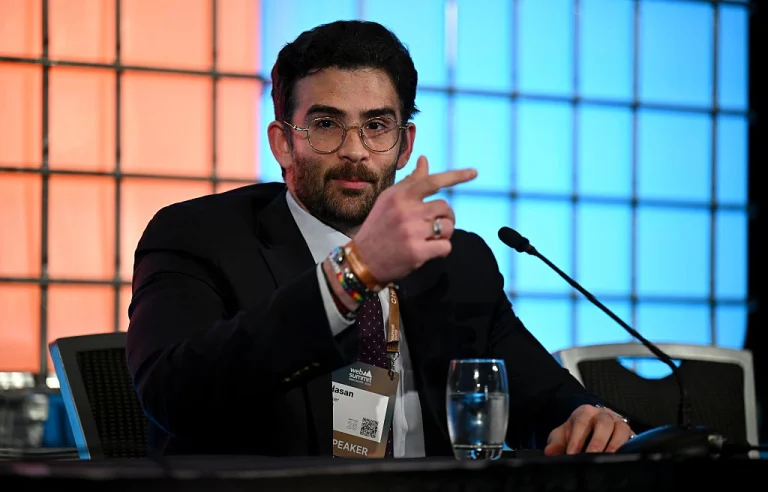
Spain’s former prime minister Mariano Rajoy has reignited a debate over race and national identity at the World Cup after writing that the French have an excellent squad but “don’t have any French players”.
The remark appeared in a preview of the World Cup semi-final between France and Spain on Tuesday 14 July and prompted accusations of racism and xenophobia in both countries. Yet Rajoy’s argument and the response to it point to a broader question raised by the tournament: how modern migration is reshaping national identity while football continues to reflect the enduring strength of European ideals.
The piece largely focused on the relative strengths of the teams, apart from Rajoy’s comment on the composition of the French squad. The remark immediately sparked controversy, with critics in Spain and France arguing that, given 23 of France’s 26 squad members were born in the country, Rajoy was being “racist and xenophobic”.
France’s Minister Delegate for Equality between Women and Men and for the Fight against Discriminations Aurore Bergé wrote on X that “the repeated racist outbursts are intolerable”.
However, Rajoy finds an unlikely ally for his position in the form of a prominent African politician and former prime minister of Senegal, Ousmane Sonko. Before the France-Senegal World Cup encounter, Sonko stated: “It’s only a football match. But if you want to look at the match politically, then whoever wins, Africa will have beaten Africa.”
Sonko went on to say that Africans should take confidence from the makeup of the French team, which is largely composed of players from migrant backgrounds, mostly African.
“Let’s continue on our path, all together”, French captain Kylian Mbappé posted on X.
Sonko’s and Rajoy’s comments tie in to broader commentary on the ethnic composition of the European teams, with some pundits noting the preponderance of players from migrant backgrounds in teams like England, Germany, France and Switzerland.
The commentary is not solely from the right – for instance, the fact that eight German players out of a squad of 26 had African heritage was championed by left-wing politicians and United Nations agencies as a symbol of a new generation, suggesting it affirmed the work of anti-racist activists.
Football and Migration
The makeup of the teams at the World Cup has fed into the debate, highlighting the significance of current patterns of migration and the legacy of colonial links between Europe and Africa.
This is exemplified by the statistic that almost a quarter of the more than 1,200 players selected for national teams were born in a different country from the one they will represent.
France alone has contributed 99 players to the World Cup, spread across teams like Morocco, Senegal and Tunisia. Out of the 48 teams playing at the tournament, eight of these squads consist of a majority of foreign-born players.
An incredible 96% of debutant Curaçao's players were born abroad, as were 85% of the Democratic Republic of the Congo’s and 73% of Morocco’s, while one of the breakout teams this year, Cape Verde, also relied on foreign-born players.
Football's governing body, the Fédération Internationale de Football Association (FIFA), allows players to play for teams other than their place of birth or present citizenship, provided they satisfy FIFA's eligibility rules, including through ancestry or residency.
This issue has caused controversy before, and not only in Europe. In 2014, Brazilian fans relentlessly booed Brazil-born Spain attacker Diego Costa for choosing to represent the European team.
Professor Gijsbert Oonk, a Dutch historian and expert in migration and identity studies at Erasmus University in the Netherlands, told the BBC that some argue fans “cannot identify with a country anymore” if its team relies on foreign-born players.
For the players themselves, it also demonstrates the degree to which national identity can be divided or diluted by immigration.
For instance, Ibrahim Mbaye had played for France at all youth levels, but surprised many when he announced last year that he would play for Senegal, his mother's birth country, calling it “a decision from the heart”.
Breel Embolo’s muted celebrations after scoring against his country of birth, Cameroon, at the 2022 World Cup met with mixed reactions.
Adopted Versus Ancestral Home
The internal struggle between the adopted and ancestral homes was also evident in the 2022 World Cup, when Switzerland attacker Breel Embolo, born in Cameroon, became the first player in the tournament's more than 90-year history to score against his own birth nation.
Instead of leaping in triumph and delight, he briefly lifted his hands in an almost apologetic gesture.
"I knew that if I scored I wouldn't celebrate the goal, out of respect. That didn't mean to say I wasn't happy about it, though," Embolo said at the time.
So while the former Spanish prime minister Rajoy has been roundly criticized for his comments regarding the composition of the French team, the World Cup has highlighted the degree to which migration is shaping the world and the difficulties this presents to fostering a deep sense of national identity.
However, flag-choosing does point to another dimension to the debate that should not be ignored. Many of the best and most experienced players in teams like Senegal and Morocco are effectively European products who have opted to play for a team to which they have family ties.
These players benefited from the continent's infrastructure, coaching, experience and wealth. Their development also reflects the wider institutional framework within which modern international football evolved.
While it is clearly the case that humans everywhere create and play games, it is equally clear that modern sporting structures are indebted to European ideals and social organization.
Today, sporting endeavors are based on principles of equality of opportunity, impartiality and objectivity as regards results and the importance of the virtue of fair play in pursuing victory.
Europe Always Wins
So rather than, as Ousmane Sonko argued, it being a case of Africa winning regardless of the result, it could also be argued that the opposite is the case: Europe always wins.
This is not only because so many African and Asian teams are dependent on players whose training and experience comes from their upbringing in Europe, but also because the very values and structures embedded within the World Cup are fundamentally rooted in European traditions.
While debates around ethnicity and national identity are important, particularly as the number of foreign-born players suggests a dilution of national ties, the significance of football and organized sports more generally as an avenue for integration should not be ignored.
Welcome to the comments section of the Štandard daily. Please take note of our guidelines, comments are moderated by us. You can contact the moderators at support@statement.com.
Participate in the discussion
Comments are available to subscribers only. If you'd like to join the discussion, choose a subscription starting at €6.72 per month.
All comments 0
Register
Comments are available to registered users only. If you'd like to join the discussion, register here.