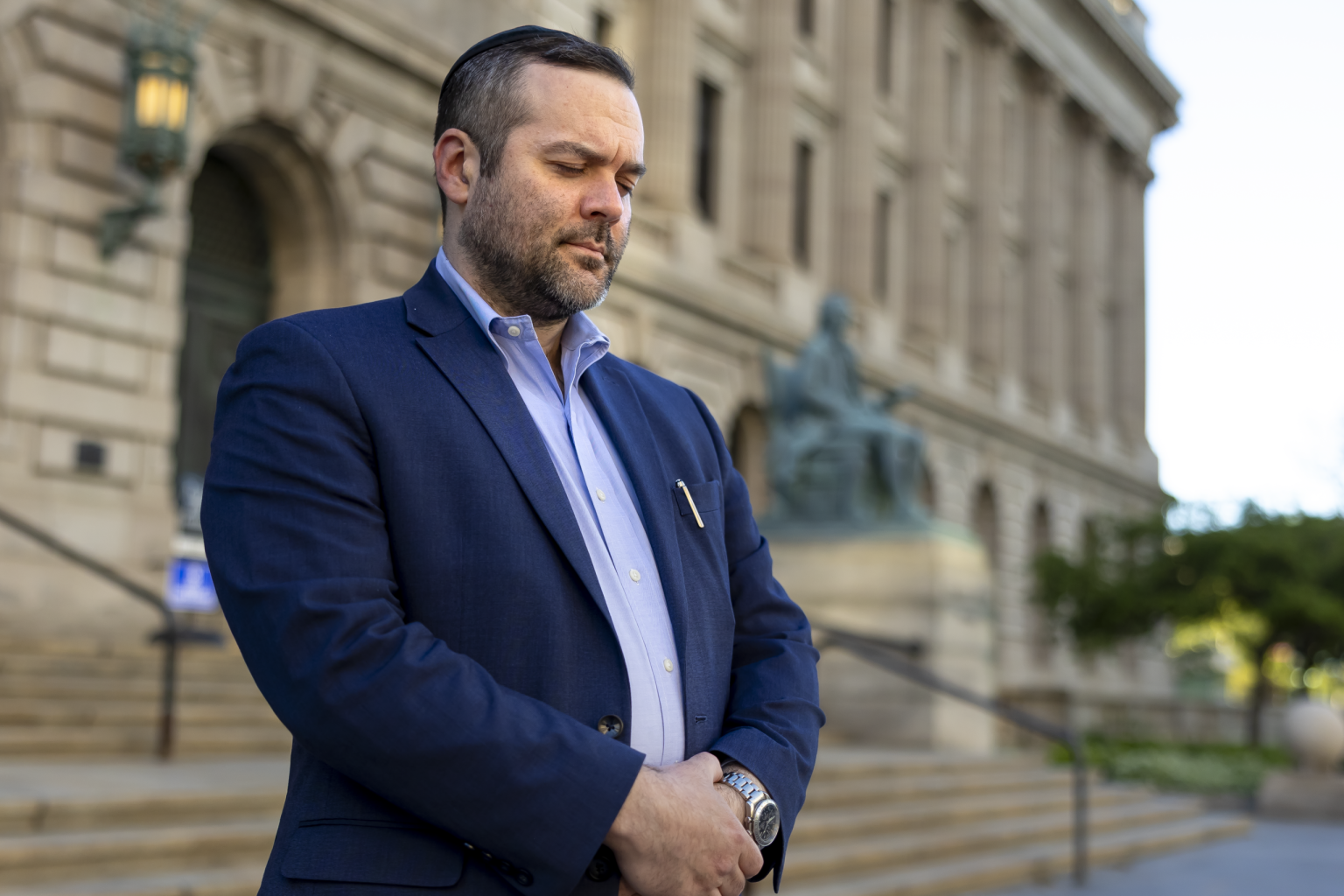
The highest court in the United States will hear a case arising from allegations of religious discrimination against an Orthodox Jew who in 2021 was barred from hosting a prayer gathering at his house after city officials told him he must first obtain a permit.
In response, Daniel Grand filed a lawsuit against the city of University Heights, Ohio, outraged at the idea that he needed government permission to pray in his own home. But the federal court declined to hear his case, saying he needed to apply for the permit first – a decision upheld on appeal.
Now, the US Supreme Court is set to hear Grand’s case to consider whether Grand had to exhaust the city’s permit process and receive a denial before he could bring a challenge to court – or if the procedural hoops themselves constituted a violation of Grand’s religious liberty.
Sabbath Prayer Gathering
As an Orthodox Jew, Grand does not drive on the Sabbath. His nearest synagogue was a six-mile round trip on foot, with multiple trips required if he was to attend all the Sabbath services.
So in 2021, seeking an alternative means of marking the Jewish holy day, Grand sent an email to 15 friends inviting them to his house to pray together, using a Hebrew phrase that roughly translates to “house of prayer and assembly”.
He told them that a rabbi would be present and to invite other members of the community who might be interested in joining Grand, his wife and five children in prayer.
You might be interested
US Report Urges Bridge, Not Wall, Between Church and State
However, after a neighbor and fellow member of the Jewish community reported Grand’s plans to University Heights officials, the mayor himself called Grand and told him the city would be sending a “cease-and-desist” letter.
The city said Grand must stop using his home as a place of worship until he obtained a special-use permit.
Public Hearing Turns Unpleasant
Although shocked that the city had intervened in what seemed like a private matter, Grand was initially willing to go through the city's permit process and submitted an application seeking permission to use his soundproof music room for “periodic religious gatherings”.
However, after a public hearing that occasionally turned unpleasant – including a written submission stating that a community member did not “want our neighborhood labeled as Jewish” – Grand discovered a problem.
A special-use permit prohibited “sleeping or residential use” on any property covered by the permit. In other words, Grand could no longer live in his home if he converted it into a house of worship. With the city requesting that he submit more materials for a second public hearing and not wanting to face what he expected to be a hostile public spectacle, he withdrew his application.
But the issue did not end there. As the city’s Planning Commission held another meeting, then-Mayor Michael Brennan issued a warning to Grand’s neighborhood.
Grand Alleges Surveillance and Harassment
Brennan said that no permission was granted to operate a “house of assembly or conduct activities consistent with one”. He encouraged neighbors to report such activities if they observed them, adding that the “city will enforce its laws”.
Grand alleges the mayor’s directive kicked off a campaign of surveillance and harassment, including claims that a neighbor installed surveillance cameras pointed at his house. In his lawsuit, Grand also alleges police twice approached a driver wearing a Jewish skullcap who was sitting in a parked car outside Grand’s home and asked if he was there to attend a house of prayer.
According to Grand’s complaint, city officials continued to target him because of his religious practices. They issued unfounded property violations, unlawfully withheld his certificate of occupancy, regularly failed to collect his trash and engaged in a “broader pattern of harassment that went far beyond ordinary zoning enforcement”.
The city’s actions underscore a “troubling trend of weaponizing zoning laws” against people of faith, according to John Bursch of Alliance Defending Freedom, a nonprofit legal organization representing Grand.
Meanwhile, gatherings of the same size, like book clubs and poker nights, continue to meet without issue.
Bursch argued that the city’s actions infringe Grand’s religious rights, adding that governments must be held accountable by the courts when they act in this way.

You might be interested
Graham Platner and the Democrats’ Israel Problem
Clash Between Law and Religion
Zoning laws have clashed with religious practice in the past, according to law professor Michael Helfand, an expert on the intersection of religion and law.
In 2000, Congress responded to concerns that local governments were using zoning laws to restrict religious activities by passing the Religious Land Use and Institutionalized Persons Act.
Since then, federal law requires that religious gatherings be treated on equal terms with comparable secular ones, and prohibits zoning laws that substantially burden religious exercise.
The case of Grand v. City of University Heights shows how procedure can “really undermine” religious rights, Helfand told Jewish news site the Forward, describing the process as “Kafkaesque”.
All Eyes on the Supreme Court
The city argues that it never actually took an enforcement action against Grand because he abandoned his permit application before the city reached a final decision.
But Grand’s lawyers argue the cease-and-desist letter and subsequent surveillance created a chilling effect and deterred Grand from hosting Sabbath gatherings.
Grand says he has been unable to observe the Sabbath on several occasions since receiving the letter and that even if his court case is successful, his friends are now “afraid of retaliation”.
Grand is still shocked that what began as a dispute between neighbors escalated quickly and is now set for a hearing before America’s top court in its next term.
He told the Forward that the case has implications well beyond the Jewish community because it will test how far governments can extend their authority into citizens' private lives. As Grand put it, if the city prevails, officials could one day argue that a dinner party with more than eight guests amounts to operating an illegal restaurant.

You might be interested
Conservatives Should Uphold Independence, Not Attack It