Should assisted suicide counseling be available by phone or video call? In Australia, supporters argue that the current ban unfairly disadvantages people in remote areas, while critics warn it risks lowering the threshold for Voluntary Assisted Dying.
Death, some campaigners suggest, should be no harder to access than a home delivery. Photo: Statement / AI
|
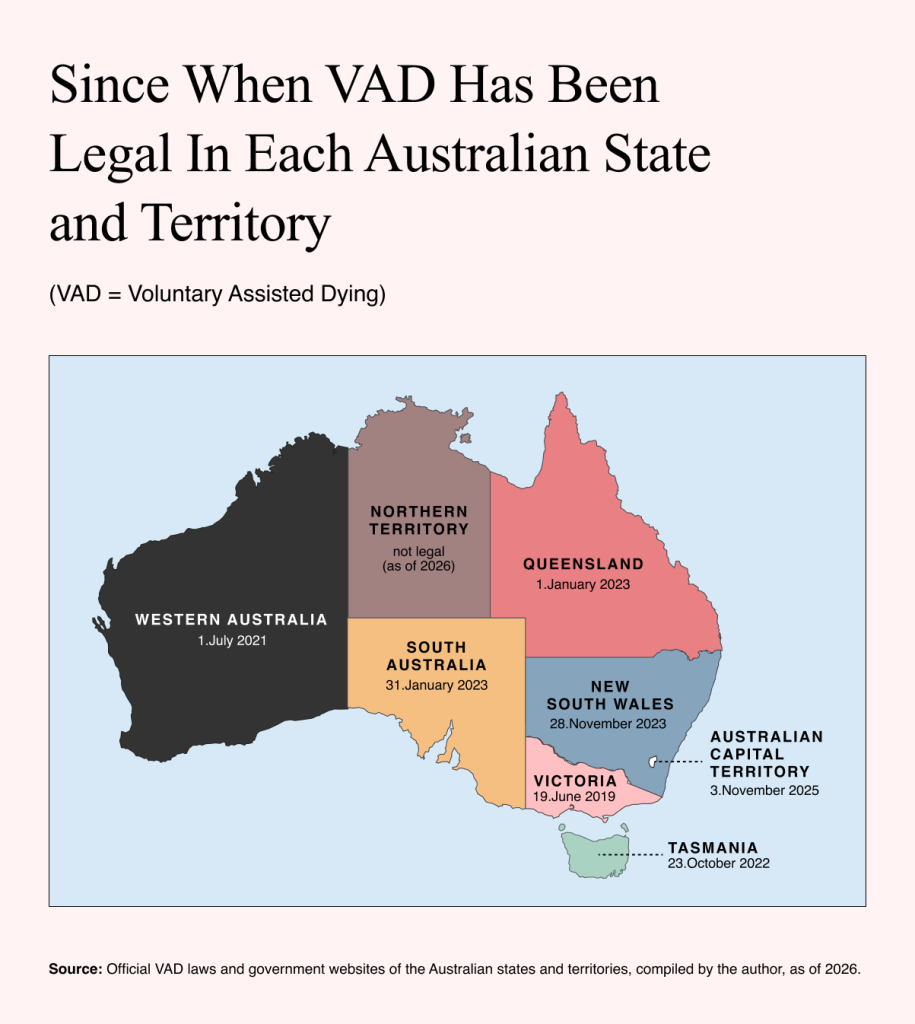
For several years now, Voluntary Assisted Dying (VAD) has been legal in most Australian states, and a debate has emerged over whether doctors, nurses and VAD counselors should be allowed to advise clients on assisted suicide via telemedicine and to assist them remotely. Given the country's vast distances, telemedicine is a normal part of medical care in Australia. Legally, however, telemedicine-supported VAD has so far been completely prohibited under the Australian Commonwealth Criminal Code, which bars the use of so-called "carriage services" (that is, telephone, internet, video calls, email and similar means of communication) to counsel, encourage or provide the method for suicide.
These rules predate the legalization of VAD in Australia but were tightened further in 2023, by which point many states had already legalized VAD, through the legal dispute Carr v Attorney-General. Melbourne doctor Nicholas Carr sought a ruling on whether VAD even counts as "suicide" for the purposes of these federal regulations. The Federal Court found that the term "suicide" in the Criminal Code can also cover VAD, making clear that certain VAD communication by phone or video remains banned under criminal law, despite the legalization of VAD at state level.
The result is a contradictory situation in Australia: most states allow VAD, while federal law prohibits electronic communication about it. Those who want to enable remote assisted suicide argue that this ban is especially burdensome for seriously ill people in rural or remote areas, since it can force doctors to travel long distances or patients to undertake arduous trips, even though telemedicine has otherwise long been part of standard care in Australia. Taken to its logical conclusion, this argument implies that killing a patient should also count as normal, modern care.
Pressure to allow telemedicine-based VAD is coming from several directions. The Greens, independent MP Kate Chaney, VAD activists such as Andrew Denton and medical organizations all want VAD to be accessible via telemedicine. Chaney intends to reintroduce a bill clarifying that lawful VAD communication does not fall under the anti-suicide communication offenses. She argues that VAD is legal in almost all states, but that the Commonwealth Criminal Code effectively prevents adequate access.
Calls for Change
The Australian Medical Association (AMA) is also calling for a change, though it does not want VAD handled entirely digitally. Its position is that doctors should be allowed to use telemedicine where clinically appropriate, with this option reserved for patients who are severely ill, immobile or living in very remote areas.
The AMA is demanding an exemption in the Criminal Code for lawful VAD communication. The wider medical community has also drawn attention to the burden created by the current legal situation. The Royal Australian College of General Practitioners (RACGP) reported that, following the Carr ruling, phone or video conversations about VAD are risky under federal regulations, particularly affecting GPs who accompany patients at the end of life.
Warnings Not Only from Christians
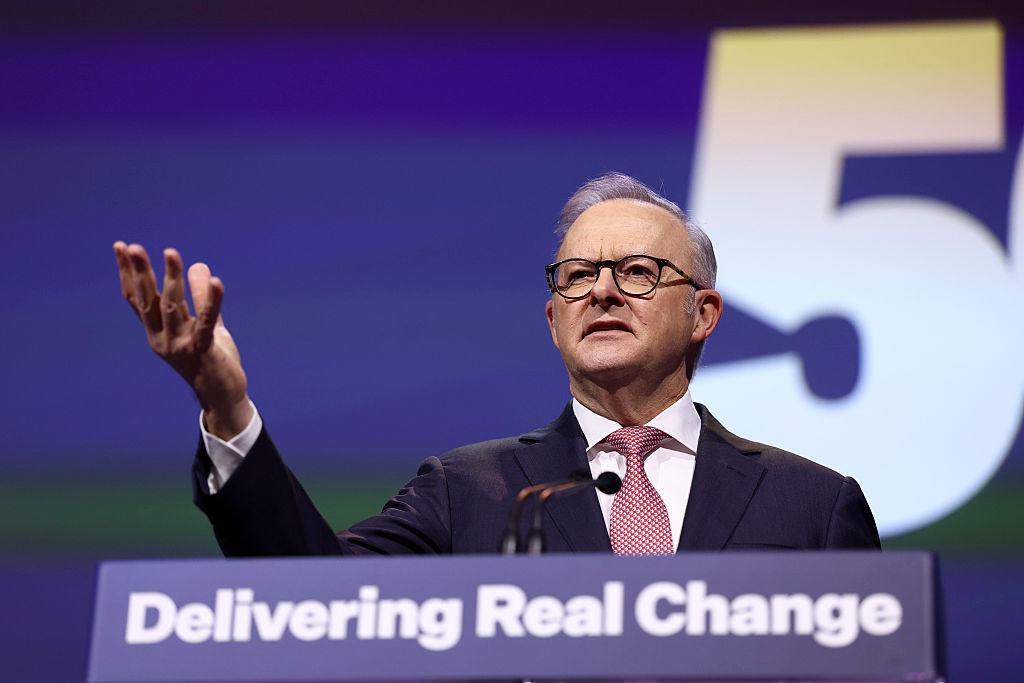
Prime Minister Anthony Albanese is against VAD via telemedicine. Photo: Dominic Lorrimer / Sydney Morning Herald via Getty Images
Warnings against introducing remote VAD do not come only from religious or conservative circles. Anthony Albanese, the Australian Prime Minister and leader of the social-democratic Australian Labor Party, is himself a supporter of VAD but opposes extending it to telemedicine, fearing that a strictly controlled exception could turn into technologically facilitated access.
Michelle Rowland, Australia's Attorney-General, also points out that the relevant federal rules exist to protect young people and other vulnerable individuals from online suicide instruction, and that they must therefore remain unchanged.
Church representatives further argue that telemedicine could make it harder to assess external pressure, loneliness, psychological distress or family interests. Their counter-proposal is better palliative care, more in-person support and no lowering of the threshold through digital procedures. From a Christian perspective, euthanasia or assisted suicide can never be a solution.
Slippery Slope
The debate illustrates the typical second phase that follows the legalization of VAD. Once killing a patient becomes an option at all, a slippery slope follows, one that continually seeks to open up further options for killing. First comes the question of whether VAD should be allowed at all. Then come questions of access, infrastructure and equal treatment, followed by further demands. In the end, killing a patient becomes an equal medical option alongside others.
Grafic: statement.com
If VAD is legal, so the argument of those pushing for change goes, then it must also be accessible via telemedicine, since without it an inequality arises. Those living in Melbourne, Sydney or Adelaide have easier access to VAD, while those who are seriously ill, immobile or living in a remote region are effectively excluded or additionally burdened. The pressure on the government is currently intense.
Opponents and skeptics counter that the finality of this fatal decision means it cannot simply be folded into an ordinary telemedicine routine. A face-to-face meeting, they argue, remains a protective mechanism, making it easier to recognize external factors, such as pressure, ambivalence, depression, dependency or family interests in ending a burdensome caregiving situation, and to respond with support services aimed at preserving life, something not so easily achieved in a video call.