
In the United States, two stories unfolded within days of each other that, at first glance, seem unrelated. Yet both raise the same question: who has the right to decide that a child’s life before birth is no longer worth continuing?
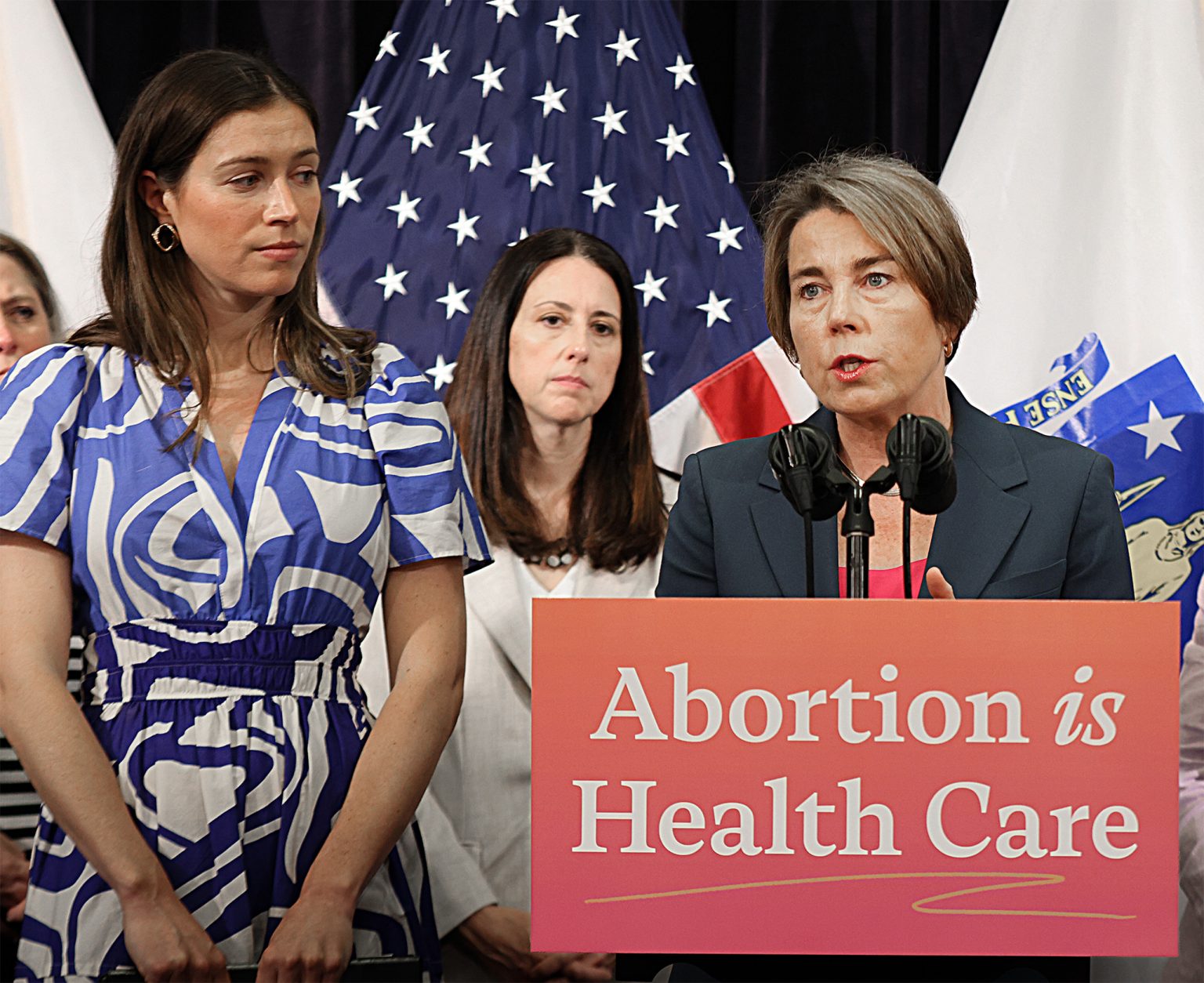
In Massachusetts, Democratic Governor Maura Healey signed a law that fundamentally changes the rules governing abortions after the 24th week of pregnancy. To understand the significance of the new legislation, there is no need for slogans. It is enough to compare the old rules with the new ones.
Four Restrictions Removed After 24 Weeks
The previous Massachusetts law allowed abortions after the 24th week if a doctor, exercising medical judgment, concluded that the procedure was necessary to protect the patient’s life or physical or mental health, or if it was justified by a fatal fetal diagnosis or a serious condition incompatible with long-term survival outside the womb without extraordinary medical intervention.
The new legislation, H5595, omitted these specific conditions. In their place, it introduced a substantially shorter formulation: an abortion may be performed by a doctor “based upon the professional judgment of the physician”. This is not an interpretation by conservative media. It is the exact wording of the law passed in Massachusetts.
Furthermore, the legislation stipulates that the medical review process must not override the professional judgment of the treating physician and the patient or her healthcare proxy. The Associated Press described the change as shifting the final decision on late-term abortions to the physician and noted that the previous specific list of medical reasons was to be removed.

Tragic Cases Used as an Argument
Governor Healey, however, did not defend the change by arguing that women need the option to terminate a healthy pregnancy just before delivery. Instead, she cited cases of women who were diagnosed with serious complications late in pregnancy but whose requests for abortions were denied because hospitals were unsure whether the cases met the legal criteria.
One well-known case involved a woman whose fetus suffered a stroke at 33 weeks, but the hospital did not consider the diagnosis clearly life-threatening. Such stories provide supporters of the reform with a powerful human argument.
However, one issue highlighted by the conservative Washington Stand remains unsolved: if the problem was inadequately defined medical exceptions, why did the legislature not simply expand or clarify them? Why did it instead remove the specific conditions?
The Washington Stand takes its interpretation a step further, claiming that the result is the legal possibility of abortion up until the moment of birth. The text does not contain the phrase “abortion up until birth”, and it would be inaccurate to present this headline as the literal wording of the legal provision.
But the fact remains that after the 24th week, the law no longer lists the previous specific medical grounds. The moral justification offered for the law is therefore narrower than its literal legal wording.
The Surrogate Who Refused to Abort
Almost simultaneously, another American story was unfolding. McKenna West was a surrogate mother carrying a child for a married couple from California. During the pregnancy, doctors diagnosed the baby with hypoplastic left heart syndrome (HLHS), a life-threatening congenital heart defect.
Following the diagnosis, a dispute arose between West and the intended parents. West claims that they demanded she terminate the pregnancy. The parents, Omar Ahmed and Nausheen Gilkar, however, dispute parts of her account and say that they always planned to provide medical care for the child after birth. It is important to note this discrepancy because the case has since become part of the US political debate over abortion.
One thing is indisputable: West refused to have an abortion. She traveled to Texas and gave birth to the child. After Texas Attorney General Ken Paxton intervened, a court ordered that life-saving medical care be provided to the newborn. The Associated Press has reconstructed the case in detail.

When “My Body, My Choice” Means “No”
This is where the argument for reproductive freedom becomes more complicated. If “my body, my choice” is to be applied consistently, it must work both ways: a woman must have the right not only to choose an abortion, but also to refuse one.
This is true even when the child is not genetically hers, when she has signed a surrogacy agreement and when the people for whom she is carrying the child take a different view of whether the pregnancy should continue.
Otherwise, we are no longer talking about a woman’s bodily autonomy. We are talking about autonomy conditional on the woman making the decision that others expect of her.
The Child and the Contract
Surrogacy adds another layer to the problem. Who decides when the interests of the various parties conflict? The woman carrying the child? The genetic parents? The doctor? The court?
A contract governs the arrangement, the intended parents have their expectations and the woman carrying the child has bodily autonomy. But one person remains outside the agreement – the child.
West’s case exposes a fundamental problem with surrogacy. As long as everyone wants the same thing, the conflict remains hidden. It emerges only when their expectations diverge. If a woman has bodily autonomy, a contract cannot force her to undergo an abortion.
If the intended parents can decide whether the pregnancy continues, the surrogate mother’s autonomy is no longer absolute. If only adults have a say, one question remains: who represents the child’s best interests?

A Serious Diagnosis Is Not a Death Sentence
West’s story also illustrates just how problematic the phrase “serious fetal diagnosis” can be. HLHS is indeed a serious condition. It can mean multiple complex surgeries, an uncertain prognosis and great suffering for the family. Its severity should not be downplayed. But it is not necessarily a death sentence.
West’s child was born. His heart condition did not disappear at birth, his genetic identity did not change and biologically he remained the same human organism that had existed earlier.
What changed was the language. Before birth, we speak of a fetus with a serious diagnosis and the possibility of terminating the pregnancy. After birth, we speak of a sick newborn and life-saving treatment.
This raises one of the most difficult questions in the abortion debate: what does birth change about the moral value of a child’s life?
One Ward Saves, Another Decides
The 24-week threshold means something different today than it did decades ago. Babies born at this stage may be viable, while modern neonatology can sometimes save those born even earlier.
This creates a striking paradox. In one part of a hospital, doctors may be fighting to save an extremely premature baby. In another, the law can determine under what circumstances a pregnancy involving a fetus of the same or greater gestational age may be terminated.
The key difference may not be biological development, but whether the child has been born.
Is Abortion a Form of Healthcare?
The Healey administration presents the new law as a safeguard of reproductive freedom and access to healthcare. The official rationale can also be found in a statement from the Massachusetts government.
“Abortion is healthcare” is a politically effective slogan. However, it is not a sufficient answer to the moral question. Pregnancy, after all, involves a biological reality that no slogan can erase: there is a woman and there is a developing human organism which has its own genetic identity and, in the advanced stages of pregnancy, may be capable of life outside her body.
Therefore, the question is not merely whether a woman has the right to make decisions about her own body. The real debate begins with the next question: Is the body of the unborn child also just her body?

Who Are We Deciding About?
The story of the Healey Act and that of McKenna West are not legally related. However, their proximity in time creates a striking parallel. Massachusetts is expanding the scope of decision-making for the patient and the doctor. West also made her choice – she decided not to give up the child. Suddenly, the genetic parents, lawyers, hospital, court and state all entered the picture.
Everyone has their own rights, interests and voice. Except for one. Perhaps this is why the abortion debate all too often begins with the wrong question. We ask who has the right to decide – the woman, the doctor, the parents, the hospital, the court or the state. But before that question comes another: who are we deciding about?
If the unborn child is merely a part of the woman’s body, the argument for reproductive autonomy is relatively straightforward. If, however, it is a separate human organism – albeit one that is existentially dependent on the mother – the issue changes fundamentally. In that case, it is no longer enough to speak only of the freedom of those who are capable of making decisions. We must also speak of the value of the life of the one person in this entire discussion who cannot yet speak for themselves.