UN Warns Nigeria over Christian Persecution as Trump Policy Gains Global Traction
A new UN warning to Nigeria over the persecution of Christian women is the latest sign that Donald Trump has scored a major success in his hard-nosed policy on anti-Christian violence.
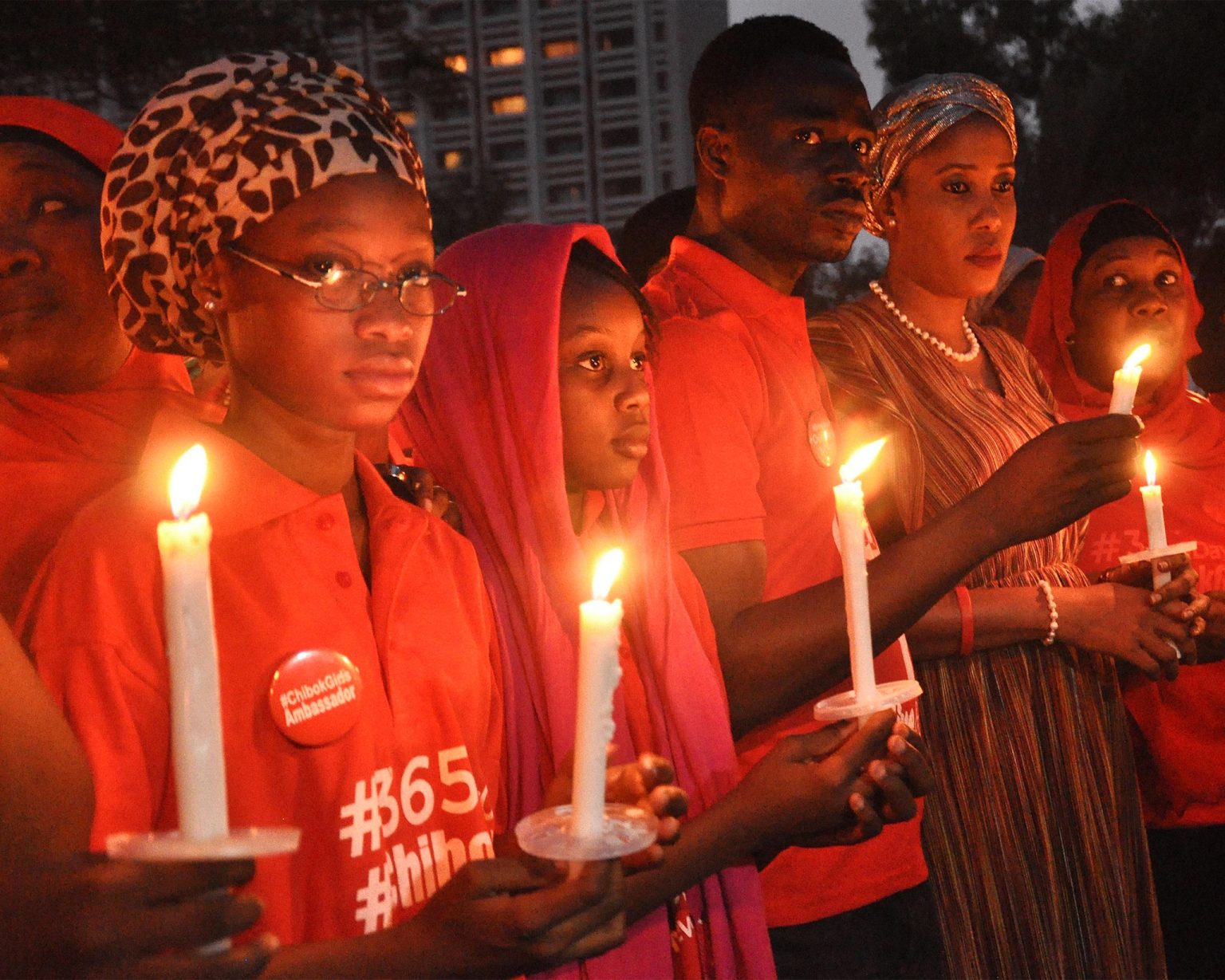
Participants hold candles at a vigil in Abuja for the 276 schoolgirls abducted by Boko Haram from Chibok in 2014. Photo: Henry Chukwuedo/Anadolu Agency/Getty Images
|
On 13 August, United Nations experts published an official communication sent to the Nigerian government, which warns of mounting reports of human rights violations against religious minorities that "particularly targeted" Christians in the African state.
The formal letter, which criticizes government inaction on growing instability and highlights its negative effects on Christian women and girls especially, is the latest sign that United States President Donald Trump has scored a rare foreign policy victory attracting support across political divisions.
The letter, sent on 1 June, came in response to "credible reports" from non-governmental organizations and human and religious rights groups of violations including killings, sexual violence, forced conversion and kidnappings.
However, before the Trump administration started banging the drum over what it called a "genocide" of Christians in the populous African country, Western leaders rarely gave sustained attention to the issue.
Following US-backed strikes on Islamist terrorists in northern Nigeria and the sustained diplomatic pressure exerted by Trump and his supporters, the tide is turning.
The publication of the latest communication followed several earlier interventions by the UN concerning violence and religious freedom in Nigeria, including a June visit by the UN special rapporteur on freedom of religion or belief, Nazila Ghanea.
As the Nigerian government is yet to respond to the latest UN missive and with signs that violence continues unabated, the story is far from over.
Christians have long been the most persecuted religious community in the world, at the hands of authoritarian governments like Nicaragua and officially atheistic states like China, as well as Islamic and other religious fundamentalists in Asia and the Middle East.
In terms of the number of Christians killed, however, Nigeria is the hotspot and has been for at least a decade. The UN letter cites reports estimating that 3,490 Christians were martyred there in 2025, making up 72% of the reported 4,849 killings worldwide.
The West African nation is the most populous on the continent at 240 million people, with a roughly even split between Christians and Muslims – although exact figures are hard to pin down.
The country has been marred by political instability and extremist violence for almost two decades, with Islamist terror groups like Boko Haram and the Islamic State West Africa Province (ISWAP) active in the predominantly Muslim north.
Some 12 states in northern Nigeria enforce Sharia law, including strict blasphemy laws and legal consequences for converts, which have resulted in numerous accusations of rights violations.
The activities of Boko Haram in particular made headlines globally for a time in the 2010s following a spate of mass abductions of mostly Christian schoolgirls.
International attention slipped away quickly – but the violence did not. Over the past decade, the epicenter has shifted from the north to the middle of the country, where roving bands of largely Islamist herders raid villages and slaughter civilians.
One recent study estimated that 79,323 people, including civilians, security personnel and members of armed groups, were killed in terror-related violence between 2020 and 2025. The victims include both Christians and Muslims.
https://twitter.com/shalomworldnews/status/2090144264709955809
Attacks on Christians have not abated since Trump's intervention, with warnings that terrorist forces have been "emboldened".
Western Indifference
Speaking earlier this year, Archbishop Ignatius Ayau Kaigama, a senior cleric in the Catholic Church in Nigeria, said there is a "deliberate program by Islamists to reduce the Christian presence in this country".
Kaigama also had some strong words for leaders of Western nations, accusing them of "ignoring" what is happening in Africa, especially in Nigeria, and urging them to take action.
Despite the horrific situation in the country, Western leaders have failed to give sustained attention to the problem of religiously motivated persecution against Christians and other minorities.
For instance, reports on the problem were watered down in the European Parliament, even while statements and policies on the dangers of Islamophobia ramped up.
When leaders did specifically address the crisis in Nigeria, the blame was pinned not on the activities of religious fundamentalists and terrorists, but on climate change.
Former Irish President Michael D. Higgins responded to a mass murder of Christians in Nigeria with just this interpretation in 2022. It led to furious backlash from Christian leaders, but garnered little in the way of international support for their plight.
Trump’s Intervention
Since President Trump began his second term in office, Christian persecution and Nigeria in particular have received the kind of scrutiny long absent from Western discourse.
It began on 31 October 2025, when the Republican president designated Nigeria as a Country of Particular Concern. Trump followed this move up by stating that "Christianity is facing an existential threat in Nigeria".
He accused "radical Islamists" of "mass slaughter" and later told the Nigerian government it "better move fast" to tackle the violent persecution of Christians by Islamist extremists.
In response, Nigerian President Bola Ahmed Tinubu officially designated kidnappers and violent armed groups, including Fulani militants active in the middle of the country, as "terrorists", placing them on the same footing as armed insurgent groups such as Boko Haram.
However, senior government officials also pushed back against Trump’s claims, arguing that the portrayal of Nigeria’s “security challenges” as a “targeted campaign against a single religious group” is “a gross misrepresentation of reality”.
Regardless, Trump continued to ramp up his rhetoric, doubling down on his description of the situation as a "genocide" targeting Christians.
Then, on Christmas Day in 2025, he followed up his words with concrete action, launching strikes against Islamic State targets in the north of the country, coordinated with the Nigerian government.
While there was no official death toll, both governments asserted that many terrorists were killed, with Trump calling the attack a "Christmas present".
The Trump administration’s approach – both its rhetoric and actions – has forced international attention back on the issue. It also appears to have successfully shifted the narrative to take greater account of the specific targeting of religious minorities, especially Christians.
As outlined above, the latest UN intervention follows a series of official exchanges between the international organization and the West African state.
Not every UN account agrees wholeheartedly with Trump’s assessment of the situation – particularly his claims of a genocide – and debate regarding the exact nature of violence in the Middle Belt of the country is ongoing.
However, it is clear that the UN is increasingly concerned by government failures to protect religious minorities, with its 1 June letter warning of the dangers of "institutional complicity, acquiescence or negligence".
The UN is not the only international body taking note. On 9 July, the European Parliament adopted an emergency resolution condemning the persecution of Christians in Nigeria, 510 votes to one, with 86 abstentions.
The Parliament also criticized the Nigerian authorities, finding they had failed to prevent these attacks and calling for an end to the impunity enjoyed by the perpetrators.
Additionally, the Trump administration's focus on the issue resulted in a slew of media coverage, with global outlets like the BBC running explainers of the crisis and major left-wing broadcasters such as Channel 4 commissioning documentaries to examine the problem.
https://www.youtube.com/watch?v=T4jIKllIW74
UN special rapporteur Nazila Ghanea warns that government inaction is leading to perceptions that genocide is being committed in Nigeria.
Forcing Serious Debate
Again, many of these articles are critical of Trump’s interpretation and debate is still ongoing regarding the exact causes of the serious state of insecurity in the region.
While the UN is now taking the question of targeted religious violence seriously, the preliminary findings of UN special rapporteur Ghanea following her June visit were still equivocal about what is motivating the present flare-up of violence.
She did warn that government inaction over violence targeting religious personnel and buildings is leading to fears of persecution and genocide on the part of the victims.
Even reports from the US Commission on International Religious Freedom acknowledge that it is hard to pin down the degree to which anti-Christian sentiment is behind the actions of Fulani bandits in the Middle Belt.
While Islamist sentiment is often identified as the driving force of violence in the Muslim-majority north of the country, insecurity in the center of the country is acknowledged to be more complicated.
Regardless, the fact that established media and international agencies are taking the issue so seriously is due to Trump and his administration’s sustained interest. Before that, anti-Christian sentiment was typically an afterthought.
Ongoing Violence
While influencing international debate is important, as regards the experience of Nigerian Christians themselves, the result of Trump’s push is mixed.
Pressure exerted by the US president and other international leaders has seen some movement by the country’s administration, with some successes in rescuing victims of kidnapping, alongside President Tinubu’s June claim that 13,000 "terrorists" were "neutralized" in the past year.
However, the government is still accused of doing too little to address the root causes of the insecurity, with some critics accusing it of giving tacit support to the activities of certain jihadist actors.
Meanwhile, Christian leaders worry about the consequences if Trump takes his eye off the ball.
Archbishop Kaigama, speaking at a conference in March of this year, thanked President Trump for his support, saying he was the "first head of state to declare as a global leader, clearly and unequivocally, that Christians in Nigeria are being persecuted".
https://twitter.com/UnderSecStateP/status/2089718465091240201
The US and Nigeria are seeking to deepen cooperation in a bid to clamp down on violent actors in the African country.
However, without further sustained intervention by way of intelligence-sharing, weaponry and intergovernmental cooperation, in the long run Trump’s condemnation could prove counterproductive, the archbishop of Abuja, Nigeria’s capital, said.
For now, terrorist organizations are "emboldened", Kaigama warned, saying attacks occur frequently and are making things worse.
On 18 August, bandits killed two men and abducted another, leading to a heartfelt plea for peace from a local priest, while in July attackers killed more than 20 people in northwest Nigeria.
Deepening Military Ties
While Nigerian Christians are not at the top of the Trump administration’s agenda at the moment, there are signs that his team is still aware of their needs.
Following on from the December strikes, the US deployed military personnel in an advisory and training role in February, while American forces participated in a joint operation against ISWAP in May.
Just this month, the two nations conducted a bilateral engagement in Washington, DC, between military and government officials, with the reported aim of deepening "military-to-military relations" and fortifying "counter-terrorism cooperation between both nations".
The Trump administration has scored a significant victory at international level regarding the plight of Christians, and there are signs it is still committed to military cooperation and support.
As the archbishop outlined, this sustained interest is vitally important. With concerns that violence is ramping up further, the situation for Nigeria’s Christians – and its citizens more broadly – looks bleak without American aid.