A Manufactured Border Crisis
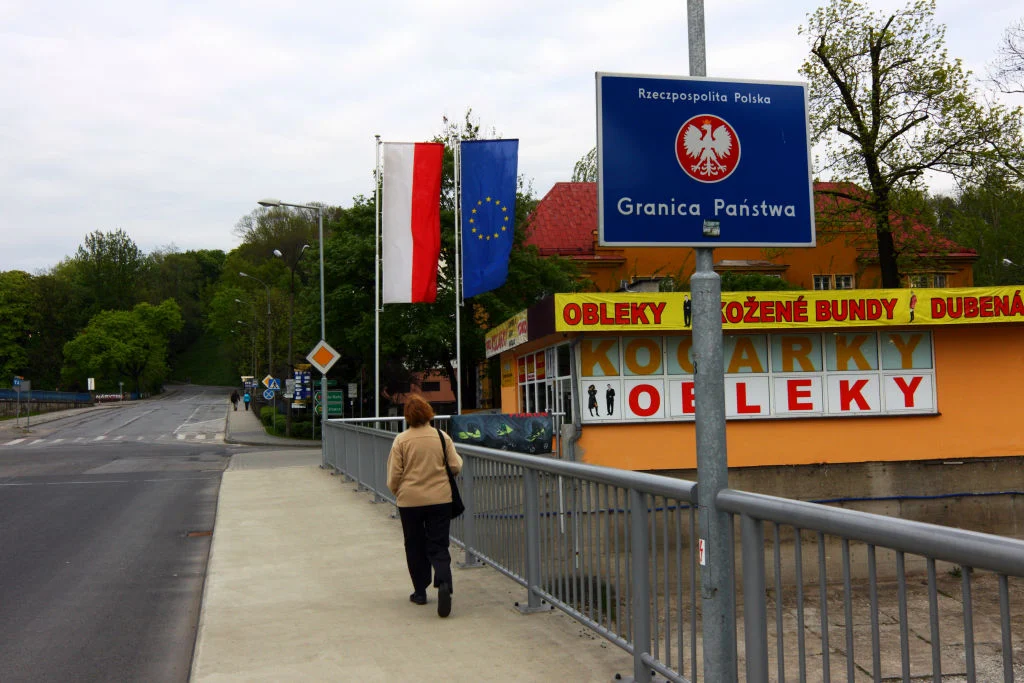
The operation has taken several forms on both sides of the border. One fake Facebook account under the name Adam Sikora, with an apparently AI-generated profile picture, purported to belong to a resident on the Czech side of the border. It accused Poland of pursuing Polonization and promoted a demonstration in Trinec on 29 August under the banner “Cieszyn Silesia is Czech”.
But the protest appears to be fictitious. No such gathering had been registered with local authorities, while the KOVO trade union said its logo had been used in promotional material without permission.
The same account had previously advertised a house for sale in Ropice, near Cesky Tesin, supposedly because residents feared Polish encroachment. The house did not exist and the images had been generated by artificial intelligence.
Other parts of the operation were more elaborate. A profile impersonating the real Czech ambassador to Poland, Bretislav Dancak, circulated a fabricated Polish Foreign Ministry document purporting to show Warsaw demanding Czech territory.
A fake version of the Czech public broadcaster’s iRozhlas.cz website was also created, using the lookalike domain lRozhlas.cz, with a lower-case “l” replacing the initial “i”. It published a false report suggesting that people in the border region were selling their homes because they feared a change in the frontier.
A genuine Polish media outlet was also targeted. Hackers gained access to the publishing system of regional broadcaster Radio PiK and replaced a legitimate article with a fabricated report claiming that Poland planned to seize Czech territory.
Poland’s NASK research institute has said that the tactics resemble methods previously associated with Russian-linked influence operations. It has not, however, established who orchestrated this campaign.
There are therefore grounds for suspicion, but not for stating as fact that the Kremlin is behind the operation.
Two Disputes, Not One
The fabricated narrative works partly because it blends two distinct chapters of Polish-Czech history.
Cieszyn Silesia is a historical region now divided between Poland and Czechia. Zaolzie – literally “beyond the Olza” in Polish – is a term used primarily in Poland for part of the territory awarded to Czechoslovakia when Cieszyn Silesia was divided in 1920. It is sometimes incorrectly used to describe the entire Czech portion of the historical region.
The area remains home to a significant Polish minority. In Czechia’s 2021 census, 38,218 people identified as Polish, either exclusively or alongside another ethnicity, with the historic Polish community concentrated largely in the border region.
The 368 hectares at the center of the present story are something else entirely.
They stem from an adjustment of the Czechoslovak-Polish border agreed in 1958. Poland transferred 1,205.90 hectares to Czechoslovakia, while receiving 837.46 hectares in return. The difference – 368.44 hectares – became what Warsaw calls the Czech territorial debt.
The issue has remained unresolved for decades and is still on the diplomatic agenda. Poland’s and Czechia’s foreign ministers discussed the territorial debt in Warsaw in February. At the time, the two sides spoke of progress, with a joint flood-control project or another mutually beneficial initiative raised as a possible way of reaching a settlement.
Poland subsequently clarified its position. In an April response to parliament, the Polish Foreign Ministry said the government still believed the imbalance of more than 368 hectares should ultimately be settled through an international agreement involving the transfer of territory.
That does not mean Poland can choose 368 hectares of Czechia and demand that they be ceded. Any change to the border would require a bilateral agreement between the two countries.
Nor is the debt a claim to Zaolzie. The two issues have entirely different origins.
Mariana Wernerova, head of the press department at the Czech Ministry of Foreign Affairs, told Statement that “it is true that negotiations with Poland on resolving the so-called territorial debt have been ongoing for many years”. She declined to provide further details.
The Polish Foreign Ministry likewise said that the territorial debt remains an issue in relations between Warsaw and Prague, although no formal negotiations on the matter have taken place this year.
“Our goal remains to resolve this issue in the spirit of good-neighborly dialogue. The timing of an agreement, as well as the form it will take, will be the subject of bilateral negotiations”, the ministry said.
That is a long way from an invasion.
Why Zaolzie Still Resonates
The invented story draws much of its emotional force from what happened in 1938.
After Britain, France, Germany and Italy signed the Munich Agreement at the end of September, forcing Czechoslovakia to surrender the Sudetenland to Nazi Germany, Poland took advantage of Prague’s weakened position to revive its own territorial demands.
On 30 September, Warsaw issued an ultimatum demanding the transfer of Zaolzie. Czechoslovakia accepted the demands, and Polish troops entered the territory in early October.
Poland’s annexation formed part of the wider partition of Czechoslovakia that followed the Munich Agreement. Hungary also acquired Czechoslovak territory later that year.
The Polish move remains controversial in Poland itself.
Responding to reports of the current disinformation campaign, Polish Foreign Minister Radoslaw Sikorski described the 1938 invasion of Zaolzie as “one of the most foolish decisions in the history of Polish foreign policy”. He also recalled that President Lech Kaczynski had publicly apologized for the episode at Westerplatte in 2009.
Less than a year after the annexation, Nazi Germany invaded Poland. Following the Second World War, the Polish-Czechoslovak border was essentially restored to its pre-1938 line.
The history explains why Zaolzie can still stir strong emotions on either side of the border. But it remains separate from the 368-hectare territorial debt created by the border adjustment two decades later.
Confusing the two is precisely what makes the current operation potentially effective.
Warsaw and Prague Push Back
Officials in both countries have responded by emphasizing their close relationship rather than reviving historical disputes.
The Czech Foreign Ministry has rejected claims that Poland is preparing to seize Czech territory and stressed that Poland is one of Czechia’s closest and most important partners.
Sikorski urged Poles and Czechs not to allow themselves to be divided.
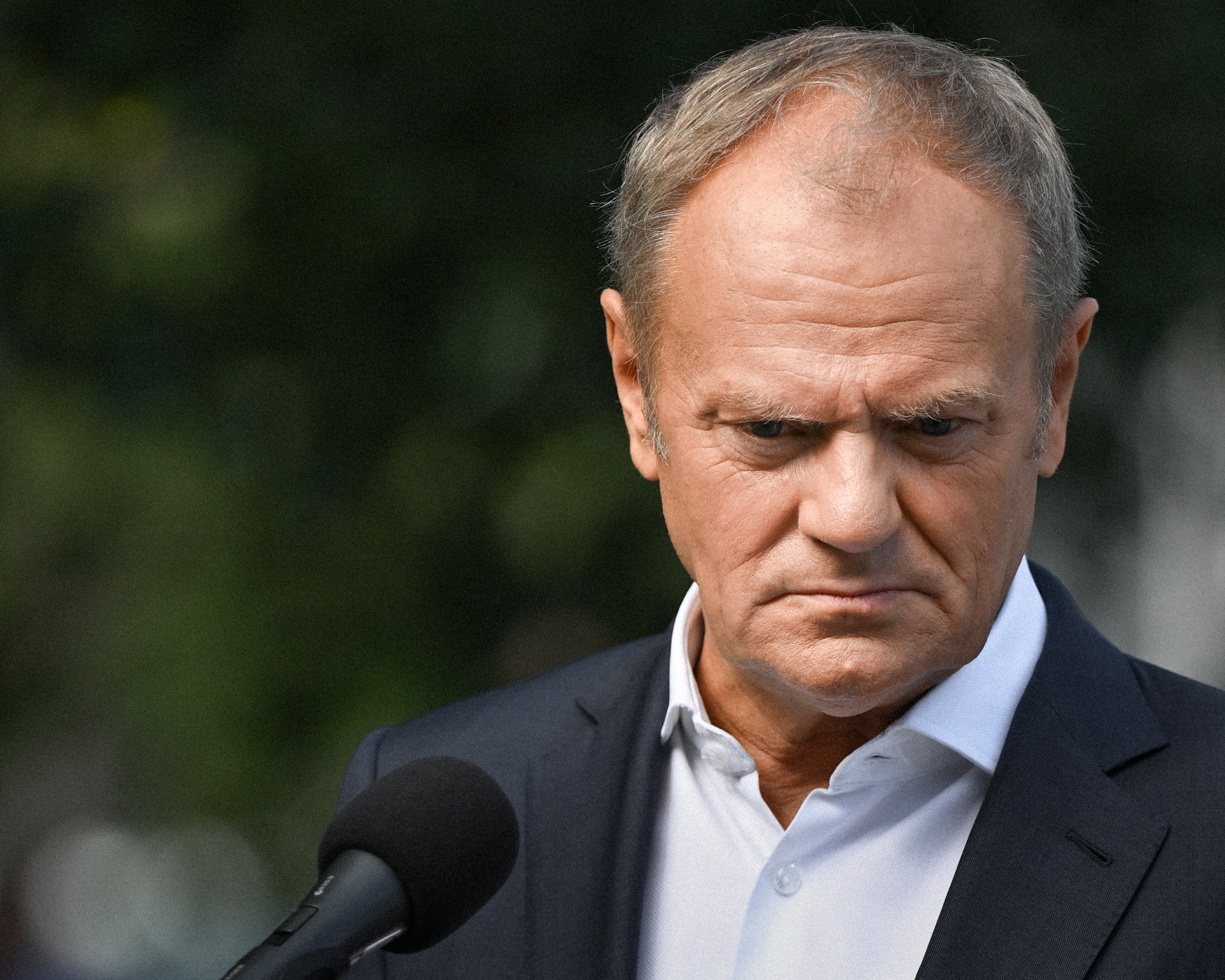
Polish Prime Minister Donald Tusk likewise wrote that “Poland and the Czech Republic are true friends”, accompanying the message with an image of two well-known children’s characters from the neighboring countries, the Czech Mole and Poland’s Reksio.
The disinformation campaign has therefore not exposed a Polish-Czech border crisis. It has attempted to manufacture one.
The territorial debt is real. The Polish invasion is not.