
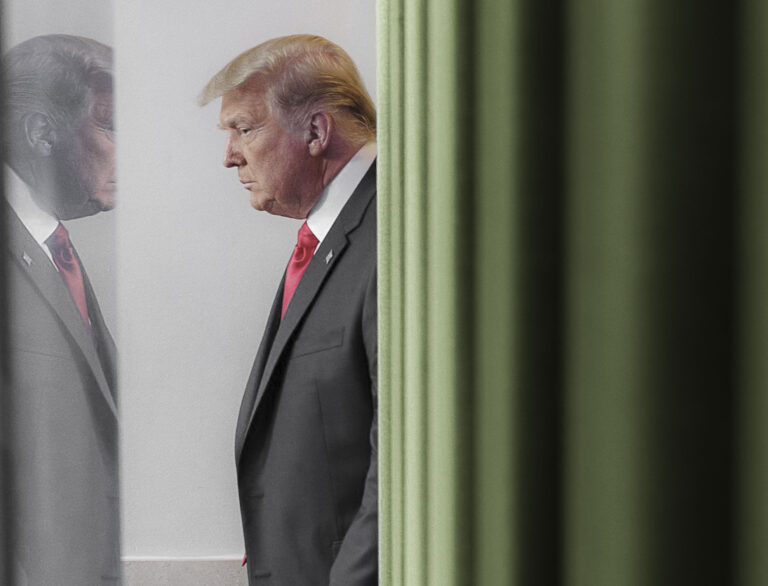
Is the re-elected U.S. president architect of the sweeping transformations American business is undergoing, or does he merely epitomize a shift that had long been underway?
On September 22, 2024, BlackRock, the world’s third-largest economy by assets managed, announced the closure of its ESG division; the decision sent shockwaves across the financial landscape. Yet, this move represented only the culmination of a strategic realignment that had been months, if not years, in the making. Earlier in 2024, major financial institutions, including JPMorgan Chase, State Street Global Advisors, and BlackRock itself, withdrew from the Climate Action 100+ initiative, a coalition that had long been instrumental in aligning corporate behavior with ESG standards as a prerequisite for accessing credit and markets.
The financial scale of these withdrawals underscores their significance. In February 2024, $14 trillion in assets—$6.6 trillion of which was under BlackRock’s management—were removed from the stranglehold of Climate Action 100+. This marked one of the most consequential retreats from ESG commitments in recent history, signaling a fundamental recalibration within the financial sector. Fervor for ESG investments, once dominant, appeared to have reached its zenith. In line with economic tradition, investors were now capitalizing on peak valuations.
The ripple effects were swift and profound. Within weeks, European Commission President Ursula von der Leyen reopened discussions on the EU’s planned phase-out of the internal combustion engine. What some media outlets hailed as a triumph of pragmatism over bureaucracy was, upon closer scrutiny, a direct reaction to the seismic shifts in investment priorities orchestrated by financial giants.
At this juncture, a faltering Joe Biden already buoyed Trump’s electoral prospects. However, attributing the maneuvers of asset management behemoths wholly to them having already predicted Trump’s re-election would be overly simplistic. During Trump’s first term, these institutions’ inclination to align their operations with his MAGA agenda was minimal.
The Musk Factor
Enter Elon Musk. As the world’s wealthiest individual and a self-styled “free speech absolutist,” Musk had long positioned himself as a disruptor within the tech-industrial complex. His public endorsement of Trump during the campaign further cemented his role as a provocateur, challenging Silicon Valley’s progressive orthodoxy.
Initially met with widespread skepticism, Musk’s calculated gamble began to pay dividends following Trump’s electoral victory and Musk’s appointment as the proverbial "Doge"—a symbolic yet strategic counterbalance to Trump in their emergent "duumvirate." In the aftermath, tech leaders such as Mark Zuckerberg and Sam Altman swiftly adapted to the shifting political winds. Zuckerberg’s newfound advocacy for free speech and Altman’s endorsement of Trump’s Stargate Project highlighted the ideological malleability of Silicon Valley elites.
The sincerity of these shifts is immaterial; what matters is the cascade effect these will initiate. As industry titans pivot, smaller entities inevitably follow, eager to align with the prevailing paradigm. This ideological realignment underscores the trickle-down dynamics of power and influence within the tech and financial sectors.
While many attribute these developments to the so-called "Trump Effect," they are more accurately understood as the culmination of an economic realignment that predates his presidency.
A New Vanguard
Trump’s swift actions to consolidate his policy agenda underscore his commitment to reshaping the economic landscape. Yet he operates within a broader context of global economic realignment. At the World Economic Forum in Davos on January 24, BlackRock CEO Larry Fink issued a contrarian declaration: “Now is the time to invest in Europe.” Fink’s dismissal of a pervasive pessimism about Europe’s economic prospects stood in stark contrast to the dominant narrative.
This pessimism, particularly acute in Germany—once Europe’s economic powerhouse—is hardly unfounded. Years of unwavering commitment to green economic policies are forcing the country to clear the debris left by an ideologically driven energy agenda. For much of the past decade, Germany’s "Sonderweg" seemed destined to culminate in an overreliance on renewable energy sources, even when other nations—like neighbouring France, which actually invested in extra nuclear reactors—pursued more pragmatic approaches.
Yet this consensus now appears to be fracturing. Von der Leyen’s rapid adoption of Fink’s rhetoric—prioritizing competitiveness over climate objectives through the "Competitiveness Compass"—illustrates the weight of his influence. Although financial inertia ensures a gradual transition, the direction is unmistakable. These shifts were evident well before Trump’s re-election.
Revisiting Causality
The question of causality remains unresolved. Trump’s presidency amplifies and accelerates these changes, but the groundwork was laid well in advance. The interplay between trillion-dollar reallocations by investment behemoths and the ideological recalibration of Silicon Valley suggests a complex feedback loop. These developments are less a reaction to Trump’s influence than an inevitable evolution of global economic priorities.
As for the chicken or the egg debate, one certainty emerges: whatever comes first in the years ahead, it will likely not be ‘organic’.