
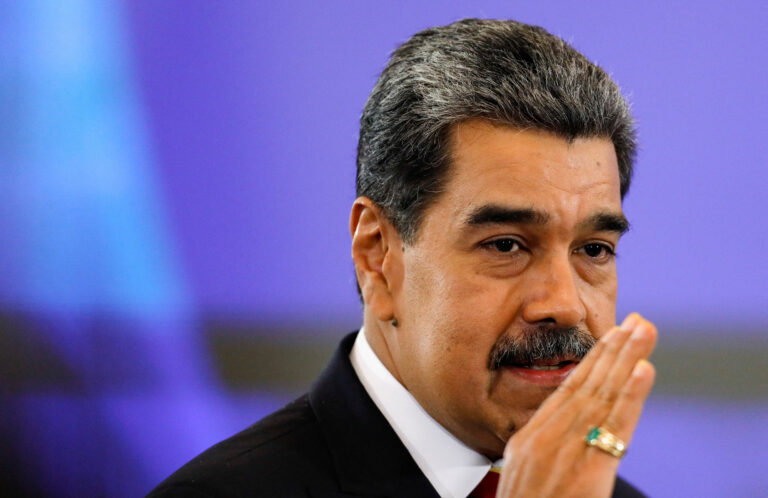
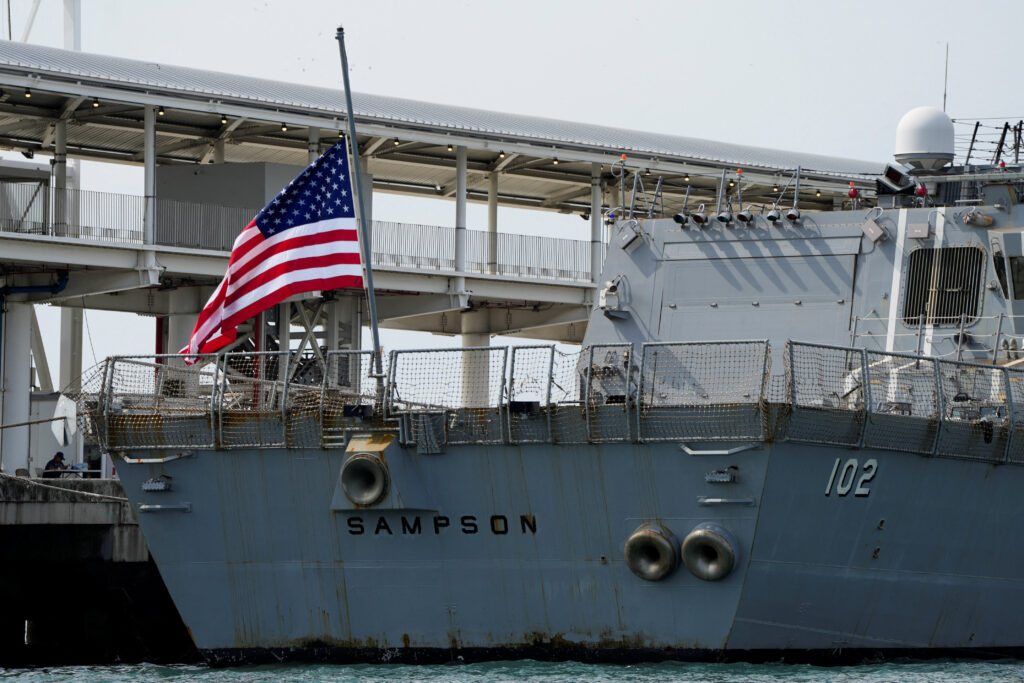
At the end of August, President Trump sent a small naval fleet to the coast of Venezuela. Among the 4,500 soldiers aboard six ships and a nuclear submarine are over 2,000 marines specializing in amphibious assault operations. The maneuver is reportedly aimed at Venezuelan drug cartels and President Maduro, whom the US considers their leader.
It's not about drugs or democracy
Even though Maduro is just as much of a thorn in the side of the Americans as his predecessor Chávez once was, they are still in contact with him and an invasion is probably not planned. Nor are the Venezuelan drug lords the real target. And it is certainly not about promoting democracy, as their still influential exporters claim. Trump's decision is in reality a reaction to domestic power struggles in Washington, targeting Venezuela's oil reserves and testing the strength of an inconvenient regime.
The US has had a problem with Venezuela for over a quarter of a century. Washington was displeased when Venezuelans elected Hugo Chávez as president in the late 1990s. In economics, he professed democratic socialism; in foreign policy, he rejected any American interference worldwide and, together with like-minded governments in Latin America, built a Bolivarian alternative to US subservience – supported by supplies of cheap Venezuelan oil.
In addition to Simón Bolívar, the father of South American independence, he also regarded Fidel Castro as a role model. Unlike Castro, however, he acted democratically. With his social programs financed by oil revenues, he won the support of the lower classes and was able to win elections and referendums despite pressure from Washington.
Maduro's style: oil and repression
His former vice president and successor, Nicolás Maduro, no longer has such solid ground beneath his feet. For seven years, he has been facing attempts by the US to overthrow him. He lacks both the charisma and the respect for democracy of his predecessor. At the same time, he is reaping the bitter fruits of Chávez's policies: Chávez shook up the oligarchy and was successful in the poor neighborhoods, but now the money is running out, crime is on the rise, and the administration of the state and its enterprises is falling apart.
Maduro relied on oil revenues and repression, backed by armed forces and loyal judges who suppress democratically elected institutions; the rule of law is not only a tool of liberals. On the international stage, Maduro is also losing the support of those who would otherwise be well disposed toward him. Russia and China occasionally defend him, but he can no longer count on neighboring Brazil. Last year, President Lula vetoed Venezuela's accession to the BRICS, even though he had previously supported Chávez and Maduro.
The Americans have been trying to get rid of Maduro since the first Trump administration. In cooperation with the opposition, they rejected Maduro's presumably rigged election victory and declared the opposition president of parliament, Juan Guaidó, president in 2018. However, Guaidó did not participate in the presidential election and now lives in exile in the US. Since then, Washington has identified other opposition politicians with whom they would like to replace Maduro.
Washington's double standards
But Maduro is holding on, and Washington is apparently asking itself whether it really makes sense to continue making unsuccessful attempts to overthrow the government of the country with the largest oil reserves in the world. Venezuela has more black gold than Saudi Arabia. Washington has a certain amount of influence due to the fact that some of the deposits are located on borders that Venezuela has been disputing for almost two hundred years – first with the British Empire and, for the last sixty years, with Guyana. It goes without saying that Guyana's representatives find open doors in Washington.
The Trump administration is pursuing a dual strategy toward Venezuela: maximum pressure and pragmatic cooperation. The pressure policy is evident in its efforts to bring about regime change. Washington does not recognize Maduro as the legitimate representative of the state and describes him as the head of a drug cartel who is fleeing American justice. A reward has been offered for him for several years, which Trump doubled to $50 million in August.
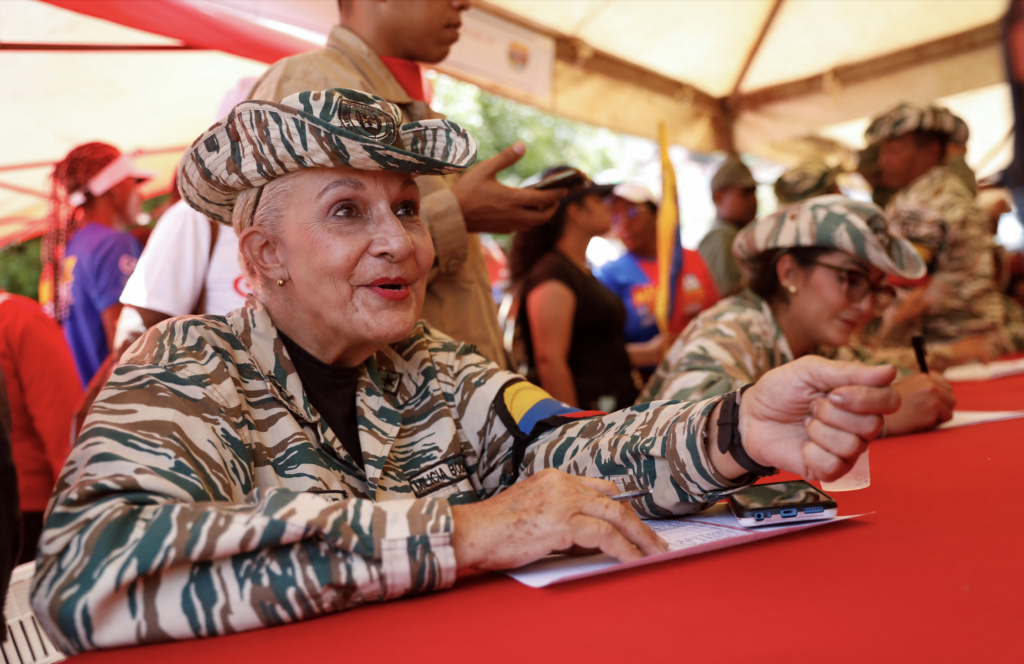
Drug cartels certainly control parts of Venezuela's state administration, judiciary, and politics, and some members of Maduro's clan presumably benefit from drug money. But his government is also fighting the cartels; two years ago, the Venezuelan army took over a prison that was controlled by a gang and is now working with Colombia to combat the drug mafia on the shared border. This is typical for Latin America. In this regard, neighboring Mexico poses a much greater threat to the US.
The accusation that Maduro is involved in drug trafficking is reminiscent of previous false accusations made by the US against Gaddafi or Saddam Hussein. In addition, the threat posed by drug mafia gangs cannot be solved by foreign missions, military interventions, or regime change, but rather at the source of the money, i.e., in the US itself, because the drug lords live off the American market.
Ideological, personal, and financial interests
Part of the pressure policy is also long-standing demonization. This comes from Venezuelan exiles in Florida and American exporters of democracy; the neoconservative National Endowment for Democracy considers Venezuela one of its long-term priorities.
In addition to ideological and personal interests, financial motives also play a role. A major supporter of think tanks that paint the Maduro regime in the darkest colors is the oil company Exxon, which is investing in deposits in neighboring Guyana, with which Venezuela is in dispute over oil reserves.
The deployment of the American fleet represents the culmination of the pressure policy to date. A landing and a violent change of power are not to be expected. Although the Americans used this method in 1989 to remove Manuel Noriega, the Panamanian dictator who was no longer obeying them, a few thousand marines would not be enough in Venezuela, a country with a population of 30 million that is twice the size of California. However, their military presence demonstrates strength in the region, which they regard as their sphere of influence. It also allows them to mobilize the Venezuelan opposition and gauge the actual balance of power in the country.
Trump's dual strategy
Although the Venezuelan president is described in Washington as a fugitive exile, they are also maintaining pragmatic relations with him. Almost simultaneously with the dispatch of the ships, another decision is made in the White House: the next oil company, Chevron, receives an exemption from the sanctions, allowing it to continue working with the Venezuelan government on oil production. Caracas is also cooperating with Washington on one of Trump's key priorities. Since the beginning of the year, it has already taken in several thousand Venezuelan citizens who were deported from the US on American planes.
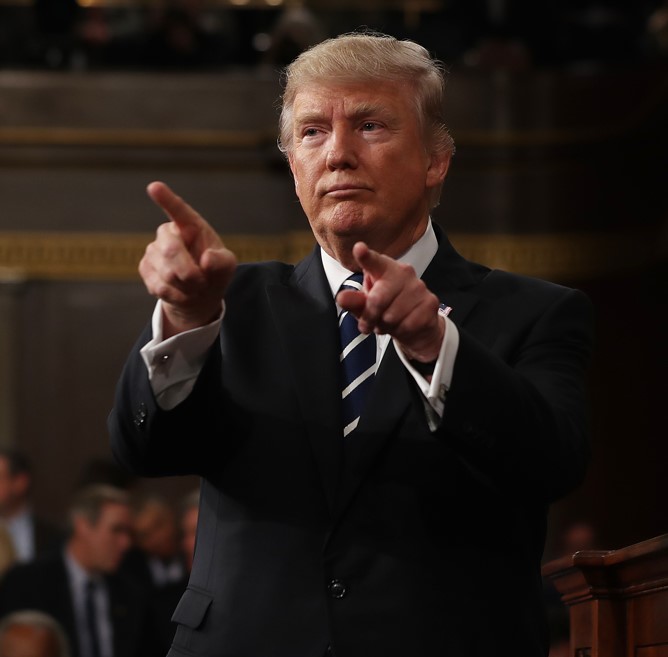
The Trump administration is pursuing a similar dual strategy toward Venezuela as it is toward Russia, where a pragmatic agreement with Putin and continued Biden support for the war are competing with each other. In both cases, this is probably not a well-thought-out strategy, but rather a convergence of different interests in President Trump's circle. In the case of Venezuela, these conflicts illustrate particularly well the competing interests of two oil companies: Exxon in Guyana and Chevron in Venezuela.
Trump himself is a pragmatist and would probably have quickly reached an agreement with Maduro if he were not bound by his apparatus. In his inner circle, Secretary of State Rubio could give him conflicting advice. As a former senator from Florida, he considers Latin America a top priority and is also close to exile groups. Hopefully, Trump will succeed in keeping the whole maneuver a demonstration of power without unpredictable incidents or civil war.