
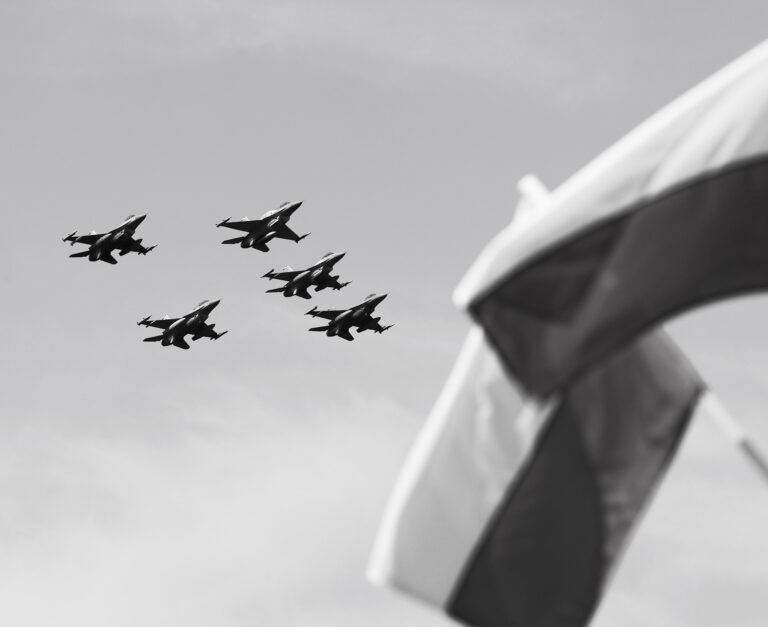
Poland’s unwavering commitment to its security has never been in doubt, but the last decade’s events have sharpened its resolve. Long a steadfast ally of the United States and a diligent contributor to NATO’s budget, Poland has emerged as a linchpin in European defence, particularly since Russia’s invasion of Ukraine in 2022.
The war on its eastern border, coupled with ongoing tensions with Belarus and Russia’s enclave of Kaliningrad, has underscored the fragility of Poland’s geopolitical position. Warsaw has responded with a bold plan to elevate defence spending to 5% of GDP by 2026, far surpassing NATO’s 2% guideline. It also aims to expand its military to 300,000 personnel, making it a force that would rank among Europe’s largest.
This ambition reflects a bipartisan consensus that transcends Poland’s often fractious politics. Whether led by the liberal Civic Platform (PO) or the conservative Law and Justice (PiS) party, successive governments have prioritised defence arguing it is a matter of national survival.
The memory of historical invasions and occupations looms large, fostering a political culture where questioning robust military investment means political suicide. Unlike some NATO allies, Poland does not merely meet expectations—it exceeds them, positioning itself as a regional powerhouse.
Comparisons with Germany, which has struggled to meet NATO’s 2% target, highlight Poland’s sense of urgency and discipline in addressing security threats. Yet, it comes at a cost, with economic trade-offs and lingering questions about sustainability.
A Strategic Response to Regional Instability
Poland’s geography is both a blessing and a curse. Its 3,582-kilometre border makes it the direct neighbour of Belarus, Ukraine, and Russia’s Kaliningrad enclave. Belarus, under Alexander Lukashenko’s regime, has aligned closely with Moscow, and hosts Russian troops while provoking Poland by sending (mostly Middle Eastern) migrants to the Polish border.
Ukraine, a partner, remains a conflict zone, and Kaliningrad is home to Russian military assets. These realities have galvanised Poland in upping its defence strategy.
Since 2014, when Russia annexed Crimea, Warsaw has steadily increased military spending, but the 2022 invasion of Ukraine marked a definite turning point. Poland’s defence budget, already at 2.4% of GDP in 2021, is set to hit nearly 5% by 2026, outdoing that of most NATO allies.
This escalation is not mere posturing. Poland has invested heavily in modernising its forces, acquiring American-made HIMARS rocket systems, F-35 jets, and Abrams tanks, alongside South Korean artillery and drones. The goal of a 300,000-strong military—double its current size—would include active troops and reserves. Meanwhile, its domestic defence industry would be bolstered.
Unlike Germany, which has faced domestic resistance to rearmament and only recently pledged to meet NATO’s 2% target, Poland faces no such hesitation. Both the PO and PiS agree that security is non-negotiable, while public support for high defence spending is consistently above 70%, according to polls. This unity contrasts with Germany’s slower pivot, where its post-WWII pacifism and coalition politics have delayed decisive action.
Poland’s approach also reflects a pragmatic reading of transatlantic dynamics. While Germany has relied on European integration for security, Poland places its trust in NATO and its American anchor. Warsaw’s contributions, including hosting NATO’s eastern flank headquarters and US troops, cement its role as a critical ally. Yet, the economic strain of such spending—diverting funds which would ordinarily go towards infrastructure or social services—poses risks, especially as Poland’s economy faces inflation.
A Model NATO Member, But at a Cost
Poland’s defence spending is a case study in strategic foresight, but it does not come without challenges. The financial burden of dedicating almost 5% of GDP to defence is substantial. In 2024, Poland’s defence budget reached €24 billion, dwarfing those of many European peers. For context, Germany, whose economy is four times larger, spent €52 billion in the same year, while still struggling to hit the 2% of GDP minimum.
Poland’s commitment, while admirable, strains public finances, with debt levels projected to rise to 60% of GDP by 2027. Investments in education, healthcare, or green energy may face cuts, raising doubts about whether a healthy long-term balance can be maintained.
Moreover, Poland’s military build-up is not just about deterrence but also regional influence. By expanding its forces and modernising its arsenal, Warsaw aims to shape NATO’s eastern strategy and counterbalance Germany’s economic dominance in the EU. This ambition has historical echoes: Poland’s interwar military was a point of national pride, and today’s leaders invoke similar sentiments. Yet, unlike the 1930s, Poland now operates within NATO’s collective framework, amplifying its influence. Its hosting of US missile defence systems and troop rotations underscores its strategic weight.
Comparisons with other NATO members highlight Poland’s outlier status. While the Baltic states also spend above 2% of GDP, their smaller economies limit their scope. The UK, a stalwart in defense spending, hovers around 2.3%, as domestic pressures constrain further increases. Poland’s model—consistent spending, bipartisan support, and public backing—sets a high bar. Yet, the risk of over-militarisation looms. A bloated defence sector could distort economic priorities, and reliance on US hardware ties Poland’s strategy to American goodwill.
Still, for a nation in such a volatile region, the alternative—complacency—is unthinkable. Poland’s resolve to remain NATO’s exemplar, regardless of who governs, ensures its security will not be gambled away.
Statement
Poland’s transformation into a military powerhouse reflects a clear-eyed response to its precarious geography and turbulent history. With defence spending set to reach nearly 5% of GDP by 2026 and a military expanding to 300,000, Warsaw is not just meeting NATO’s expectations but exceeding them, driven by bipartisan consensus and public support. Unlike Germany, which has lagged in meeting NATO’s 2% target, Poland’s urgency stems from it bordering Belarus and Ukraine. This commitment, while economically taxing, cements Poland’s role as a regional leader and NATO’s eastern bulwark, proving that security remains its priority, no matter who holds power.