
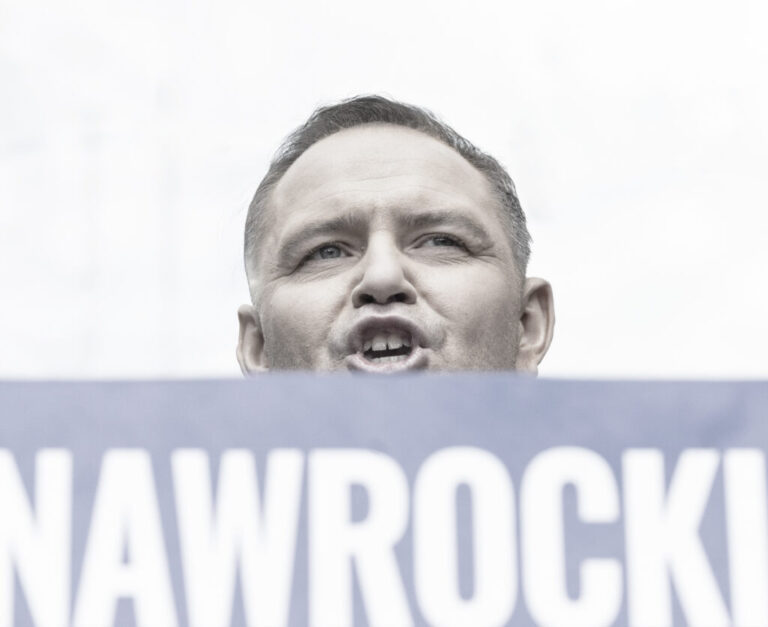
A year ago, Karol Nawrocki was, until recently, a virtual unknown to the Polish public, a Gdańsk historian quietly leading the Institute of National Remembrance. By June 2025, he had defied expectations, clinching the presidency in a tightly contested election, defeating the liberal favourite and Warsaw Mayor Rafał Trzaskowski.
Backed by the right-wing Law and Justice (PiS) party, Nawrocki’s ascent from obscurity to the presidential palace is a testament to the political acumen of PiS leader Jarosław Kaczyński, frequently styled Poland’s perennial kingmaker. Having propelled four presidents—Lech Wałęsa, his late brother Lech Kaczyński, Andrzej Duda, and now Nawrocki—Kaczyński’s gamble on a “civic” candidate paid off spectacularly. Nawrocki’s ability to unite conservative voters, including supporters of the nationalist Konfederacja and Grzegorz Braun, secured his victory in a nation deeply divided between liberal cities and conservative heartlands.
The presidential election, held in two rounds on 18 May and 1 June 2025, saw Nawrocki trailing Trzaskowski in the first round, with 29.5% to Trzaskowski’s 31.4%. Exit polls after the runoff initially projected a narrow win for Trzaskowski, prompting premature celebrations among his supporters. Yet, late polls and official results revealed Nawrocki’s triumph in the second round, securing 50.89% to Trzaskowski’s 49.11%, with an impressive 71.6% turnout. As Nawrocki prepares for his inauguration on 6 August, questions loom: can he assert independence from PiS, and what will his presidency mean for Poland’s role on the global stage? His tenure promises to challenge Prime Minister Donald Tusk’s pro-EU government, potentially with greater intensity than his predecessor, Andrzej Duda.
A Masterstroke by Kaczyński
Nawrocki’s rise owes much to Jarosław Kaczyński’s strategic vision. Selecting a relatively unknown historian as PiS’s candidate was a calculated risk, designed to sidestep the baggage of more prominent party figures like Mariusz Błaszczak, Przemysław Czarnek or former Prime Minister Mateusz Morawiecki. Nawrocki, a 42-year-old political novice, presented a fresh face, untainted by the bruising political battles of PiS’s eight-year rule until 2023. His academic credentials and leadership lent him credibility among conservative voters wary of liberal elites. His campaign resonated with rural and small-town Poles, who saw in him a defender of traditional values and national sovereignty.
Crucially, Nawrocki’s appeal extended beyond PiS’s core base. In the first round, nationalist candidates Sławomir Mentzen of Konfederacja (14.8%) and Grzegorz Braun of the Confederation of the Polish Crown (6.3%) drew significant support, reflecting a fracturing of Poland’s political duopoly.
Nawrocki’s team deftly courted these voters, securing endorsements from figures like outgoing president Duda and even gaining traction among Mentzen’s youthful, anti-establishment base. His meeting with US President Donald Trump in May 2025, alongside endorsements from Trump’s allies like Kristi Noem, bolstered his image as a transatlantic conservative. Despite controversies—allegations of past involvement in football hooliganism and questionable property dealings—Nawrocki’s “everyman” persona, complete with Lechia Gdańsk tattoos, endeared him to voters disillusioned with Tusk’s urban liberalism. This broad coalition of conservative support, orchestrated by Kaczyński, proved decisive in the runoff, overturning Trzaskowski’s early lead and exposing the fragility of Tusk’s coalition.
Navigating Independence and International Challenges
As Nawrocki prepares to assume office, his ability to carve out an independent path while tethered to PiS looms large. Though largely ceremonial, the presidency nonetheless wields considerable veto authority, a tool Duda used to stymie Tusk’s reforms on judicial independence and abortion laws. Nawrocki, analysts predict, will be an even tougher adversary. His campaign promises—to block EU migration policies, resist the European Green Deal, and oppose Ukraine’s NATO membership—signal a combative stance that could deepen Poland’s rift with Brussels.
Political analyst Joanna Sawicka notes, “Nawrocki’s presidency means a high-level conflict with Tusk, potentially paralysing the government until 2027.” His alignment with populist leaders like Hungary’s Viktor Orbán, who congratulated him warmly, suggests a regional alliance of eurosceptics, Poland’s status as a pivotal actor within both NATO and the EU.
On the international stage, Nawrocki’s tenure will be closely watched. Poland’s robust defence spending—proposed at 5% of GDP—reflects his commitment to national security, yet his opposition to deeper EU integration may strain ties with Berlin and Paris. Nawrocki’s White House visit and Trump’s backing hint at a transatlantic pivot, potentially aligning Poland with a US-led conservative axis.
Domestically, his veto power could stall Tusk’s agenda, from judicial reforms to liberalising abortion laws, risking political gridlock. Yet, Nawrocki’s relative inexperience may offer Tusk opportunities to outmanoeuvre him, provided the coalition can maintain unity. His presidency may reshape Poland’s trajectory, for better or worse, in a world watching closely.
Statement
Karol Nawrocki’s improbable ascent from anonymity to the presidency in June 2025, defeating Rafał Trzaskowski (50.89% to 49.11%) after trailing in the first round (29.5% to 31.4%), underscores the enduring craft of Jarosław Kaczyński’s as a political kingmaker. By selecting a “civic” candidate, PiS united conservative voters, including Konfederacja and Braun supporters, to secure a third consecutive presidential win. Nawrocki’s inauguration on 6 August heralds a formidable challenge for Donald Tusk’s government, likely surpassing Duda’s obstructionism. His eurosceptic stance and Trump-aligned conservatism may strain EU ties while bolstering Poland’s nationalist agenda, reshaping its domestic and international future.