
In the dark hours between midnight and 2 a.m. on the 15th of April, nearly a billion—$962 million—in previously reported savings vanished from DOGE’s official website without explanation. The organ of government billed as ensuring transparency, specifically when it comes to taxpayer dollars, is, it seems, able to lose a billion USD without raising eyebrows in Washington.
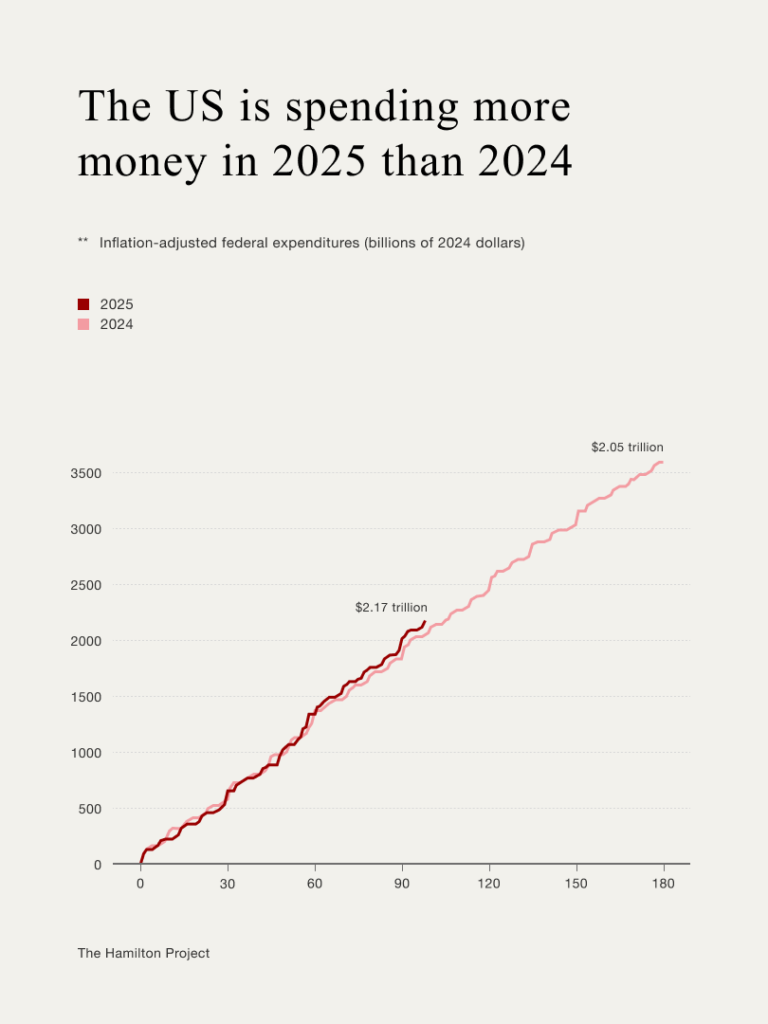
This comes as President Donald Trump approaches the hundred-day mark of his second term, during which the Federal Government has not reduced costs with respect to 2024.
It also coincides with the possible imminent end of Elon Musk’s tenure as head of DOGE. President Trump recently indicated that Elon Musk is likely to depart from his role in the administration within a few months to refocus on managing his various companies. "Elon is fantastic," Trump remarked, acknowledging Musk's significant contributions, however, "he has a number of companies to run.”
It is appropriate, then, to look at the short history of irregularities in DOGE operations and wonder what Musk’s legacy will be as the Trump administration moves forward.
Slashing Costs or Sloppy Accounting?
The DOGE website, essentially a public record of Musk’s campaign to shrink federal expenditures, has been somewhat carelessly run. It has repeatedly posted erroneous data, such as an $8 million contract once inflated to $8 billion.
One of the largest items to disappear from the website’s records was a $1.1 billion contract with the Acacia Center for Justice, which funds legal services for unaccompanied immigrant children. DOGE initially claimed a savings of $367 million from the contract’s cancellation. Now, it has disappeared from the site entirely. The New York Times noted on April 13, 2025, that DOGE adjusted total claimed savings from $140 billion to $150 billion, with little justification provided.
Another noteworthy case is the $250 million Department of Energy contract tied to efficiency standards, which appeared as savings, only to be later revised or removed. In dozens of instances, the programme has arbitrarily adjusted its claimed savings—sometimes increasing them by over 50%, other times zeroing them out entirely. In early April, twelve contracts saw their combined “savings” rise by $1.2 million and some individual grants were adjusted by more than $1 million—again, with no clear rationale. There also seems to be evidence that DOGE has taken credit for closures and cancellations that were approved before its creation.
But the most flagrant irregularities involve an alteration to DOGE’s website in the week leading up to an April 10 meeting, during which Musk’s remarks seemed to indicate his savings goal is $150 billion, rather than the previous $2 trillion. Indeed, DOGE’s website had precisely recalculated its total claimed savings from $140 billion to $150 billion just before.
DOGE’s offers a shifting digital scoreboard, a show of savings with no clear methodology, updated erratically and often providing no rationale. It is a project in the image of Big Tech’s “move fast and break things” ethos: ambitious but erratic and lacking in transparency.
A Blow to Populism?
Donald Trump’s political ascent was marked by his appearing to be an outsider challenging the entrenched political interests—and this on behalf of working and middle-class Americans.
During his second term, Trump’s economic populism has been principally connected to DOGE’s sweeping cost-cutting mission. This was the instrument that would uncover and dismantle the “Deep State” and streamline government operations, aligning with Trump's long-standing rhetoric around reducing bureaucratic overreach and revitalising the economy.
However, irregularities in how it’s been run could lead to skepticism not only concerning the effectiveness of DOGE but, by extension, also about the potential for genuine change it seemed to embody. Voters who were drawn to Trump's anti-establishment message may find themselves disillusioned. In fact, much of the reporting about DOGE, if true, provides fodder for mainstream media figures to defend career-politicians and technocrats as more competent than “outsiders.”
Statement
In the early hours of April 15, 2025, approximately $962 million in reported savings disappeared from DOGE's official website without explanation. As Artificial Intelligence systems and tech tycoons continue to participate in public administration, DOGE is a cautionary tale. When transparency is replaced by technical sleight-of-hand, and when oversight is deferred to “Special Government Employees” like Musk, able to act with broad discretionary powers, the already-corroded trust in public institutions can only be further eroded. As a result, the populist promise risks becoming more of a mirage, which plays right into the hands of the establishment it said to combat.