
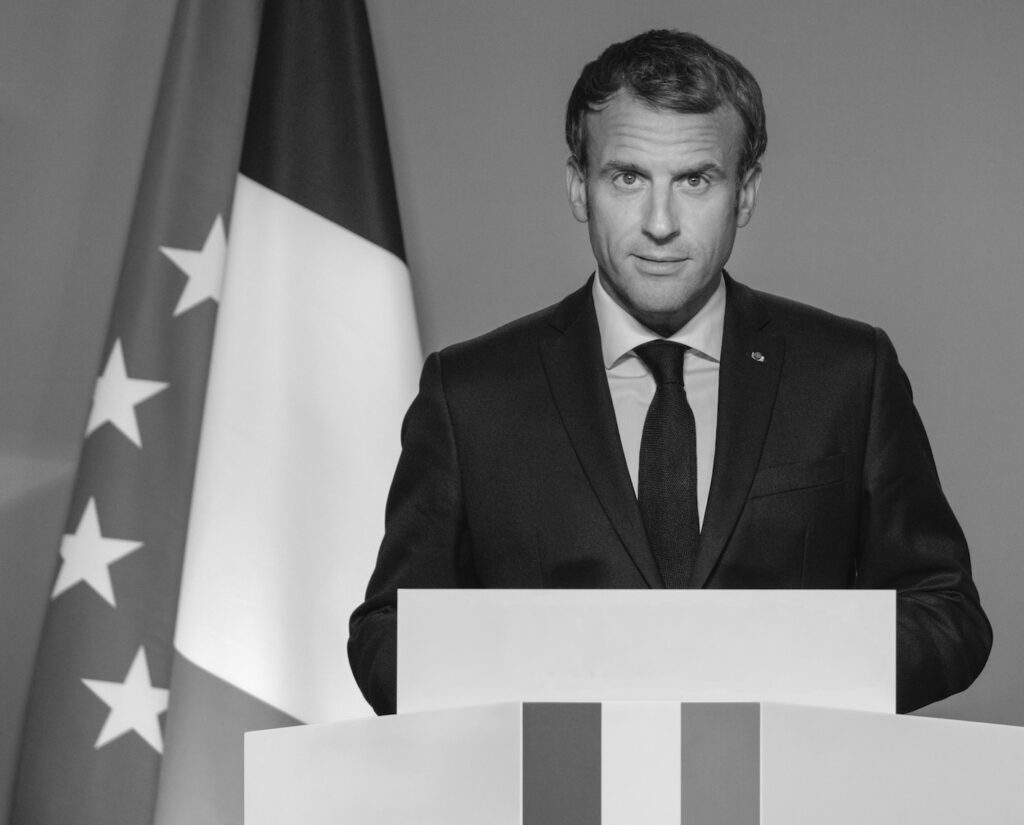
On 26 September 2017, Emmanuel Macron, not yet forty, delivered an impassioned address at Paris’s emblematic Sorbonne University, aiming to breathe new life into a faltering European ideal. Within his ambitious "Initiative pour l'Europe," Macron eloquently spoke for over ninety minutes, setting forth a detailed vision for Europe's renewal. HMacron’s poise and youth cast him as Europe’s would-be saviour. The speech resonated across the continent, extensively covered by European media, offering hope that a stagnant Europe might finally have found its young champion.
His speech acknowledged the frustration driving populism, not just called for renewal. He candidly admitted Europe's challenges and outlined solutions, a rare gesture at a time when optimism about Europe's shared future still lingered. By embracing the term "sovereignty"—a concept frequently used by Eurosceptics critical of diminished national autonomy—Macron cleverly redefined it, advocating instead for a unified European sovereignty, rather than fragmented national sovereignties.
The victory of Macron over Marine Le Pen in 2017 initially appeared as a turning point in European politics, especially significant following the Brexit referendum in 2016. Brexit exposed severe criticisms of the European Union, particularly its notorious bureaucratic inefficiencies. European leaders often resorted to abstract rhetoric without concrete outcomes. Macron’s speech at the Sorbonne explicitly sought to break from this tradition, emphasizing actionable policies rather than vague ideals. But why, despite the initial enthusiasm, did Macron’s ambitious plans yield mixed results?
Ambition Meets Reality: The European Defence Fund and Beyond
One remarkable aspect of Macron’s foresight was his early recognition in 2017 that the United States was retreating from its global policing role. By 2025, this observation has proven increasingly accurate as American inwardness has become more pronounced. Macron might have seemed visionary—if his proposals had borne fruit. Central among these was his call for a unified European army to complement NATO forces.
The European Defence Fund (EDF), inspired by Macron’s vision, perfectly illustrates the challenges of EU policymaking. It took nearly four years from Macron’s speech before the EDF was officially established through EU Regulation 2021/697 in April 2021. Its ambitious objectives—reducing EU dependence on foreign military technology, fostering intra-European cooperation, and stimulating innovation—were backed by a relatively modest budget of €7.953 billion for 2021–2027–compared it to U.S. defence R&D spending of around $100bn annually. It’s insufficient for developing a truly effective European defence capability. Recent geopolitical shifts prompted Ursula von der Leyen to advocate more substantial military spending. Yet, even this revised proposal, less ambitious than Macron's original vision, requires at least €800 billion for credible European defence forces. EU member states, however, continue to undershoot NATO’s 2% GDP target for defence spending, averaging just 1.9% in 2024.
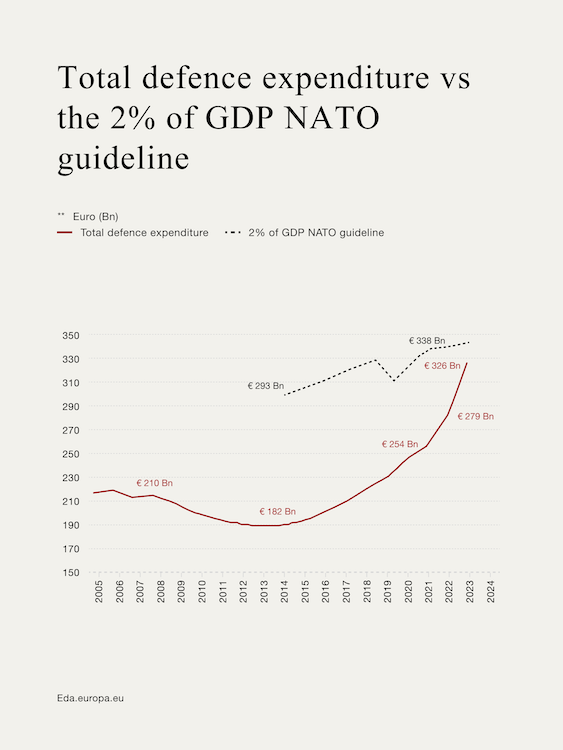
This defence example highlights the broader disparity between Macron’s ambitious vision and practical EU outcomes. NATO’s arms imports between 2020–2024 more than doubled compared to 2015–2019, with the United States accounting for a dominant 64% of these supplies, significantly increasing European dependence rather than reducing it. Macron’s initiative, ambitious as it was, underscored typical EU shortcomings.
Other aspects of Macron's extensive European vision have fared even worse. Proposals for a European intelligence academy and coordinated civil defence mechanisms produced minimal tangible outcomes. EU initiatives regarding migration, environmental policy, and digital transformation similarly lagged. For instance, taxation measures aimed at global corporations were enacted but implemented ineffectively, with giants like Apple still benefiting from negligible tax rates in Europe—0.005% in 2014, according to the European Commission. In digital technology, where Macron initially seemed progressive, his stance increasingly turned cautious, leaving Europe behind in fields like cloud computing and artificial intelligence.
A Legacy of Unfulfilled Promises and Deflection
Reviewing Macron's ambitious European agenda comprehensively reveals a persistent gap between lofty aspirations and limited practical success. After eight years, tangible results are minimal, with the dream of a federal Europe further away than ever. National crises have eroded EU solidarity, exposing Macron’s vision as utopian
When confronted about these failures, Macron consistently deflects, attributing setbacks to external crises—including the Yellow Vest protests, the COVID-19 pandemic, the Ukraine war, and energy disruptions—rather than acknowledging personal or strategic errors. Even when compelled to admit mistakes, such as during France's controversial pension reforms, Macron blames messaging, not policy.
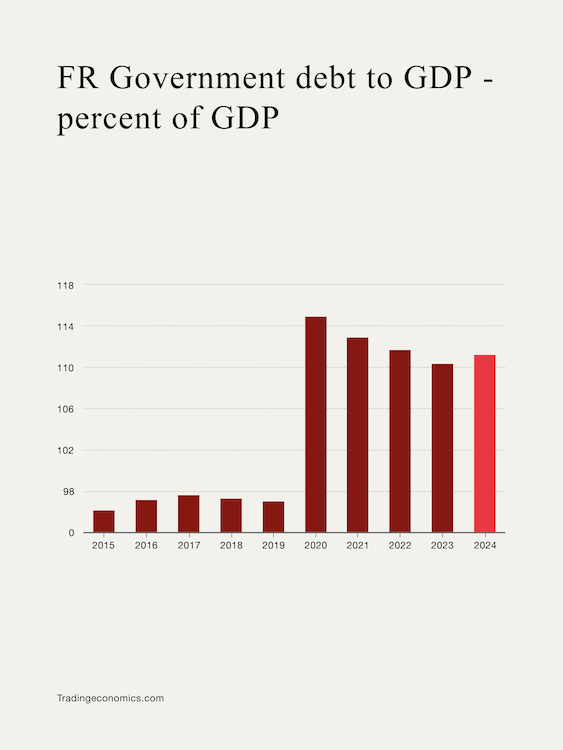
If Macron’s decisions are sound, why are rating agencies sounding alarms, by predicting debt to reach 120% of GDP by 2028, as indicated by Fitch? Macron’s unwillingness to critically assess his own policies, combined with the inadequate results from his grand European project, raises fundamental questions about both his leadership and Europe's direction. Macron’s stalled European ambition thus offers a sobering lesson in the profound disparity between visionary political rhetoric and effective governance.
Statement
In 2017, Emmanuel Macron pitched a bold European renaissance at the Sorbonne—calling for sovereignty, defence autonomy, and digital innovation. Eight years on, his vision lies mostly unrealized. Even as Macron rightly anticipated American withdrawal from global leadership, Europe’s response has remained lethargic and fragmented. His soaring rhetoric met EU inertia, and when progress faltered, blame shifted to crises—never to miscalculation. Macron promised a federal Europe; what remains is a cautionary tale of aspiration outpaced by institutional drift and strategic deflection.