
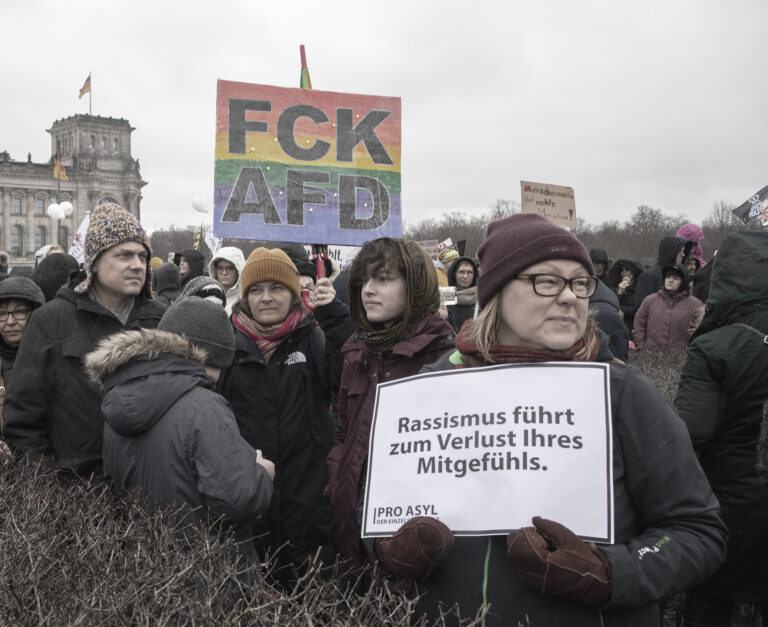
Thirty-five years after reunification, Germany is no longer divided by a wall – and yet more fractured than ever. The split today runs not between East and West, but between competing perceptions of reality.
Germans now carefully weigh their words. Surveys reflect this cautious spirit: merely 40% say they feel free to express their true political opinions openly. Such hesitance stems from a growing perception, fostered by Germany’s major media outlets, that straying from officially sanctioned views makes one an outsider. To diverge from the government line or progressive orthodoxy is increasingly seen as social heresy.
Alexis de Tocqueville argued in Democracy in America that democracy’s survival hinges on a vigilant and independent press—a "tool of liberty" more vital than in any monarchy, where aristocratic power balances the crown. Yet in modern Germany, mainstream media, instead of challenging governmental narratives, often act as their allies. This alignment diminishes the press’s role as advocate for minority views against a tyrannical majority. Consequently, citizens harbouring dissenting perspectives feel voiceless, unrepresented, and alienated.
The Illusion of Consensus
German political culture has historically preferred consensus over confrontation. The Weimar Republic was perhaps the last era in Germany when genuine media diversity flourished—yet it is remembered as an era of chaotic failure. Today’s ordered intellectual landscape, influenced by leftist intellectuals of the 1968 generation, provides clearer boundaries. Despite various scandals and apparent political biases, public trust in Germany’s state broadcasters remains remarkably resilient. But this superficial unity masks deeper fissures.
These divisions surfaced unmistakably during the migrant crisis of 2015, when Angela Merkel's open-border policy was universally celebrated by mainstream outlets, even as many communities confronted rising crime rates. Large segments of the population lost faith in traditional media narratives and turned instead to alternative sources online. Yet, the establishment often mistakes the real threat, focusing excessively on voters of the right-wing Alternative für Deutschland (AfD), while overlooking an even larger, silent demographic deeply sceptical of official narratives.
The Clash Over Facts
Today’s conflict in Germany is not simply a disagreement of political opinion—it is about irreconcilable perceptions of reality itself. One side insists migrants sustain Germany’s welfare state, believing the country wealthy enough to accommodate continued immigration. The other sees mounting poverty, overwhelmed welfare systems, and strained police forces. Crucially, these disputes no longer revolve around differing interpretations but divergent sets of facts themselves.
In a decidedly Orwellian twist, state institutions and aligned media have introduced various "fact-checking" bodies to validate official truths. But truth imposed from above only exacerbates tensions. German democracy increasingly resembles an exercise not in democratic deliberation but in authoritarian instruction. Citizens, naturally resistant to having their perceptions dictated, push back with rising anger—an anger paradoxically fuelled by state actions ostensibly intended to combat populism.
Marginalisation and Alienation
The AfD’s rise vividly illustrates this dynamic. Initially fuelled by migration anxieties, the party entered parliament in 2017. Despite relentless criticism, stigmatization by the media, and official surveillance by security services, the party’s support has surged rather than faded. Its attraction is less about specific policy proposals than about its unique role as the sole political representative of an "alternative reality," dismissed outright by mainstream forces as dangerous or extreme.
Consequently, any dissenting viewpoint is swiftly branded as "AfD-like" or even "far-right," accelerating social polarisation. This process goes beyond political ostracism—it strikes at the basic humanity of dissenters, leading restaurants and bars openly to refuse service to AfD members or voters, evoking troubling historical memories. The dialogue ceases entirely, and dissenters become societal pariahs.
The Edge of Conflict
This exclusion fosters volatility. Far-left groups, such as Antifa, have targeted even moderate conservative politicians who deviate slightly from accepted norms. Attacks and intimidation against AfD representatives have similarly risen sharply. The possible ban of the AfD—a party polling around 25%—demonstrates how deep this reality split runs. The naive hope of one side is that eliminating the party would erase its underlying support, while opponents fear it would only ignite greater unrest.
Germany’s contemporary political landscape thus resembles less a healthy democracy than two parallel societies, each convinced of its factual correctness and moral superiority. Compromise requires mutual recognition, yet each camp sees concession as betrayal, convinced it alone possesses absolute truth. The press, traditionally democracy’s watchdog, now acts largely as a guard dog for approved narratives.
Statement
Germany's division is no longer metaphorical; it cuts deeper than political disputes, manifesting openly wherever its parallel realities collide. Democracies, unlike monarchies, cannot sustain such profound disunity without eroding their foundations. With hostility flourishing in televised and online discourse, Germany faces a perilous test: the possible banning or electoral triumph of the AfD. Either outcome risks igniting the explosive tensions beneath. A nation once split by a physical wall is now separated by a mental barrier just as formidable. Bridging this divide is imperative—failure to do so could unleash consequences far beyond politics.