
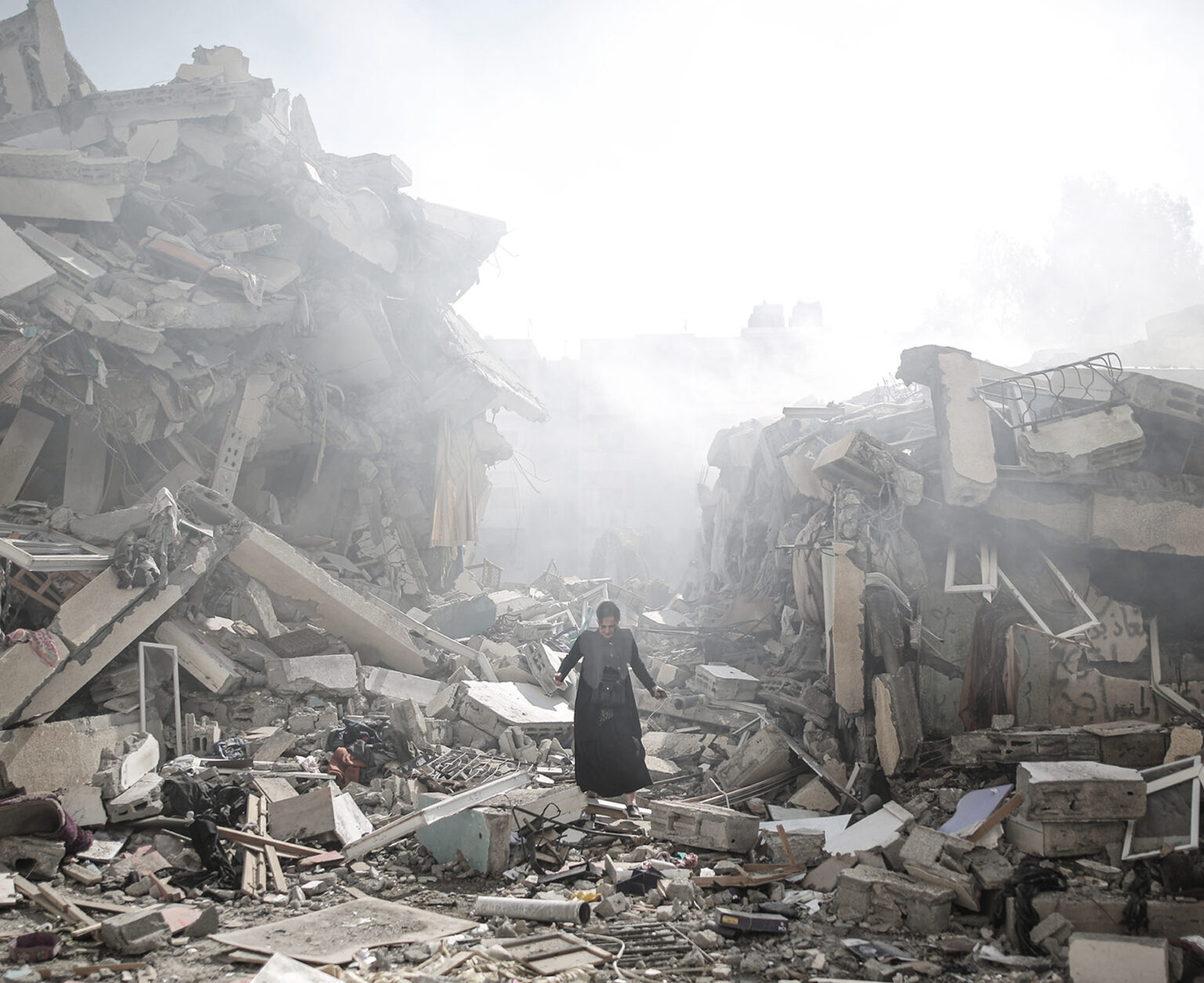
Peace rarely follows in the immediate wake of great wars. More often, what ensues is what the German writer Ernst Jünger termed ‘Mobilmachung’—a total mobilisation of society in which war continues by other, more insidious means. After 1918, Europe was not pacified; rather, the war dissolved its frontlines and seeped into every aspect of political and social life. Soldiers did not return home—they came back, traumatised and uprooted, rifles still in their packs. In Kyiv, Reds, Whites, anarchists, Cossacks and demobilised veterans clashed in a chaotic melee, even as Mikhail Bulgakov recorded the collapse of the old world in literary agony. In Germany, the Freikorps stormed against workers' uprisings and spilled into Poland amid spiralling ethnic conflict. In Italy, the groundwork of fascism was laid.
A century on, all signs suggest a repetition in eerie silhouette: post-war Ukraine will not become the Europe of Brussels, nor of Davos—or even Sochi—but something far more reminiscent of postwar Upper Silesia or Crimea in 1920.
The present war will end—that much is certain. But its end may offer no true political beginning. No peace-making order, no stable equilibrium, no juridical catharsis. Ukraine may have irrevocably turned from Russia, but that does not mean it will be embraced by, or embrace, a liberal, cosmopolitan West. It may emerge not as a grateful ward of Euro-Atlantic integration, but as a nation that sees itself as bled and bartered away—sacrificed, not in solidarity, but by a self-serving, materialist, post-heroic West.
That wound will fester into politics.
Already, disappointment is palpable: with Western dithering, German hesitation, American calculation. The illusion that the West is a safe haven has shattered. The Ukrainian nation, tempered in fire, is unlikely to greet post-war life with reconciliation. It will be harder, less trusting. Its democratic institutions will be weakened, its society militarised, its political centre defined by veterans. Liberal discourses, inclusive nationhood, civic idealism—these are unlikely to gain traction. Instead, a self-image forged in struggle and strength will emerge, one that resembles, at least formally, the ethos of Russian propaganda more than the visions of Brussels.
As after 1918, Europe will witness the rise of a stratum of young men who have not only survived the act of killing but mastered it. Men who understand that war is not a streaming series, nor a conference in Munich, nor an academic seminar in geopolitics. What began in the trenches of Donetsk and Luhansk will not be pacified by EU accession talks. Ukraine will become a post-heroic republic where patriotism arises not from historical memory, but from lived trauma. And that, in turn, will produce a new political class: veterans, battalion commanders, militia leaders—armed, charismatic, influential.
But the danger is not confined to Ukraine’s internal evolution. The geopolitical aftershocks of the war will convulse Europe’s periphery—above all, the East. In Poland, paramilitary groups already coalesce, some in the guise of border guards, others emerging from veterans’ networks. The militarisation of civil society is no longer merely a Ukrainian or Russian phenomenon—it is becoming a Central European one. In Lithuania, Latvia, Romania—everywhere—there grows a mistrust in the defensive capacity of the state and the reliability of the West. The response: self-armament, shadow armies, hybrid security structures. It was precisely such dynamics that, after 1918, unshackled the boundaries of political violence.
In this sense, the analogy with Afghanistan cuts both ways. For Russia, certainly, as with the Soviet Union before it: Moscow teeters on the edge of implosion—politically, economically, morally. But for the western neighbors and Brussels as well, Ukraine risks becoming its ‘Afghanistan’— as a volatile exporter of conflict-energy. Veterans, weapons, irreconcilable passions—all may be turned outward, or inward: against Russia, against a West perceived as treacherous, against minorities. Terrorist acts, political assassinations, violence against ‘traitors’—such outcomes are not fanciful. A Ukraine that sees itself as a betrayed frontline nation will pursue its own path—and that path may not lead westward.
What emerges, then, will be neither a second Russia, nor a second Netherlands. It will be a new geopolitical entity: aggressive, vigilant, unbounded. A tragic echo of the interwar years, in which Ukraine—born of heroic resistance—may itself become a space where violence remains the currency of politics.
Bulgakov once described his native Kyiv as a place of "holy ruin". Today, young men fight there with high-tech drones and Soviet rifles. What they are doing is defence. What they are experiencing is transformation. The war will end. But the fever will remain. And Europe should ask itself: is it prepared for what follows when the guns finally fall silent?
Statement
After 1918, peace proved illusory. Europe slid from trench warfare into fratricidal tumult. Ernst Jünger and Mikhail Bulgakov captured this brutal interzone: Jünger’s mechanised soldier presaged total mobilisation; Bulgakov mourned a bourgeois Kyiv sinking into sacred decline. Their depictions of civil war across Central and Eastern Europe resonate once again—and have done so repeatedly. After Mariupol and Bakhmut, after ultranationalist irregulars like Azov and Wagner, after paramilitary formations gathering in Poland under the guise of ‘border security’, the line blurs once more between army and militia, between the declared interests of the state and the ambitions of shadow powers. Europe is once again flirting with internal militarisation under the mantle of security. Jünger and Bulgakov do not merely look back—they warn of a war that mutates, but never ends. The fever remains. Will the war in Ukraine become not only Russia’s new ‘Afghanistan’—but also the nightmare of Brussels and Central Europe capitals like Warsaw or Bratislava?