
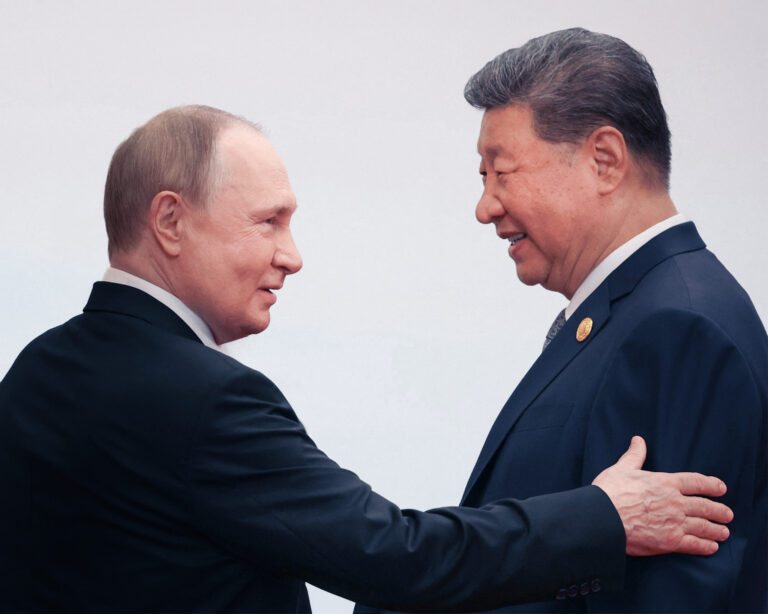
The Shanghai Cooperation Organization summit in Tianjin, China, was one of the most significant events in global diplomacy this year. After 25 years of existence, the long-underestimated organization is now taking on a previously unimagined geopolitical dimension as a crucial forum for political discussion on the most important issues facing Eurasia. Participation in the summit is testament to this.
The beginnings of the Shanghai Cooperation Organization
In contrast to the recent BRICS summit, which was attended by neither the Russian nor the Chinese president, the summit in Tianjin was attended by the highest representatives of all member countries, and most partners and guests were also represented at the highest level. Given the new developments in the politics of global balance, the participation of Indian Prime Minister Modi was of crucial importance. The weakness and mistakes of the West also increase the weight of the Shanghai cooperation.
The organization was created at the beginning of our century as a place for coordinating interests and resolving disputes between Russia, China, and the newly emerged Central Asian states of Kazakhstan, Uzbekistan, Kyrgyzstan, and Tajikistan. Turkmenistan, which would also belong, does not participate due to its strict policy of neutrality and is not a formal partner; its president came to China as a guest this year.
In its first decade, the organization is dedicated to coordinating the fight against terrorism motivated by rising Islamism, but otherwise remains just one of dozens of regional forums, of which there are hundreds worldwide.
Just international order
Since the second half of the last decade, it has been undergoing a fundamental transformation. With the accession of India and Pakistan in 2017, it lost its exclusively Central Asian character and, with the addition of Belarus and Iran last year and the year before, became a Eurasian organization whose partners now include countries from Egypt to Turkey, the Persian Gulf states, Indonesia, Mongolia, and Vietnam.
This rise is driven by the same engine as the rise of the BRICS countries: the decline of American hegemony and the resulting need to find a new model of international order.
Similar to the BRICS countries, it rejects the Western concept of a “rules-based” international order, if only because the Americans do not allow anyone else to participate in the formulation of the rules and, above all, because the West itself repeatedly violates all the rules it proclaims.
In Tianjin, the talk was instead of a “just international order.” Unlike the BRICS countries, the Shanghai Cooperation Organization is not based on a global foundation, but is limited to the world's most important continent, which has its limitations but also its advantages.
Eurasian emancipation
It is emerging as the most important institution of Eurasian emancipation. In the 19th century, issues concerning Eurasia were decided primarily in London, in the 20th century in Washington, and for a time also in Moscow. In this century, the centers of decision-making are shifting from the Anglo-Saxon world, from the Atlantic maritime powers, to the continental Eurasian great powers of China, India, and Russia.
Each of them represents its own civilization, each is self-sufficient in security matters, and each is capable of resisting American attempts at isolation or blackmail. This distinguishes them, for example, from Brazil and South Africa, with which they otherwise form the core of the BRICS countries. These are neither comparably strong nor resilient, which limits not only their own room for maneuver but also that of the entire BRICS countries.
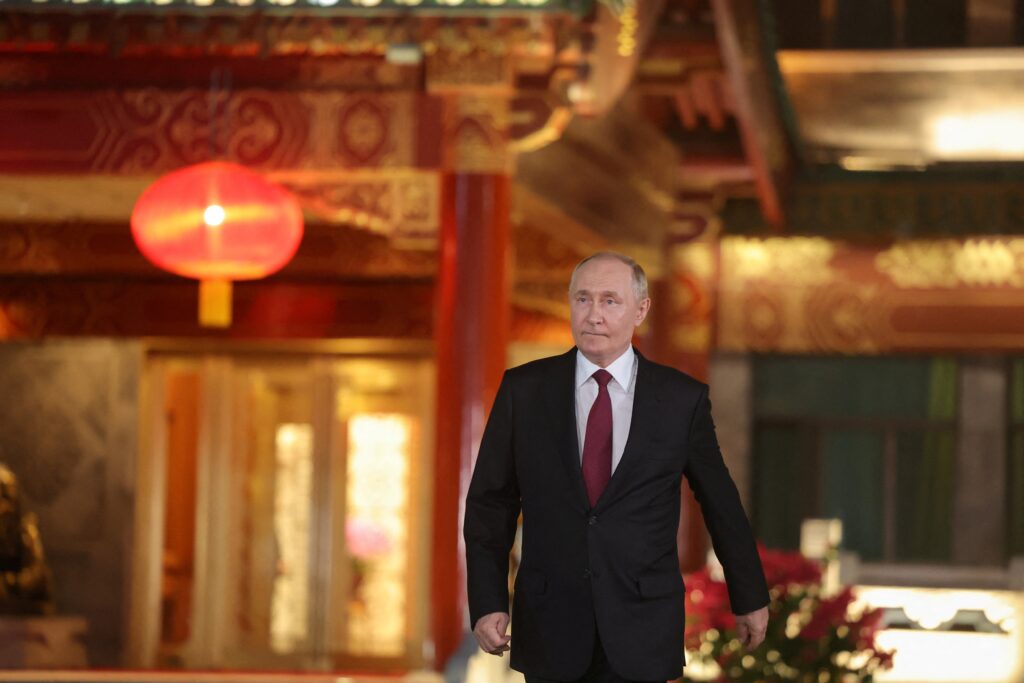
Cooperation in Shanghai is based precisely on the cooperation between these three self-confident Eurasian superpowers. They have different relationships with the political West. Russia is closest to it due to its history and culture, a military superpower with a small but extremely resilient economy. President Putin also initially followed the Western course until he realized that the US and Europe did not consider Russia an equal partner and sharply distanced himself from them in order to defend Russia's fundamental interests.
Diverse relations with the West
The expansionist policies of the US from Bush Jr. to Obama to Biden have turned a friendly Russia into an enemy. Trump tried to change this during his previous term in office, but was unsuccessful. Today, the situation seems to be repeating itself. Germany and France, which until recently tried to maintain their relations with Russia even against the will of the US, are now the main destroyers.
In contrast, China is furthest removed from the West. Historically, it represents a consistent civilizational alternative to the West, which today takes the form of an economic and military superpower with an expanding global network of partners and customers.
Its relationship with the West is purely pragmatic; in the past, it was painfully marked by economic colonization, but in the last fifty years, it has been marked by beneficial modernization. It does not seek confrontation, but is patiently preparing for the moment when confrontation may be inevitable. Trump's policy of global containment of China probably convinces it that confrontation will eventually occur.
India vs. its Shanghai partners
India, a demographic giant, culturally divided, with an underdeveloped economy and a military whose equipment depends on supplies from Russia and the West, is the most unstable. Politically, it is closer to the West than to Russia, but in terms of civilization, it is just as far away from it as China.
It considers its Shanghai partners China and Pakistan to be a greater strategic threat than the US. Unlike Russia and China, it has no global superpower ambitions and does not form exclusive alliances. It is based on a policy of non-alignment and does not strive for a multipolar world, but rather a “non-polar” and “multi-aligned” world.
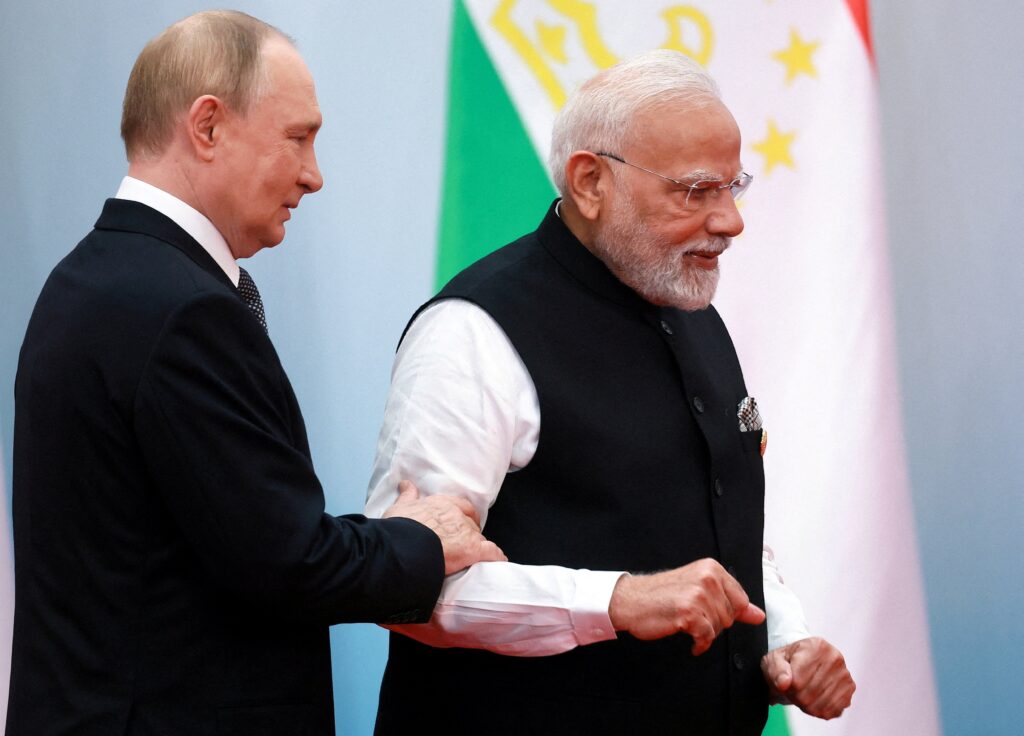
At BRICS meetings, it has always emphasized that it is not an anti-Western bloc, but rather a forum that facilitates conflict-free cooperation between countries in the Global South. It maintains close relations with Europe and the US. It gets on particularly well with France, from which it buys a lot of weapons. At France's initiative, it has reportedly also rejected Algeria's accession to the BRICS countries. Paris has many problems with Algeria and has convinced the Indians that Algeria is controlled by the Chinese.
It has always been interested in friendly relations with the US. It cooperates with them both bilaterally and regionally in the Quad format, which also includes Australia and Japan. In February of this year, Prime Minister Modi was one of the first guests at the White House under Trump.
The West's mistakes have strengthened cooperation between its rivals
In the months that followed, Trump managed to significantly disrupt US-Indian relations. First, he boasted that he had brokered a ceasefire in the conflict between India and Pakistan, which the Indians angrily denied – they consider it unacceptable for third parties to interfere in their relations with Pakistan.
Much more serious was the increase in tariffs on Indian exports to 50 percent, which Washington justified by citing India's purchases of Russian oil. The Indians did not understand why the US was interfering in their trade with Russia, especially since other countries that were spared the sanctions tariffs also purchase oil and gas from Russia.
Over the past twenty years, the West has done much to make enemies of all three Eurasian powers and to strengthen their cooperation. Russia is strengthening its strategic partnership with both China and India. One of the results of Putin's trip to China is the agreement on the new “Sibirskaya Sila 2” gas pipeline, which is expected to double Russian gas exports to China; It will run from the deposits on the Yamal Peninsula, which previously supplied Europe.
There is also a thaw in the complicated Chinese-Indian relations, which are strained by border disputes. This is reflected in China's support for India's admission to the UN Security Council and the Indian Prime Minister's participation in the summit meeting of the Shanghai Cooperation Organization. He visited China after seven years and agreed with his Chinese counterpart, among other things, to resume air links between the two countries.
Modi is not closing the door on the US, but is making it clear to Washington that it cannot count on the Sino-Indian rivalry on which the West bases its activities in Eurasia.
When (no) sense of geopolitical realities is lacking
Western commentators who described the summit as a meeting of dictators cling desperately to the mistaken idea that states with different political regimes are not equal partners and that the political West is self-sufficient. With moral complacency, they ostracize the European heads of state and government who have traveled to China. They deserve praise instead for showing the ability to recognize the geopolitical reality of a growing Eurasia.
No one west of Belarus attended the meeting in Tianjin, as the states of Western and Central Europe are not involved in the Shanghai Cooperation Organization. The situation was different at the military parade that took place in Beijing after the summit to mark the anniversary of the end of World War II in China. Serbian President Vučič and Hungarian Foreign Minister Szijarto stood on the podium alongside Prime Minister Fico.
This is not the first time that these three Central European states have shown an awareness of geopolitical realities that has been lost in Western Europe.