
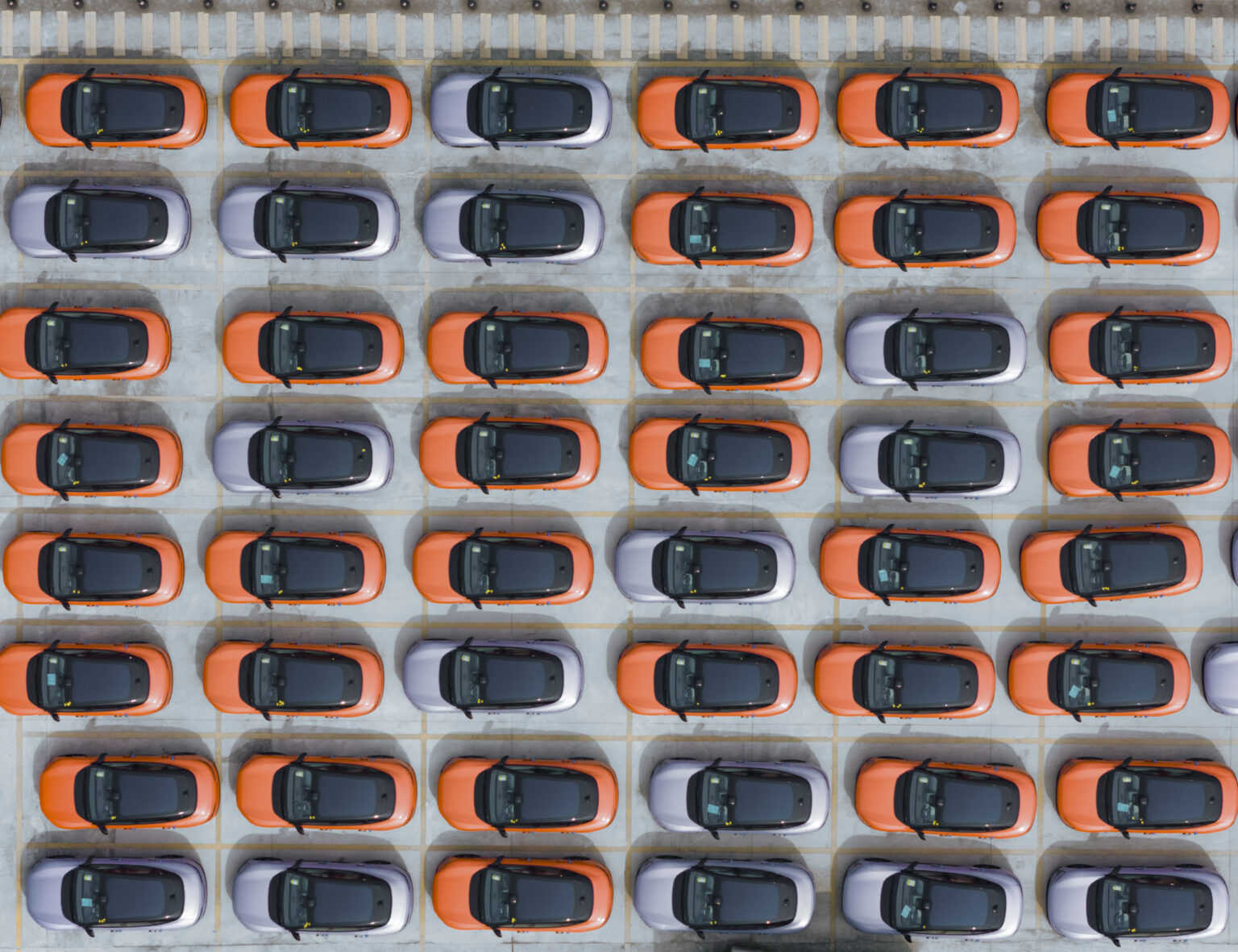
The electric car sector did not have an easy time in Europe last year. Sales of battery-powered vehicles not only fell short of optimistic expectations and forecasts, but actually slipped into the red. They declined by 1.3 percent.
By 2024, electric vehicles are expected to account for up to one-fifth of cars sold in the European Union. However, the reality was that they accounted for only 13.6 percent of the market.
A combination of several factors was responsible for this, but the main reason was apparently the cutback in generous subsidy programs for consumers who had decided to purchase a “zero-emission” car in individual countries of the Union. Consumers preferred to wait for new models at more affordable prices.
It was expected that the situation would stabilize over time and that, after an unsuccessful 2024, there would be a certain recovery and a return to the old state of affairs.
This is currently happening on a relatively large scale. Even though battery-powered electric cars will not reach a market share of 20 percent this year, the figure of 15.6 percent in the first seven months of the year is still a respectable result.
China's path to dominance
Growth in the European electric vehicle segment is being led by Chinese automakers. It's not that European manufacturers are particularly unsuccessful, but at the beginning of this year, the situation looked very different, and the recovery was driven exclusively by domestic manufacturers. Bloomberg reported in the spring that in February, only 6.9 percent of electric vehicles manufactured by Chinese companies were registered in the EU, the lowest level since February 2023.
Today, however, their market share has reached one-tenth. In June, it even surpassed that (10.6 percent), reaching its highest level since shortly before the introduction of high tariffs on imports of electric cars from China to the EU.
BYD is particularly successful, selling nearly 9,700 cars in the EU in July, more than three times as many as a year ago (3,165). The automaker has already captured more than one percent of the market. In the first seven months of this year, its sales increased three and a half times compared to the previous year.
Bloomberg notes that China's pressure on the European market is increasing as a price war rages in the electric sector in the country of the dragon. And the rich American market is practically closed to China. The old continent, where Chinese models can compete successfully despite tariffs thanks to their affordable prices and good quality, is therefore very attractive.
According to the agency, Chinese cars already account for 5.3 percent of vehicles sold in the EU, with this being the third consecutive month in which the five percent mark has been exceeded.
However, the flagship products of Chinese manufacturers are not battery-powered cars, but primarily those with hybrid drives. The Chinese captured almost ten percent of the market in this segment in July, while their share was close to zero a year ago. They have thus contributed significantly to the strong growth of this segment in the EU.
The reason for China's focus on hybrid vehicles is simple: the tariffs imposed by Brussels on Chinese electric cars with battery reinforcement do not apply to them. Manufacturers have therefore rapidly expanded their offerings in this segment.
For the same reason (to circumvent tariffs), they are starting to locate their production directly in Europe. BYD is currently building factories in Hungary and Turkey, Chery has revived the former Nissan plant in Barcelona and is also considering production in the United Kingdom. The European group Stellantis, in turn, is collaborating with Leapmotor to jointly produce electric cars in Spain.
Tesla sounds the death knell in Europe
As Chinese tentacles spread across the old continent, the American pioneer of electric mobility is running out of steam in Europe.
Sales of Tesla vehicles are down 43.5 percent so far this year compared to the same period last year. The company's market share has shrunk to well below one percent.
Although the American manufacturer is coming up with improvements, it is lagging behind the Chinese in terms of price. While Chinese brands score points with price and availability, Tesla is banking on a premium image.
And that is exactly what its boss has begun to ruin in Europe. Elon Musk has commented on the political situation in Germany several times this winter.
At the end of December, he wrote on social network X that “only the AfD can save Germany” – the anti-immigration and Eurosceptic right-wing party. Later, he even called on Germans to vote for them in the early elections on February 23.
It was during these months that Tesla's sales figures began to fall sharply.
Although Musk cannot be denied the right to his own opinion, he must now bear the consequences of his decision. Because when business gets too mixed up with politics or ideologies, the resulting cocktail may not taste very good.