
Meanwhile, Europe is struggling with the opposite problem—it has placed its defense in foreign hands.
When Russia crossed the border into Ukraine in February 2022, many suspected that better times were ahead for arms manufacturers. More than three years later, it is now clear that this is the beginning of the biggest arms boom since the end of the Cold War. This is also fueled by fears of a possible Chinese invasion of Taiwan and Israel's heated conflict with the Muslim world.
The global arms market has thus become an arena in which individual companies and countries compete fiercely with each other.
Washington is the long-term leader. According to the Stockholm-based SIPRI institute, the US accounted for 43 percent of global arms exports over the past five years, which is more than the eight largest exporters combined. And compared to the years 2015 to 2019, they have increased their foreign sales by 21 percent.
Russia, traditionally the second-largest exporter, is experiencing an export collapse (down 64 percent) as it primarily supplies its own army. This has caused it to fall to third place in the rankings behind France.
However, it should be added that although Moscow does not sell many goods on the global market, Russia's arms manufacturing capacity is enormous and has multiplied since the start of the war. A detailed report was recently published by The Economist magazine, which explained that many factories there are operating around the clock.
One of NATO's top commanders told the magazine that Russia will produce about 1,500 tanks in 2025, while America will only manage 135. The situation is similar with armored vehicles and artillery ammunition, which is important for Ukraine.
For the future, this means that although Moscow is currently exporting very little, after a possible ceasefire it could return to the export markets on a massive scale, in addition to replenishing its stocks.
Huge demand for Korean products
The picture of the arms market would also be incomplete if we limited ourselves to the current export tables. For arms manufacturers, new orders are crucial, as they provide a secure sales base for the future, enabling companies to invest in new capacity and expand.
This is where a surprising newcomer from Asia comes to the fore.
A decade ago, South Korea was best known for cars and electronics, but today it is also making a name for itself in the arms boom. In terms of the number of major weapons systems ordered, it ranks second behind the United States. In several categories, such as tanks, it even surpasses the US.
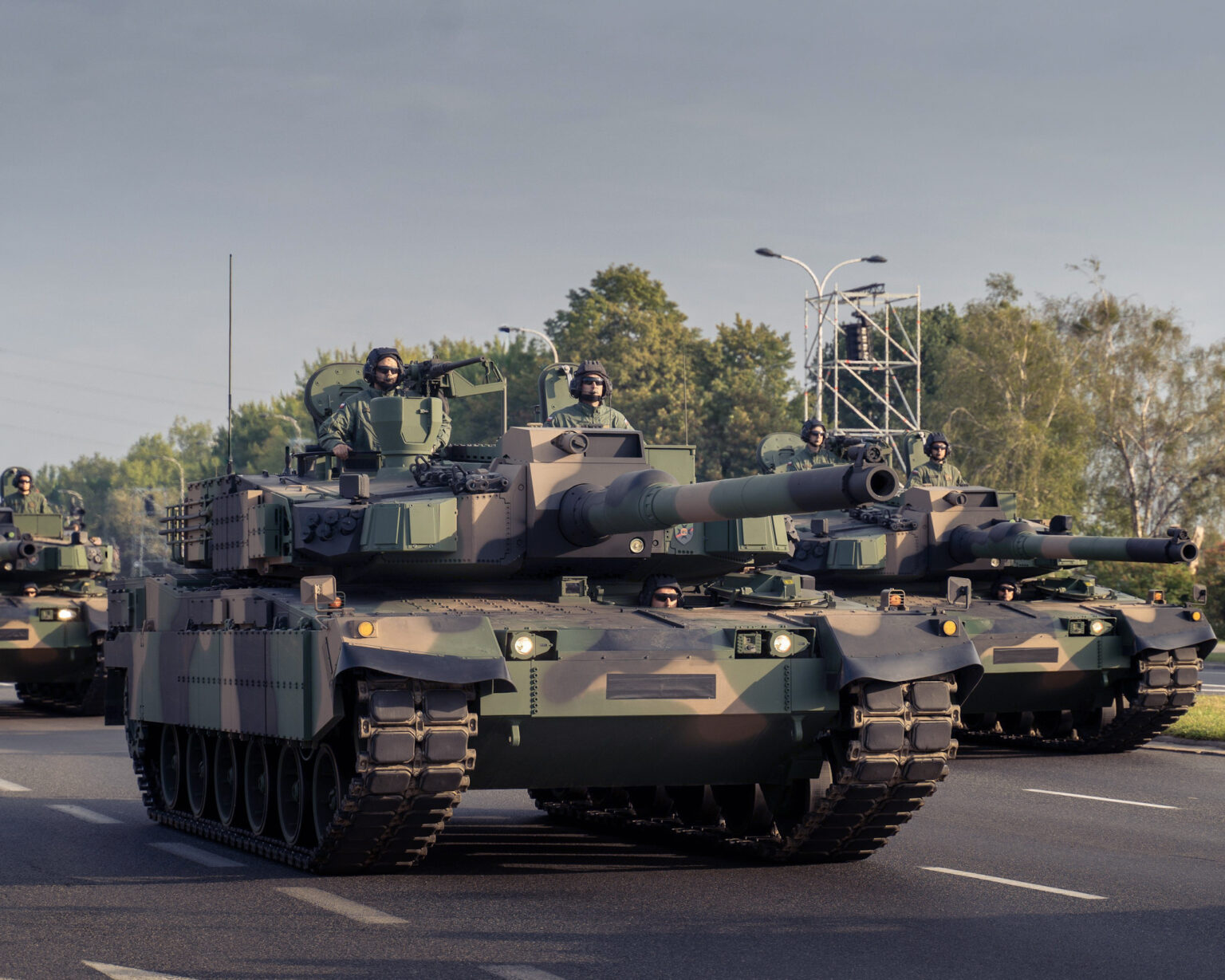
In 2022, it signed contracts worth $22 billion with Poland for the delivery of 180 K2 tanks, nearly 700 howitzers, 48 FA-50 fighter jets, and nearly 300 K239 rocket launchers.
The Economist magazine notes that South Korea's advantage is that it can manufacture products that meet North Atlantic Alliance standards relatively quickly and at a good price.
However, it sells weapons not only to Poland, but also to the Philippines, India, Saudi Arabia, Peru, and Romania. And it is bidding for a $17 billion contract from Canada to supply submarines.
The South Koreans' tremendous rise is also documented by the figures on the stock market. The price of shares in Hyundai Rotem, which manufactures tanks and howitzers, has increased tenfold since the start of the war. The value of Hanwha Aerospace, which manufactures artillery and missile systems, has risen by around two thousand percent since then.
Even an experienced trader is climbing to the top
Another big leap forward is Turkey. Although it is not yet among the top 10 exporters, according to The Economist magazine, it has increased its arms exports from two to seven billion dollars in the last five years.
Bayraktar drones regularly appear on the Ukrainian front, with Kiev using them particularly heavily at the beginning of the war. However, Turkey's offerings include not only drones, but also armored vehicles, tanks similar to those of South Korea, artillery, missile and air defense systems, as well as warships, fighter jets and helicopters.
Ankara has a similar advantage to Seoul in that it produces weapons to NATO standards at a reasonable price and without the various conditions that often accompany American or European contracts.
However, compared to South Korea, Turkey still lacks reputation. This was evident in tenders in Malaysia and the Philippines, where Korean products were awarded the contract.
Ali Bakir of the American think tank Atlantic Council noted that Turkey “offers competitive prices, state-of-the-art technology, and proven efficiency, but is still a newcomer (to the market).”
And what about Europe?
It is also interesting to take a look at who is buying weapons. At first glance, it is clear that Ukraine is at the top of the list. It purchases weapons from several Western allies, particularly the US.
But other countries on the old continent also import weapons on a large scale. European NATO members imported up to 64 percent from the US.
Looking at the old continent's self-sufficiency, for many weapon systems, about as much is imported as is produced “at home.” Only 51 percent of combat aircraft in European armies are locally produced. The situation is a few percentage points better for artillery and armored vehicles. Europe's worst result (32 percent) is in missile systems.
The old continent finds itself in a difficult situation. After years of underestimating its own defense, it is now investing hundreds of billions of euros in its armies. Individual NATO members have pledged to increase their defense spending to five percent of GDP, and the European Commission is also mobilizing €800 billion to support armaments as part of the “Readiness 2030” initiative.
However, if this money goes to foreign companies, the local economy will not benefit from the rising national debt.
Although the controversy over whether defense can become a new engine of European growth is stimulating, building something new is a major problem in the Union. And not because of a lack of funds.
Defense companies report that they still lack long-term contracts that would make it worthwhile to invest heavily in building new capacity. Existing capacity is already fully utilized, but investors have to take a much higher risk when building new facilities. And be confident that their investment will pay off.
Some leading politicians, such as German Defense Secretary Boris Pistorius, point out that although long-term contracts have already been signed with European manufacturers, they are not fulfilling their obligations and production is only increasing slowly.
However, the reason for this can be found in Brussels. For years, defense contractors have been pointing out that their hands are tied by the strict regulatory environment. Environmental regulations in particular are prolonging the construction of new halls and factories – where explosives are used, the formalities alone can take years to complete.
Combined with the EU's energy policy, which makes electricity more expensive for heavy industry, and climate regulations such as EU ETS, CBAM, and Euro 7, which make it difficult to establish supply chains or increase the cost of logistics, investments in new capacity become risky and often unprofitable.