
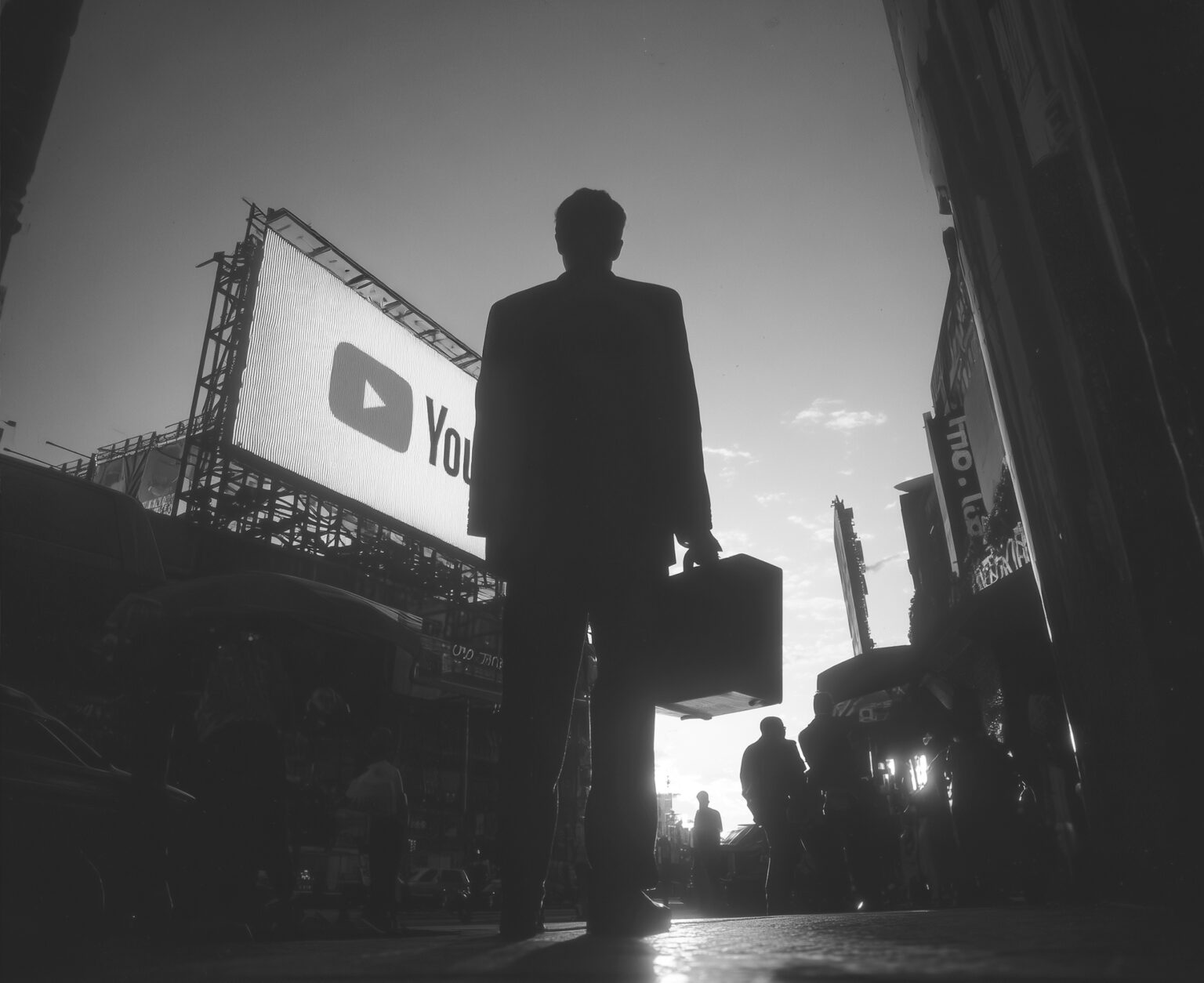
In the 1980s, video killed the radio star. In the 2020s, it looks set to kill again—this time, the online star. While traditional newspapers are still lamenting their slow death, online media now finds itself staring into the headlights of a much bigger beast: YouTube.
It started as a platform for silly clips and home-made bloopers. Today, YouTube has become the world’s largest media distributor. In February 2025, Nielsen reported that YouTube accounted for 11.6% of all U.S. TV viewing—more than Disney, Netflix, Amazon Prime, or any traditional broadcaster. By April, that figure had risen to 12.4%, cementing YouTube’s dominance for a third consecutive month (Nielsen).
Streaming as a whole has already overtaken cable and broadcast television in the U.S. (The Desk). And YouTube isn’t just riding the wave—it is the wave. With over 2.7 billion monthly users, more than 100 million subscribers to YouTube Premium and Music, and $36.1 billion in advertising revenue in 2024 alone, YouTube is not merely another streaming service. It has become the television of our time (MarketWatch).
As YouTube CEO Neal Mohan recently declared: “YouTube is the new television.” (The Guardian). It’s not bravado—it’s reality.
The Death of Reading: Why News Now Talks to Us
There was a time when news meant words. First on paper, then online. Now it means video. People no longer read the news—they watch it, they listen to it, they scroll past it until it speaks to them. The rise of podcasts was a warning shot; YouTube is the artillery barrage.
Video journalism, explainers, livestream debates—all these formats flourish on YouTube. And unlike print or static online articles, the platform rewards personality as much as substance. To put it bluntly: people want a face, a voice, an attitude. Reading is lonely; watching feels social.
What makes YouTube especially disruptive is not just its size—it’s the intimacy it manufactures. In a Google survey, 40% of Millennials claimed that their favorite YouTube creators understood them better than their real friends. That’s the essence of the parasocial relationship: viewers believe they know the creator, trust them, and invite them into their living rooms daily.
Creators, in turn, cash in on what might be called “authenticity capital.” The audience isn’t simply looking for information—it’s seeking a bond. A quirky smile, a candid aside, a moment of vulnerability—these count for more than polished layouts or investigative rigor. Authenticity becomes the currency of attention, and YouTubers know how to spend it.
For traditional media, that’s a nightmare. You cannot fake authenticity with an editorial board. The result is that even the most respected online newspapers look sterile compared to the rough-cut charisma of a YouTuber streaming from their kitchen.
Ironically, print may still find a way to survive. Niche magazines, luxury coffee-table editions, and weekend newspapers can carve out their corner. Their value is tactile, collectible, almost artisanal. Online-only outlets, however, may face extinction.
Why? Because they tried to beat print at its own game—speed, convenience, accessibility. But in a world where video delivers faster, more conveniently, and more entertainingly, their advantage evaporates. Articles without faces or voices simply can’t compete with endless streams of “authentic” creators talking straight to camera.
Thus, the very publications that once triumphed over print may be the next casualty. The “digital native” news site could soon feel as archaic as the morning broadsheet.
Video Strikes Twice
We’ve seen this movie before. In the 1980s, television’s dominance killed the radio star. Now video is back for a sequel: YouTube versus online journalism. Spoiler alert: text does not come out alive.
Of course, writing won’t vanish altogether. Humans still need words to think clearly, to structure arguments, to record history. But as a vehicle for mass communication, the article may soon be relegated to the sidelines, a niche for policy wonks and long-form aficionados. The mainstream will scroll, click, and watch.
Journalists face a brutal choice: adapt to the camera or fade into irrelevance. It’s no longer enough to write well; one must perform well. The newsroom needs lighting, a good mic, maybe even a YouTube channel. Without it, online news will be drowned in a tide of reaction videos and livestream commentaries.
At the heart of this revolution lies one word: authenticity. YouTube rewards it, audiences demand it, and creators exploit it. For media companies, that’s both an opportunity and a trap. Be too polished, and you look fake. Be too raw, and you look unprofessional. Walking that line requires more than journalistic skill—it requires stagecraft.
And so the future of news may not belong to the writer, but to the hybrid figure: part journalist, part performer, part confidant. A strange mix of Walter Cronkite and MrBeast.
YouTube didn’t just change the media landscape; it is the media landscape. It has overtaken TV, humbled Netflix, and put online newspapers on notice. News has become something you watch, not read; creators are trusted more than outlets; and authenticity has replaced authority as the coin of the realm.
When we look back on the 2020s, we may well remember them as the decade when the online star was killed—not by another website, but by a platform that turned every bedroom into a broadcast studio. Video killed the radio star. And now, video kills again.
Statement
YouTube hasn’t just surpassed Netflix and TV—it’s dismantling the foundations of online journalism. What began as a platform for cat videos now dominates US media consumption, reshaping how news is delivered and received. Written articles, once the hallmark of digital media, are losing ground to the emotional intimacy of video. “Authenticity” now trumps editorial authority, and viewers trust creators more than institutions. The result: online news sites, once disruptors, now face obsolescence. Journalism’s future lies not in sharper prose, but in camera-ready charisma. If text is to survive, it must perform. The screen hasn’t just won—it’s rewritten the medium itself.