
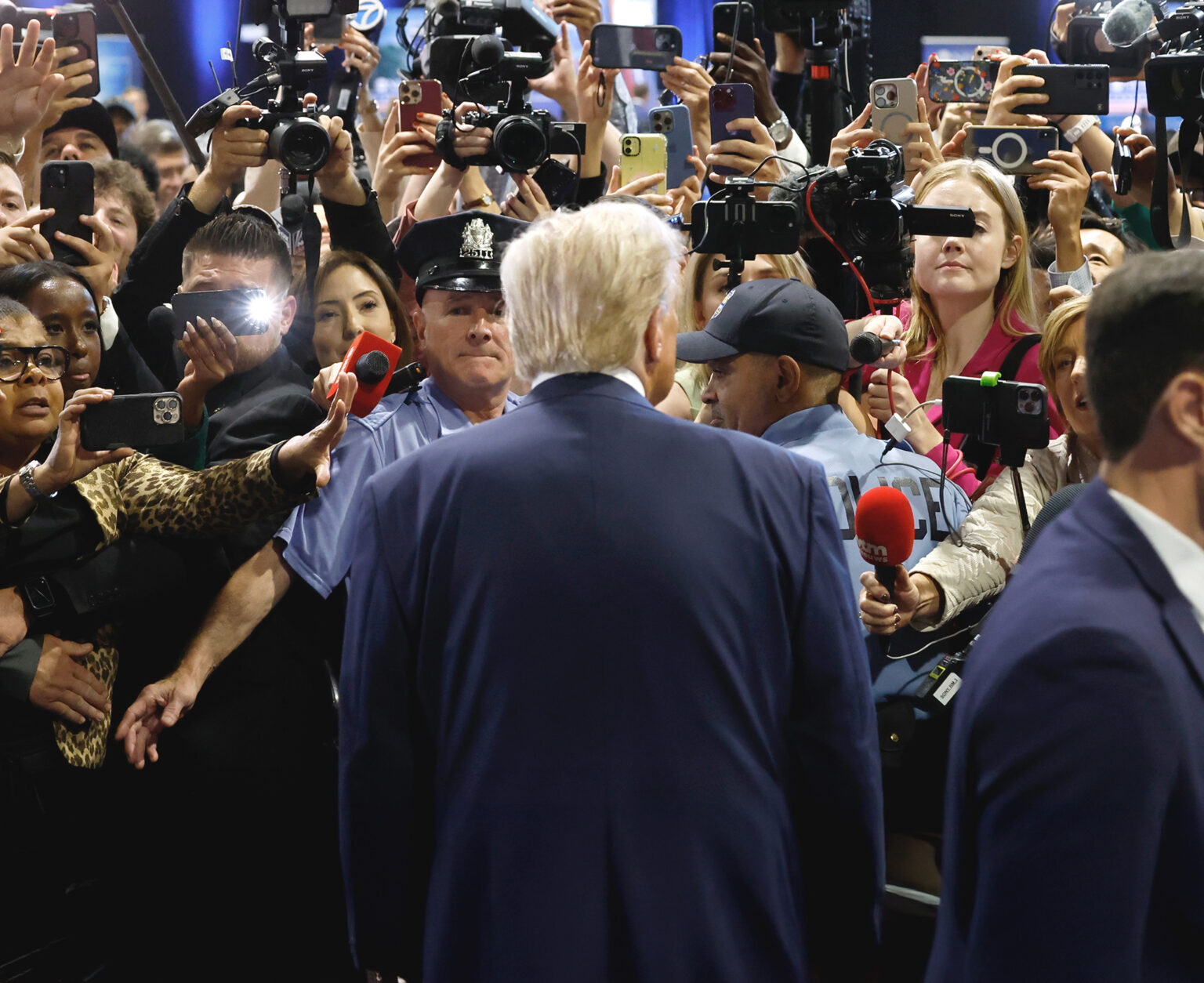
Elon Musk has promised a revolution with X. With the platform as a direct mouthpiece, the media in the conventional sense no longer exists. “You are the media” is his slogan. It does not speak to sexual, ethnic, or religious minorities, but to the majority. Everyone can be a journalist. In countries such as Germany—indeed in many states—the professional title of “journalist” enjoys no legal protection.
The claim is not new. It is a development rooted in the early Trump years. Back then, traditional media attempted to play gatekeeper. From the outset they sought to corral and channel Donald Trump’s words and appearances. But even in the campaign of 2016, that method was antiquated. Throughout the election, and during his presidency, Trump made constant use of Twitter, the opinion platform that Musk would later purchase and rename.
Trump employed the very technique now encouraged among “citizen journalists”: direct communication over events, the sharing of instant analysis without a barrier. He could speak directly to Americans, bypassing Democrat-friendly broadcasters and papers. The fragility of the gatekeepers’ role was then exposed. In that light, Trump’s suspension from Twitter after Joe Biden’s inauguration was not merely a disciplinary act, but the true removal of a sitting president’s voice.
Media’s own undoing
Musk’s elevation of X into the maximal medium is therefore less an invention than a consequence. The “democratisation” of news has a single root: the mainstream press itself. Only with the collapse of trust in newspapers, radio, and television could the idea take hold that anyone with a microphone, a camera, or a commentary on politics commands the same authority as the once-revered newsreader. If the press is shown to lie, to peddle propaganda, or to parrot government opinion, counter-forces are inevitable.
This is less a contest between truth and falsehood than between supply and demand. The left-leaning media establishment often claims that audiences fall prey to populists. Yet the reality is more unsettling: audiences want to be taken in. They make a conscious choice. The expansion of the alternative media scene is a response to the failure of legacy outlets. Whether that failure is real or merely felt is secondary. The self-styled role of journalists—not to explain what is, but what ought to be—marks the fissure where news gave way to ideology. Both senders and receivers crossed that threshold decades ago.
The perils of empowerment
Surrender to the “democratisation” of the press comes with hazards. If everyone is a journalist, who is worth hearing? Not probity, but sensation commands the crowd. The success of tabloids and penny novels long foreshadowed this appetite. Social media and artificial intelligence merely accelerate it. People do not in truth know what they want. They say they wish to form their own opinions; in fact, most merely want to hear their own views echoed back. That explains the recent surge of right-wing opinion journalism, cheered on by readers with the refrain: “At last someone dares to say it.”
Whether such journalism—of left as well as right—has already passed its peak is doubtful. Mere vitriol, tailored to stoke outrage, agitation, and campaign frenzy, is nothing that an algorithm cannot replicate. Through the last two centuries there has always been the type of opinion columnist who, without stylistic finesse or intellectual depth, meets his public where it stands. What separates him from the genuine social critic—say a Tucholsky or a Kraus—is not only originality. It is also the ambition to do more than capture the mood of the day, and the recognition that current events do not in themselves constitute the present; they are raw material for shaping it.
The machine speaks
In short, there is nothing here that a machine could not simulate. The empty clichés of artificial intelligence, dressed in rhetorical mist, surpass the hackwork of today’s opinion writer. AI is the ideal embodiment of meaningless punditry, flattering the reader’s prejudices. It is the perfection of automation.
What then remains? Investigative reporting? The high-quality magazine? Journalism that questions itself, that offers a platform for genuine debate, pro and contra alike? Such formats have retained relevance throughout media history. They may yet grow more important. But they will also struggle with the fact that “democratisation” strengthens clientelism. In Germany, examples abound: Süddeutsche Zeitung and Die Zeit long ago abandoned the idea of “journalism” in favour of binding themselves to the left-liberal bourgeois milieu that sustains them financially.
Statement
In an era of atomisation and division, the mass medium itself becomes a dinosaur. What lies ahead is parcelling and refinement: bespoke media products precisely calibrated to audience niches. Whether these serve fact or truth will in most cases be secondary.
Growth knows no limit—until saturation arrives. As in the entertainment industry, the moment will come when oversupply forces the market to collapse. Those who endlessly expand formats, aspiring to be universal broadcasters, will eventually find their audiences evaporating.