
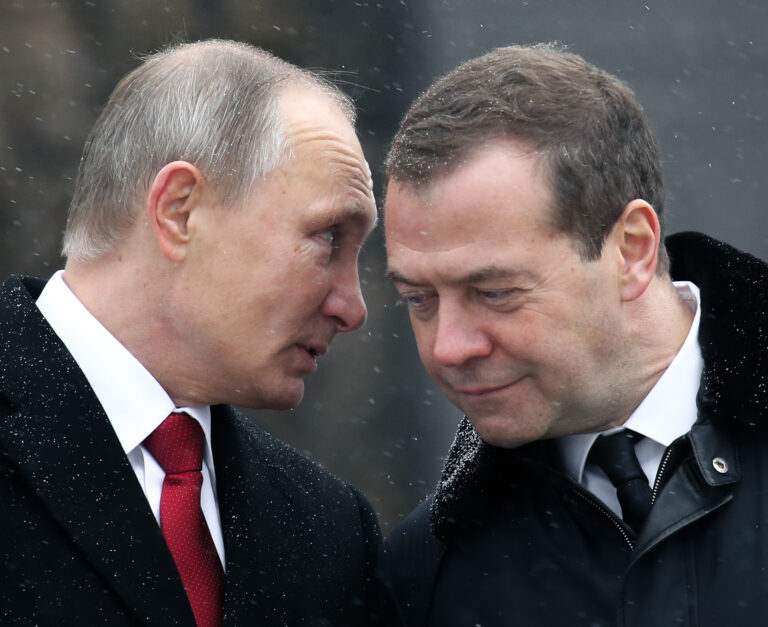
On September 8, former Russian President and current Deputy Chairman of the Security Council of the Russian Federation Dmitry Medvedev published a detailed article entitled New Finnish Doctrine: Stupidity, Lies, Ingratitude on the website of the state agency TASS.
A few hours later, the article appeared in the English version of TASS, and on September 10, the Russian Foreign Ministry quoted a passage from it on Platform X—albeit incorrectly stating the publication date as September 9 instead of September 8.
📄 Deputy Chairman of Russia's Security Council @MedvedevRussiaE:
— MFA Russia 🇷🇺 (@mfa_russia) September 10, 2025
The Finnish establishment mustn't forget: confrontation with Russia can lead to collapse of Finnish statehood – this time forever.
❗️Unlike in 1944, no one will go soft on them this time.https://t.co/pPLmBR5L0P pic.twitter.com/WBvS3HMHac
Less than a week before the article was published, Medvedev visited the Finnish-Russian border in the Leningrad region and spoke about the significant decline in passenger and freight traffic in the region in recent times.
“The trade volume for 2024 was only 1.26 billion euros (by comparison, in 2019, goods turnover reached 13.5 billion US dollars),” Medvedev wrote in his article.
However, there is no mention of nostalgia for the old days in Medvedev's text.
“In its rush to get back at Russia, the Finnish establishment is setting up a new ‘Mannerheim Line,’ but it shouldn't forget that messing with us could mean the end of Finland as a country—for good this time,” the Russian Foreign Ministry said, paraphrasing a bit from Medvedev's article.
On September 10, senior state representative, Chairman of the State Duma Defense Committee and Deputy Minister of Defense, Colonel General Andrei Kartapolov, declared that the “Ukraine project” had failed and that Finland – along with Estonia, Latvia, Lithuania and Moldova – was now a “new pressure point on the border” with Russia.
In a video posted by TASS on the Telegram platform, Kartapolov also said: “If the policies of the current Finnish leadership lead to any tragic consequences, they will bear responsibility for them. We know how to defend our interests, and we are prepared for any developments.”
After Russia's invasion of Ukraine, Finland joined NATO, creating a new border between Russia and the North Atlantic Alliance that is around 1,300 kilometers long.
This was accompanied by the construction of Russian military bases on the border with Finland. Finland responded by building its own military facilities on the border with Russia, which Medvedev criticized in his article.
“Hotbed of fascism”
In the spirit of Kremlin rhetoric, Kartapolov also expressed his conviction that Finland is “developing into a true hotbed of fascism faster than Ukraine.”
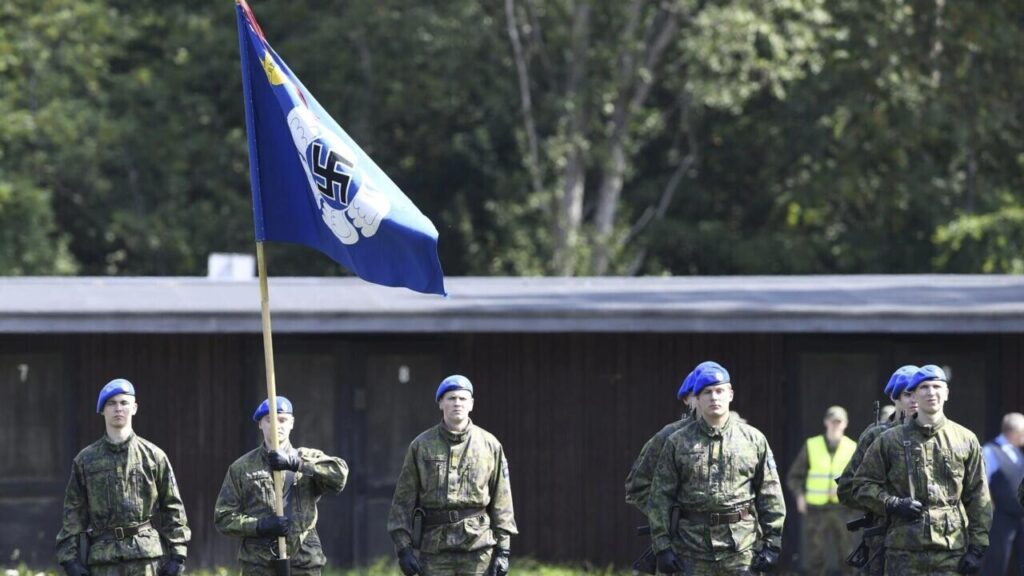
Medvedev, in turn, accused Finland in his article of using a “fascist symbol” on its air force flags and described the Finns as “ideological heirs of the Finnish fascist usurpers.”
As a reminder, the Finnish Air Force does indeed use a swastika on its standard – but this is a symbol dating back to 1918 and not the symbol of Nazi Germany under Adolf Hitler from 1933 to 1945.
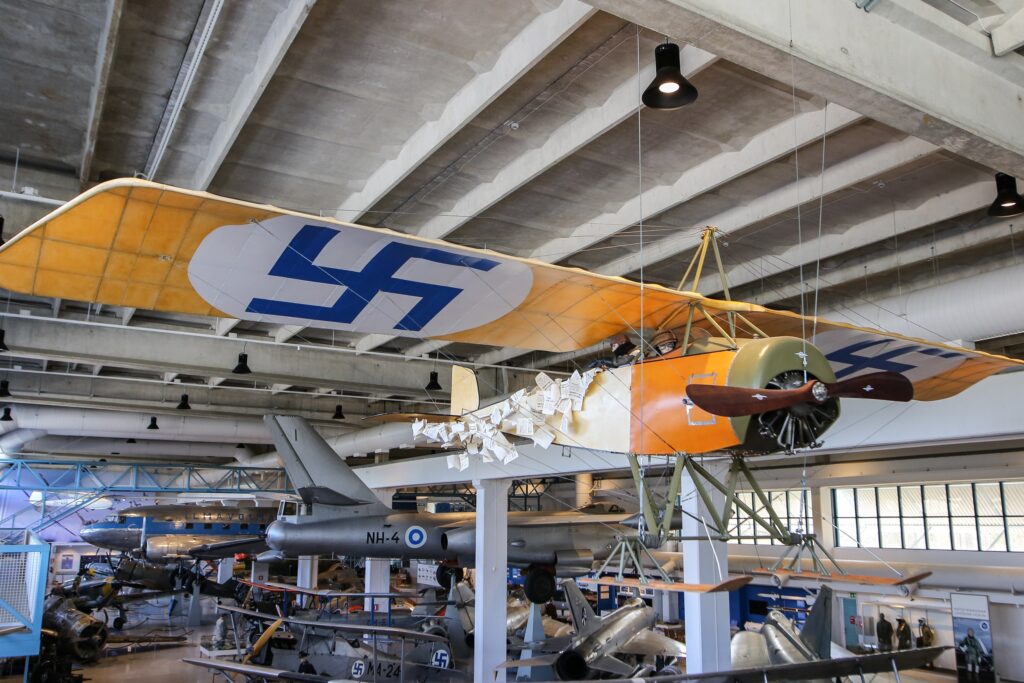
During the Finnish Civil War, Swedish Count Eric von Rosen donated a Thulin D aircraft to the White Army, which landed in Finland on March 6, 1918—a date that is considered the symbolic birth of the Finnish Air Force.
Before flying across the Gulf of Bothnia – which separates Sweden and Finland – von Rosen painted his personal symbol of good luck on the underside of the wings: a blue swastika on a white background.
Since this summer, Helsinki has been working to gradually remove the swastika and replace it with a golden eagle.
The swastika (Finnish: hakaristi) is also found in traditional Ugric-Finnish symbolism (tursaansydän, mursunsydän), which was later taken up by Finnish artists such as Akseli Gallen-Kallela (1865–1931).
Two wars
The secret annex to the Soviet-German Non-Aggression Pact of 1939 not only concerned the division of Poland and the occupation of the Baltic states by the Soviet Union – Finland also fell to Moscow.
On November 30, 1939, without a declaration of war, the Red Army launched an offensive against Finland, which went down in history as the Winter War – for which the USSR was expelled from the League of Nations, the predecessor of the UN, on December 14.
The war ended on March 13, 1940, with the Treaty of Moscow, which meant the loss of large areas for Finland, including almost all of Karelia – in total, Finland lost 41,500 square kilometers. Almost half a million people had to be evacuated from the occupied territories.
Shortly after the German attack on the Soviet Union began on June 22, 1941, the Soviet Air Force attacked German units in Finland, mainly at airfields.
Finland responded with the so-called Continuation War, whose goal was to take advantage of Moscow's weakening due to the war against Germany and its allies and to bring the occupied eastern territories back under Finnish control.
The war effectively ended with an armistice on September 5, 1944, when Finland agreed to the 1940 borders – in return, Moscow undertook not to continue the offensive against Helsinki and to concentrate its troops on the main front towards Berlin.
Painful Karelia
In his article, Medvedev also mentions Karelia a total of 14 times – a historical region that is now divided between Finland (Western Karelia) and Russia (Eastern Karelia), with most of it falling under the administrative unit of Karelia.
At the end of 2024, the Russian domestic intelligence service FSB added the name of the Republic of Karelia in the Karelian language and other local languages and dialects (Karjalan Tašavalta, Tazavaldkund, Tazavaldu) to its list of terrorist organizations.
Together with the local names of Karelia, the Karelian National Movement was also added to the terrorist list by a decision of the Supreme Court of the Russian Federation with effect from December 28, 2024. The movement has long criticized the Russification of Ugric-Finnish Karelia.
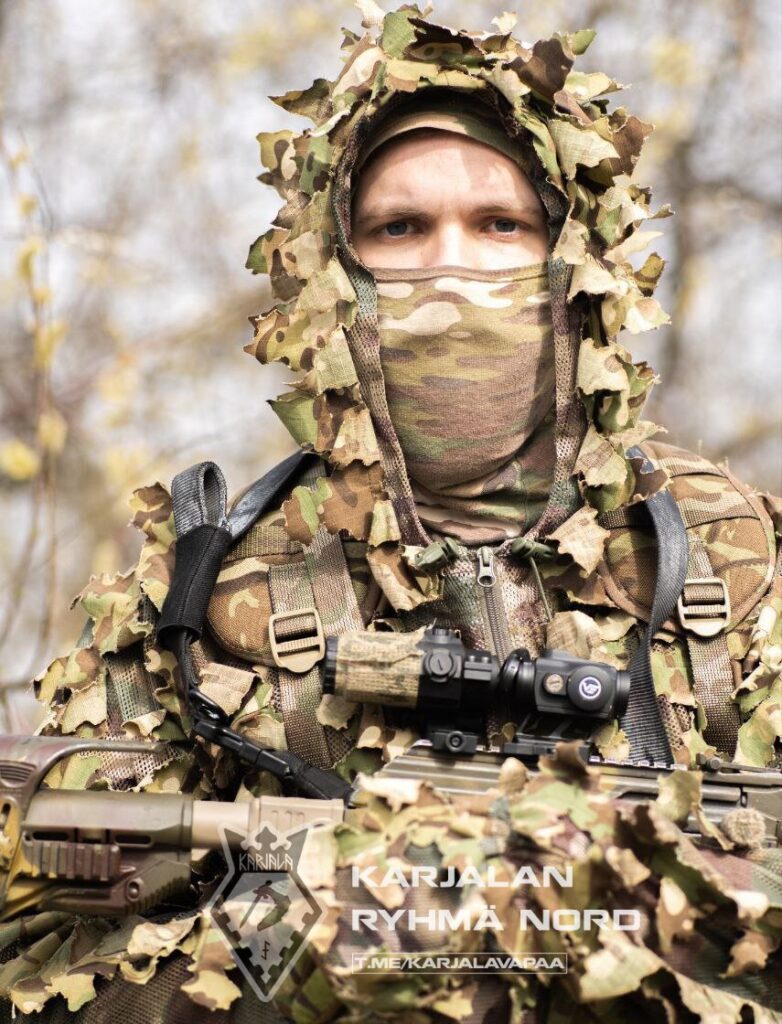
Some of the Karelians are fighting in the ranks of the Karelian Group NORD alongside the Russian Volunteer Corps (RDK) against Russian troops in Ukraine. Members of the NORD unit are almost exclusively ethnic Karelians and their Baltic and Finno-Ugric relatives.
Finland and its Russian Tsar
In 1809, Finland became part of the Russian Empire as a grand duchy. Initially, it benefited from the advantages of being an autonomous administrative unit. However, over time, Russification increased.
In 1917, the Finns took advantage of Russia's weakening as a result of the Bolshevik Revolution and declared their independence. Unlike Russia, the White movement prevailed in Finland, so the country did not become part of the emerging Soviet Union.
As early as 1889, the Finnish Penal Code (Suomen rikoslaki) had been adopted in the Finnish part of the Russian Empire, with effect from 1894.
Although it has undergone hundreds of amendments since then, the preamble has never been changed. Therefore, the Finnish Criminal Code still begins with the same words as it did 136 years ago – and Finnish citizens are still formally sentenced in the name of the Russian emperor:
“We, Alexander III, by the grace of God, Emperor and Autocrat of All Russia, King of Poland, Grand Duke of Finland, etc., etc., etc., proclaim: At the humble suggestion of the Estates of Finland, we hereby confirm, by our grace, the following criminal law for the Grand Duchy of Finland, the enactment and enforcement of which shall be regulated by a special ordinance.”
For many citizens of the Russian Federation, President Putin and the rule of the United Russia party embody an interface between communist ideas – which persist not least because of nostalgic memories – and the pre-revolutionary and post-Soviet eras.
Under international law, however, the Russian Federation is the successor to the Soviet Union, not the Russian Empire, and today's Kremlin ideology also places the legacy of the USSR above that of the Tsarist Empire.
This is also one reason why no Russian representative in the verbal attacks against Finland refers to the Russian Tsar in Finnish legislation.