
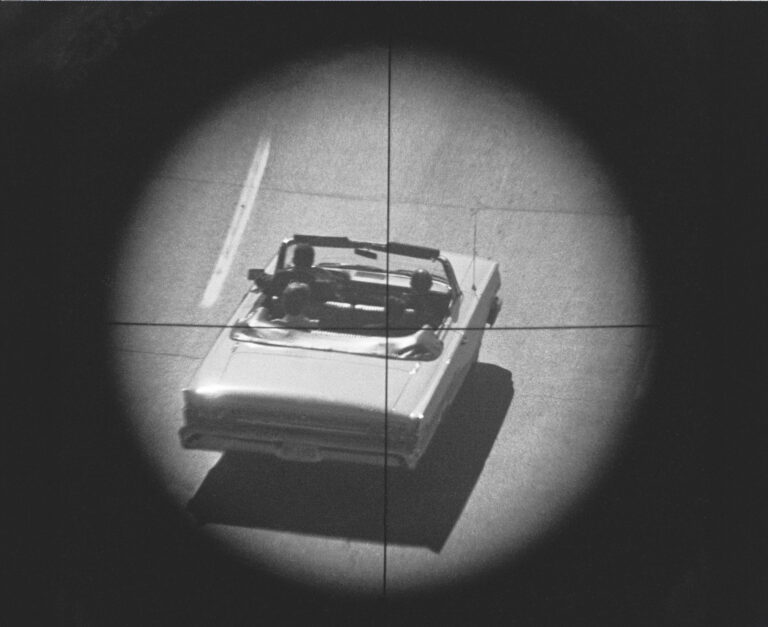
Political assassination is one of the most direct assaults on democracy. Yet it does not manifest in the same way across societies. A comparison between Europe and the United States reveals two distinct “assassination cultures”. America has long been the land of the lone gunman, where individuals step forward to alter history by pulling a trigger. Europe, by contrast, produced underground armies: disciplined, conspiratorial cells that waged war on the state through carefully planned kidnappings and murders.
In the United States the assassin is almost always alone. John Wilkes Booth, who shot Abraham Lincoln in 1865, fancied himself a heroic avenger of the Confederacy. Charles Guiteau, who killed President James Garfield in 1881, was a delusional office-seeker who believed God had commanded him to act. Leon Czolgosz, who murdered William McKinley in 1901, claimed inspiration from anarchist lectures. In the case of Lee Harvey Oswald, who felled John F. Kennedy in 1963, no organisers or backers have ever been conclusively identified.
Even failed attempts, like the shooting of Ronald Reagan in 1981, confirm the pattern. The would-be assassin of Donald Trump in Pennsylvania in 2024, too, was a solitary figure. American political culture elevates the individual; it has produced the “self-made killer”, convinced that a single bullet can redirect the course of the republic.
The material conditions support this individualisation. Firearms are abundant; the President is a highly visible target; and American mythology casts the lone avenger as a familiar archetype. Yet the deeper cause is not the availability of weapons, as Europe’s history shows.
Europe’s Underground Armies
Europe’s assassins followed another script. They did not act alone, but in groups that conceived of themselves as revolutionary vanguards.
In Germany the Rote Armee Fraktion (RAF), founded in 1970, declared war on the “imperialist state”. Its members lived underground, rotated through safe houses and developed a small but disciplined cadre structure. Their targets were chosen to symbolise state power: General Federal Prosecutor Siegfried Buback (murdered 1977), banker Jürgen Ponto (1977), and industrialist Hanns-Martin Schleyer (kidnapped and executed the same year). Each killing was a group effort, justified in manifestos, designed to shock.
Italy’s Brigate Rosse pursued a similar strategy. Their most infamous act was the 1978 abduction of Aldo Moro, a former prime minister and leading Christian Democrat. Held captive for 55 days, Moro was subjected to a “people’s trial” before being executed.
Even Europe’s right-wing extremists followed the underground model. Neofascist cells such as Ordine Nuovo carried out bombings, most notably the Bologna railway station attack of 1980, which killed 85 people. These groups likewise operated as conspiratorial collectives, not as lone eccentrics.
Individual vs. Collective
The contrast cannot be explained by gun laws. Europe in the 1970s had some of the strictest regulations on civilian firearms, yet political murder was common. America has the loosest, but has not seen the equivalent of a disciplined underground army kidnapping or executing officials. The divergence is cultural and structural.
The United States concentrates symbolic power in the presidency. To kill a president is to strike at the heart of the nation. In a political culture where individual agency is celebrated, assassins act alone, imagining themselves as tragic heroes. In Europe, by contrast, power is more dispersed, and radical movements of the 1960s and 1970s encouraged the notion that small groups could be the revolutionary spearhead. Political violence was collectivised: assassinations became the work of clandestine bands.
Historical contingencies reinforced the pattern. America’s assassins became myths—Booth and Oswald notorious names, Kennedy’s murder a national trauma. Each lone gunman added to the archetype. Europe, scarred by fascism and revolution, bred groups that viewed themselves as heirs of partisan warfare. The “years of lead” in Italy or the “German autumn” of 1977 embedded the model of organised terrorism rather than solitary assassination.
Statement
Today, assassination is rarer in both contexts, but not absent. In the United States, the spectre remains persistent.
In Europe, the last generation of the RAF faded in the 1990s; the remnants of Italy’s armed groups disappeared into prison or obscurity. Yet political killings still occur: the murder of Dutch politician Pim Fortuyn in 2002, or the shooting of British MP David Amess in 2021. These were not the acts of underground armies, but of individuals—suggesting that the lone-wolf archetype is no longer confined to America. The fact that Amess’s killer was an Islamist introduces a new dimension into the culture of assassination.