
On September 23, the press office of the Foreign Intelligence Service (SVR) of the Russian Federation stated on the agency's website that “according to information available to the SVR, the Brussels Eurocrats are determined to keep Moldova.”
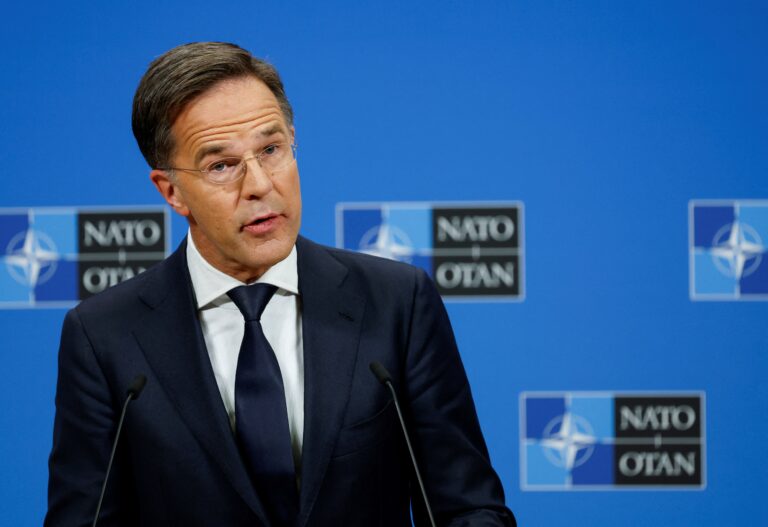
According to the SVR, Europe is prepared to do everything “up to and including the deployment of troops and the de facto occupation of the country.” According to the Russian intelligence report, “NATO forces are currently concentrating in Romania near the Moldovan border.”
NATO in Odessa?
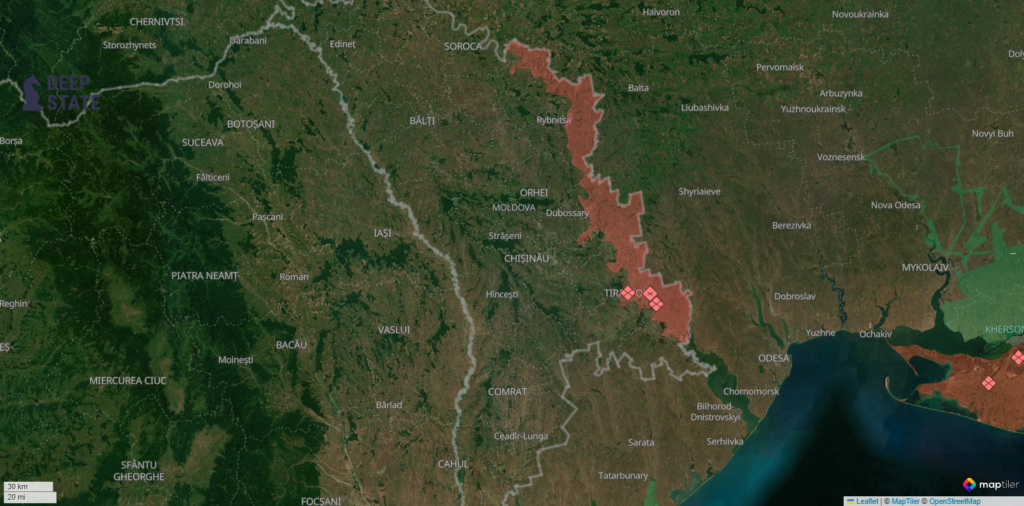
The Russian intelligence service also claims that NATO is preparing a landing in the Ukrainian region of Odessa with the aim of “intimidating Transnistria.” The SVR states that “the first group of professional soldiers from France and Great Britain has already arrived in Odessa.”
Transnistria is a strip of land between the Dniester River in the west and the Moldovan-Ukrainian border in the east. Although the UN states consider the area to be part of Moldova, since the 1990s – when Russia supported the separatists – it has been an unrecognized state with ties to Moscow, which has stationed around 500 “peacekeepers” in the region.
Among those who took part in the fighting on the side of the separatists at that time was the war criminal and later defense minister of the self-proclaimed People's Republic of Donetsk, Igor Vsevolodovich Girkin, known as Igor Ivanovich Strelkov.
As a reminder, on March 16, 2022, the Parliamentary Assembly of the Council of Europe adopted a resolution designating the territory of the self-proclaimed republic as “occupied territory” by Russia—previously it had been listed as “under the effective control of the Russian Federation.”
“The leadership of the Russian Federation, through its attitude and actions, poses an open threat to security in Europe and is pursuing a course that includes an act of military aggression against Moldova and the occupation of its Transnistrian region,” the Council of Europe statement said.
Moldovan elections
According to the SVR, the scenario of a NATO intervention has been rehearsed several times and “could be implemented after the parliamentary elections in Moldova on September 28.”
The Russian secret service claims that a “gross falsification of the election results” by Brussels and the Moldovan government will drive Moldovan citizens onto the streets, whereupon President Maia Sandu will call on NATO armies to fight against them.
The Moldovan state had already been described as totalitarian last year by the head of the Russian secret service, Sergei Naryshkin – who met with MEP Ľuboš Blaha (Smer) in Moscow at the beginning of March – who added that Moldova had taken the path of Ukraine.
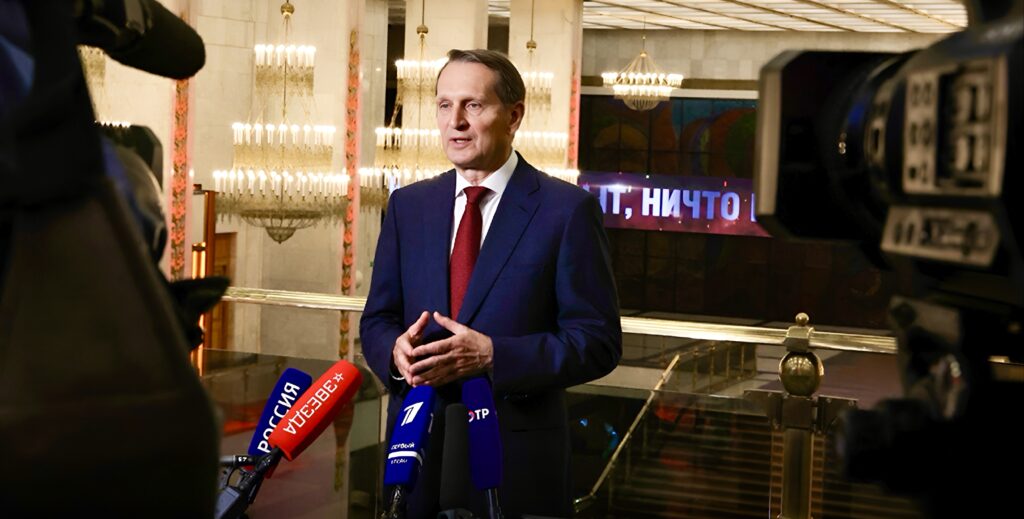
According to a press release from the SVR, the deployment of European armies in Moldova is intended to “force Moldovans to accept dictatorship.”
Furthermore, the Russian intelligence service claims that Brussels allegedly intends to “not abandon its plans to occupy Moldova” even if the election results do not make this necessary – it will simply wait for another pretext, namely the Transnistrian parliamentary elections on November 30.
The SVR report ends with an emotionally charged statement that “the Europeans, fearing direct confrontation with the great Russia, have decided to take out their anger on little Moldova. Asserting oneself at the expense of the weak has always been an indispensable part of European colonialism.”
Chișinău had already warned
Moldovan Prime Minister Dorin Recean warned back in June that Russia was trying to influence the upcoming parliamentary elections in Moldova in order to install a government that would allow the deployment of 10,000 Russian soldiers. These were to occupy the Transnistria region.
Recean told the Financial Times that Moscow was spending significant resources on propaganda, online disinformation, and the illegal financing of political parties.
“Their propaganda, their communication mechanisms are very strong. They spend a lot of money,” he said.
According to him, last year alone, the Russian regime spent a sum equivalent to one percent of the country's GDP on influence operations in Moldova.
The prime minister also expressed concern about the military threat to NATO. In his view, the deployment of thousands of Russian troops poses a risk to both Ukraine and NATO member Romania.
As a reminder, in 2023, the official language of Moldova was renamed from Moldovan to Romanian, with the Moldovan variant containing fewer loanwords from Russian.
“Pro-Russian forces in Moldova and the Kremlin ... have always disputed the notion that the majority of the population is ethnically Romanian and speaks Romanian,” noted Cristian Cantir, a Moldovan lecturer in international relations at Oakland University, after the law was passed.
The western part of the former Principality of Moldova is now part of Romania, along with Wallachia and Transylvania.