
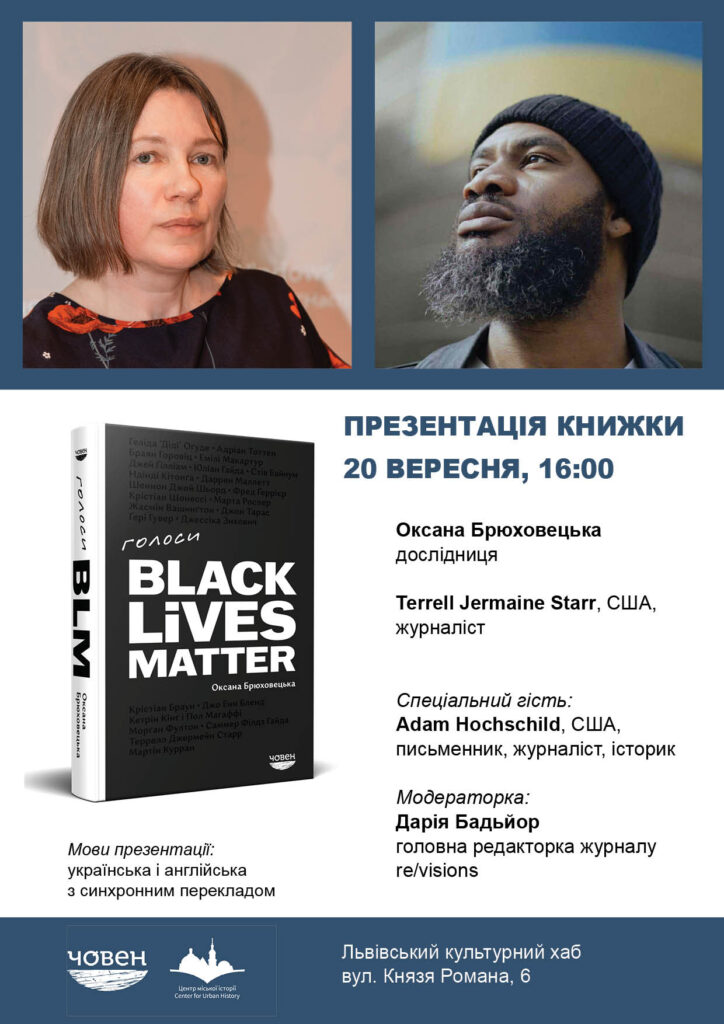
On September 13, Ukrainian publishing house Čoven (Boat) announced on social media that it would be hosting the presentation of the book “Voices of BLM” (Голоси BLM) on September 20 in collaboration with the Lviv Center for Urban History.
BLM is no longer an unfamiliar acronym. It stands for the slogan Black Lives Matter, which also appears on the book cover.
The slogan and the decentralized movement of the same name emerged in 2013 and gained worldwide notoriety in 2020 after African American George Floyd died during a police arrest, sparking mass protests by Black people and supporters from other population groups across the US.
Several nationalist groups—including members of Karpatensych and representatives of the 3rd Army Corps, veterans of the Azov special forces—triggered or significantly intensified a wave of resistance to the event with their posts on social media.
BLM and a Ukrainian woman
On August 22, in North Carolina (USA), 23-year-old Ukrainian Iryna Zaruzka was killed by African American Decarlos Brown Jr. – he stabbed her in the neck with a knife on the subway, injuring her so severely that she bled to death at the scene.
The perpetrator then ran through the subway, repeating, “I got the white girl.”
The official account of the BLM movement then posted a short video with a scene from an older film in which the phrase “Oppressed people have the right to violence” was uttered.
Since “oppressed” in BLM's usage refers to Black people, the post caused outrage – it was understood as a justification for the killing of a young white woman.
Posts appeared on Ukrainian social networks claiming that a photo showed Zaruzka in the room of her cousin Vera Falkner, whose door had a “Black Lives Matter” poster hanging on it. However, all Ukrainian nationalist groups condemned her killing.
As a reminder, even though the term “nationalism” is now equated with chauvinism in many countries of the European Union, Russia, and Belarus, it originally meant “affinity with one's people” or, in the case of nation states, “patriotism.” This is also confirmed by Slovak dictionaries, with the exception of those from the communist era.
Inappropriate time and inappropriate guest
The deputy commander of the 3rd Army Corps, Major Dmytro Kucharčuk, wrote on social media in connection with the planned book presentation that he hoped that “conscious Lviv residents will explain to [the organizers] what really matters,” and added a video of a BLM activist who, on his YouTube channel with over half a million subscribers, said with a laugh that Black people “don't care” what happened to Zaruzka in the subway.
One of the ideologues of the 3rd Army Corps, Olexiy Reyns, whose nom de guerre is “Consul,” wrote in reference to the announced presentation of Voices of BLM: “It's hard to say what prevails here—short-sightedness, moral decay, or deliberate provocation.”
The organization “Karpatensitsch” stated on its Telegram channel that it was regrettable that the event was taking place with the support of a state institution which, together with the publisher, was encouraging Ukrainians to “admire a movement that has been justifying and heroizing criminals for years.”
A well-known nationalist channel ꑭ ᴠᴀʟʜöʟʟ ✙ summarized the situation as follows: “Ukrainophobes and blacks in Ukraine are presenting readings about anti-white racists and criminals, while Ukrainians in Ukraine are dying at the hands of Muscovites [a historical, now derogatory term for Russians], who, incidentally, are actively using mercenaries from Africa.”
In connection with the killing of the young Ukrainian woman by an African American, the date of the book presentation could be described as provocative or at least inappropriate. But Ukrainian nationalists also saw the problem in the invited guest.
This was the African American Terrell Jermaine Starr, who a year and a half ago had criticized a video in which a unit of the Ukrainian armed forces wanted to raise money for equipment. Starr was bothered by the fact that one of the Ukrainian women in the video appeared as if she were the African American singer Tina Turner.
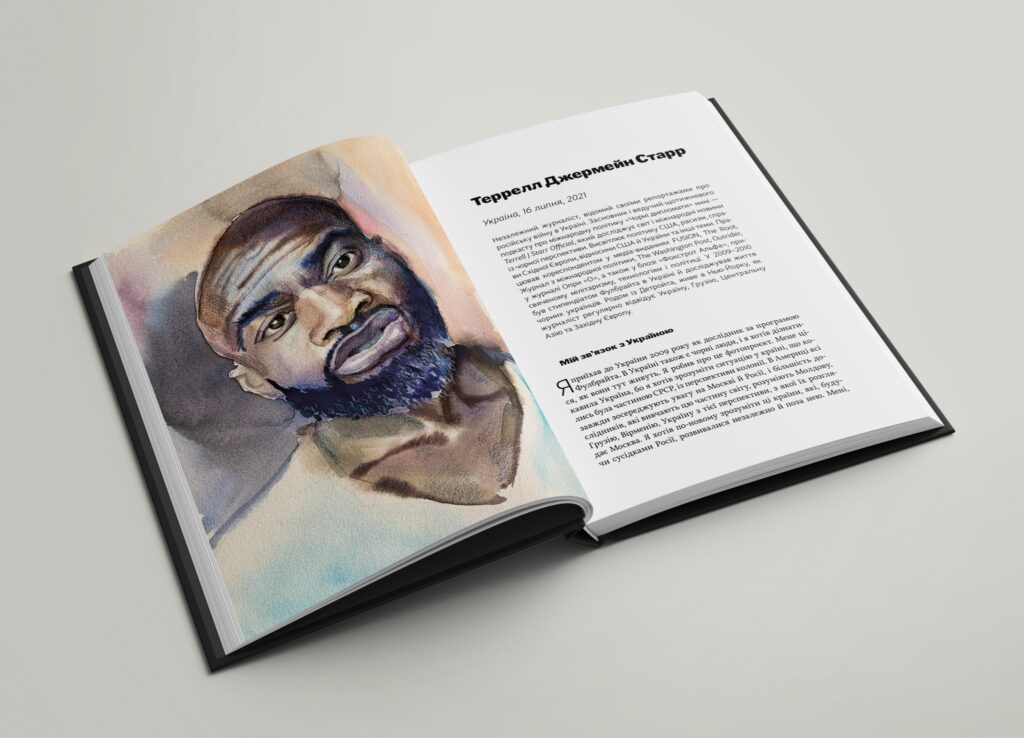
The criticism from the well-known African American led to black people and leftists from several countries reporting the video. As a result, it was deleted and the unit received no support.
The uproar that nationalists sparked around the presentation led to an increase in negative comments. On September 18, the publisher announced that the event would be canceled due to “brutal, racist, hateful comments and threats.”
Shortly thereafter, Interfax Ukraine and several national media outlets also reported on the cancellation.
The aforementioned “consul” commented approvingly, saying that creating an atmosphere in Ukraine that is unbearable for left-wing activists and liberals of all kinds is an effective means of combating hostile activities.
BLM in Ukraine
In response to the emergence of the BLM slogan and movement, the slogan White Lives Matter (WLM) was created in 2015. Unlike its predecessor, WLM is considered racist in several countries; in Belarus, the Ministry of Internal Affairs added the slogan to its list of extremist symbols.
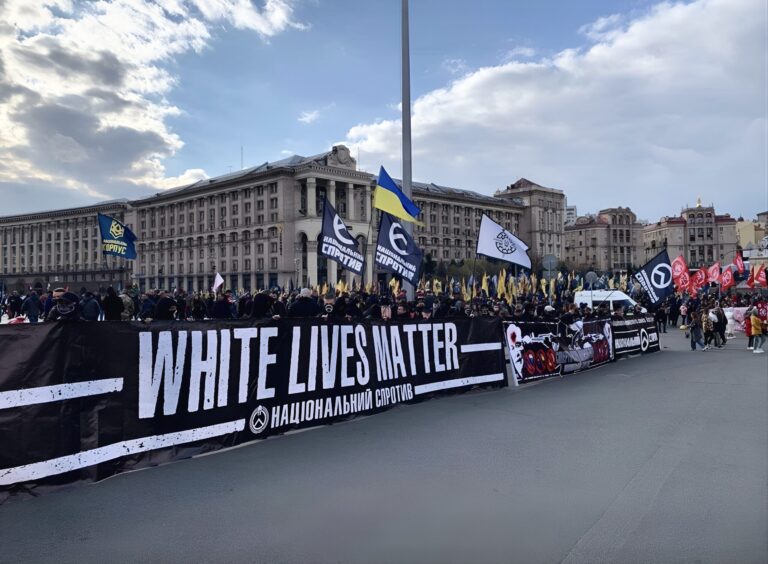
A banner bearing the inscription WLM was carried in 2020 by participants in a march in Kyiv marking the anniversary of the founding of the Ukrainian Insurgent Army (UPA).
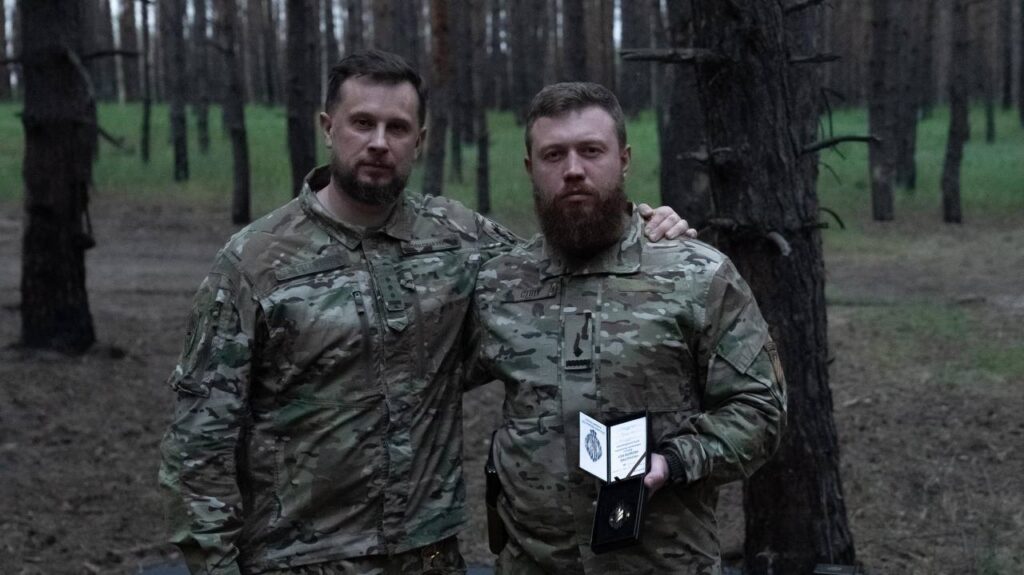
In January 2021, Andriy Bilezkyi, founder and former commander of the Azov Regiment and now commander of the 3rd Army Corps, reported on a social media platform on the death of Ukrainian soldier Roman Dzyubenko. Dzyubenko had died from his injuries in the Luhansk region, leaving behind a young widow and a six-month-old son.
“The death of a Ukrainian has no chance of becoming ‘viral’ news. Throughout the day, it is overshadowed by the joy of Ukrainian leftists – the BLM movement has been nominated for the ‘Peace Prize’. The ‘liberals’ are celebrating the victory of ‘the rule of law’ and ‘equality’,” Bilezkyj wrote.
After the protests against the LGBT march, after the arrest of members of the organization ‘Right Youth’ and war veterans at a demonstration against the queer film festival ‘Sunny Bunny’, after Ukrainian nationalists criticized the possible ‘import of migrants as in Russia and the EU,’ and much more, it is clear that Kiev must proceed very cautiously in its efforts to meet the ideological conditions for EU accession.
Since 2014, when they consistently provided a significant portion of the volunteers in the fighting in the east, Ukrainian nationalists have enjoyed growing popularity. Regardless of how the Russian-Ukrainian war ends, Kiev will have to take their voice into account, which is supported by a conservative-minded segment of the population on many issues.
It will thus find itself caught between two millstones: one in the form of Brussels' current de facto official ideology, which encompasses “tolerance, inclusion, and diversity” and cannot be avoided in the effort to join the EU, and another in the form of the nationalists, who, in addition to the support of a significant portion of the population, also wield real power in the form of entire units.