
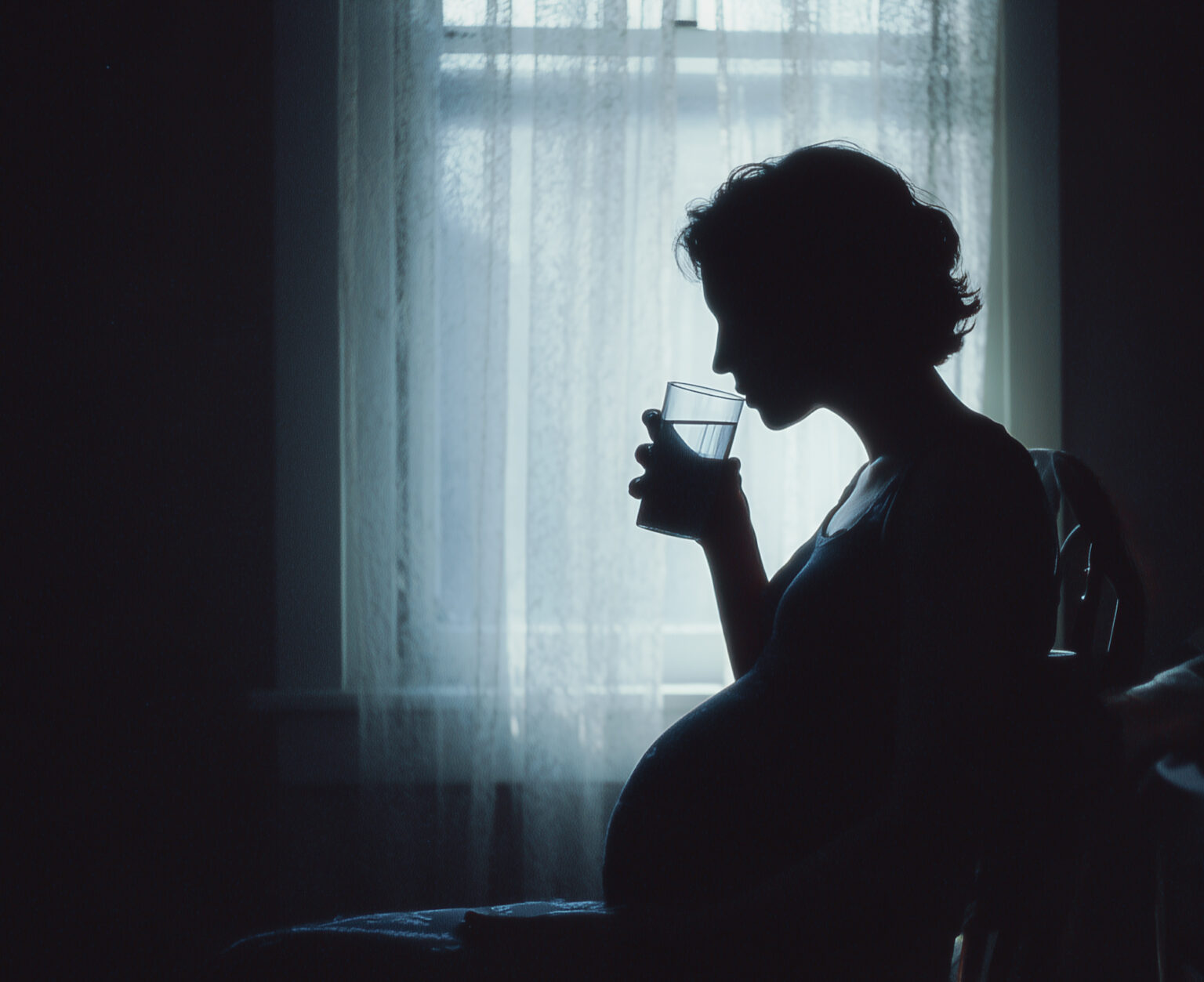
On September 5, the World Health Organization (WHO) updated its list of “essential medicines” and included the abortion pills mifepristone and misoprostol for the first time.
“Essential medicines are those that meet the priority health needs of the population,” states the introduction to the new WHO list. “They are selected based on the prevalence of diseases, their importance to public health, evidence of their effectiveness and safety, and their comparative cost-effectiveness.”
Let's examine why both abortion drugs do not fall under this definition.
Ideological manipulation
First, a pregnant woman is not sick. Pregnancy is not a disorder, but a biological process whose natural end is supposed to be a new human being, not death.
Therefore, an abortion pill cannot be a “drug”—let alone an essential one. For it contradicts the primary purpose of medicine: to save lives.
The language used to describe artificial abortion as a “solution to a health problem” has only one goal: to dehumanize the unborn child.
When we no longer perceive the fetus as a human being and regard it as a “health problem,” killing it suddenly seems legitimate.
Mother Teresa warned that a society that considers motherhood a problem has lost its moral compass. And that is exactly the kind of times we are living in right now.
Although we like to argue on the basis of human rights, we are undermining the most fundamental right—the right to life. For if a human being cannot be born, we also deprive them of all other rights that arise from birth.
Scientific manipulation
However, the WHO's approach also loses its basis from a scientific point of view.
Chemical abortion takes place in two phases: The first pill blocks the hormone progesterone. Without this hormone, the fetus loses its food and oxygen supply—it dies of suffocation and starvation.
Doesn't that remind you of a certain chapter in the history of the last century?
The second pill triggers contractions and expels the fetus. And it is precisely this process that also endangers the woman's body. More so than the regulatory authorities admit.
The US Food and Drug Administration (FDA) has relaxed the safety standards for abortion pills since 2016: they can now be prescribed by people without medical training, their applicability has been extended from seven to ten weeks of pregnancy, the number of medical check-ups has been reduced, and even the reporting requirement for side effects has been lifted—unless the patient dies.
However, a study from April 2025 found that serious complications after an abortion with mifepristone are actually up to 22 times more common than stated in the package insert. Nearly 11 percent of women experience sepsis, infection, bleeding, or other serious adverse events within 45 days of the abortion.
The authors of the study examined 834,000 more patients than the FDA, based their findings on more recent data from after 2017, and had a more representative sample of women.
They therefore call for the agency to immediately reintroduce stricter safety regulations and for women to be examined by doctors after taking the pill. In their opinion, these drugs deserve thorough investigation—possibly even revocation of their approval.
And what is the WHO doing? Despite these alarming figures, it classifies abortion pills as “safe and essential” drugs.
Responsibility without excuses
While ideologies and “science” distort the facts, we often overlook the simplest and most important truth: every human being has the power to prevent an artificial abortion—through their own behavior.
The solution is simple: don't have sex. Sexual intercourse is not an essential physiological need like eating or breathing—it is a choice. And every decision has consequences.
If we don't want to risk these consequences, but also don't want to completely forego pleasure, there are several effective natural methods of family planning.
Reproductive medicine does not begin in the pharmacy with the selection of abortion pills, but in the responsible behavior of each individual.