
As the land of the Gallic rooster, France has long identified with the fiery spirit of its people—a defining national trait. Throughout its history, this temperament has often led to unrest, civil wars, and frequent changes of regime.
Even if it is not immediately visible, the state today remains in a kind of chaos. A well-known lady recently returned from a visit to Bratislava, raving about how clean and pleasant the Slovak capital was. She lives in southern France, where, in her view, things are quite different.
There are several reasons for the country’s decline. France is grappling with a falling birth rate, closely tied to its fiscal troubles. An aging population means fewer workers and more retirees.
Europe’s poor demographic situation has long been offset by migration—yet this “solution” has opened Pandora’s box without truly fixing the problem. A considerable number of immigrants lack basic work habits and place a heavy burden on France’s generous social welfare system. The resulting budgetary strain, which of course cannot be attributed solely to migration, has in turn produced deep political instability.
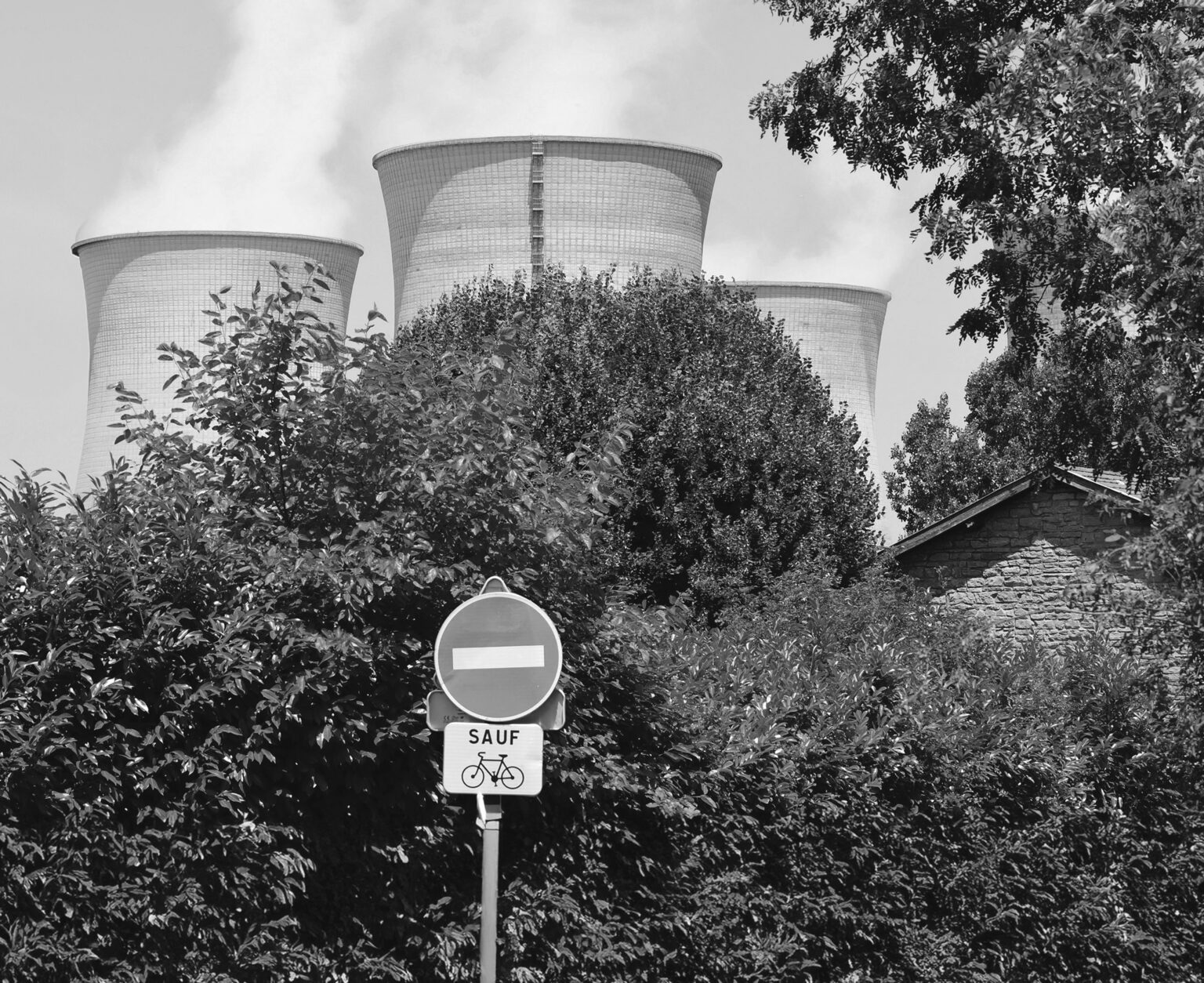
Amid France’s long-running instability, there remain a few inspiring exceptions. One area in which the country long served as a model for Europe was its management of nuclear energy.
The use of the past tense here is no accident. France’s nuclear sector is slowly rusting—and that is not just a metaphor, but an alarming reality.
Wealth must be maintained
It is a paradox. The country generates two-thirds of its electricity through nuclear fission, making it a clear world leader. While other nations turned away from nuclear power after the Chernobyl and Fukushima disasters, Paris held firm. Today, only the far larger United States and China operate more nuclear reactors.
Yet the European Union’s second-largest economy has somehow neglected this comparative advantage. France has failed to properly care for its nuclear wealth, which has long ensured both a high degree of energy independence and low emissions.
The average age of French reactors reached 39.1 years last year. Their standard planned lifespan is 40 years.
The problem of aging plants became most visible in 2022, when Europe faced an energy crisis following the outbreak of war in Ukraine. At certain points, nearly half of all French reactors were shut down due to technical issues and inspections. As a result, nuclear output dropped to its lowest level in 30 years, and France—despite its dominance in the field—became a net importer of electricity, a historic shock for the nation.
There is a solution to the aging fleet: extending the operating life of reactors by another twenty years. This, however, requires complex and costly modernization.
The French nuclear regulator has decided that the state-owned company EDF may operate two dozen of its 1,300-megawatt reactors for an additional ten years beyond their original 40-year lifespan—but only if the necessary upgrades are carried out. France plans to do so. EDF has already set aside roughly six billion euros for the task.
Modernization is not enough
Extending reactor lifespans must go hand in hand with building new ones—otherwise, it merely delays the inevitable.
New construction, however, is extraordinarily expensive, time-consuming, and unpredictable. The construction of the latest reactor, Flamanville 3, has shown that original cost estimates are usually far too low—just like the projected timelines.
Originally scheduled to go online in 2012, the plant was not connected to the grid until December of last year. Because of maintenance and inspections, it was taken offline again for two months. It has been operating normally only since April of this year. Its initial estimated cost of 3.3 billion euros has ballooned to a staggering 13 billion.
Although President Emmanuel Macron has for several years spoken of a nuclear renaissance in France and of building new high-capacity reactors, recent experience suggests it may already be too late to start. Furthermore, the national audit office concluded in January that France is “nowhere near ready” to build the six nuclear reactors Macron announced three years ago.
Even though France’s dominance and preference for nuclear energy remain an inspiration, its neglect of new construction—of a fleet that could carry the Gallic rooster’s banner for decades to come—reveals a political failure to think long term.
Slovakia, which today also faces the challenge of aging reactors and is planning a new one, as well as other European countries that refused to abandon nuclear energy, would do well to learn from France’s mistakes and avoid repeating them. The importance of this energy source will grow exponentially in the age of artificial intelligence—an age defined by massive energy consumption.
Author: Samuel Kolesár