
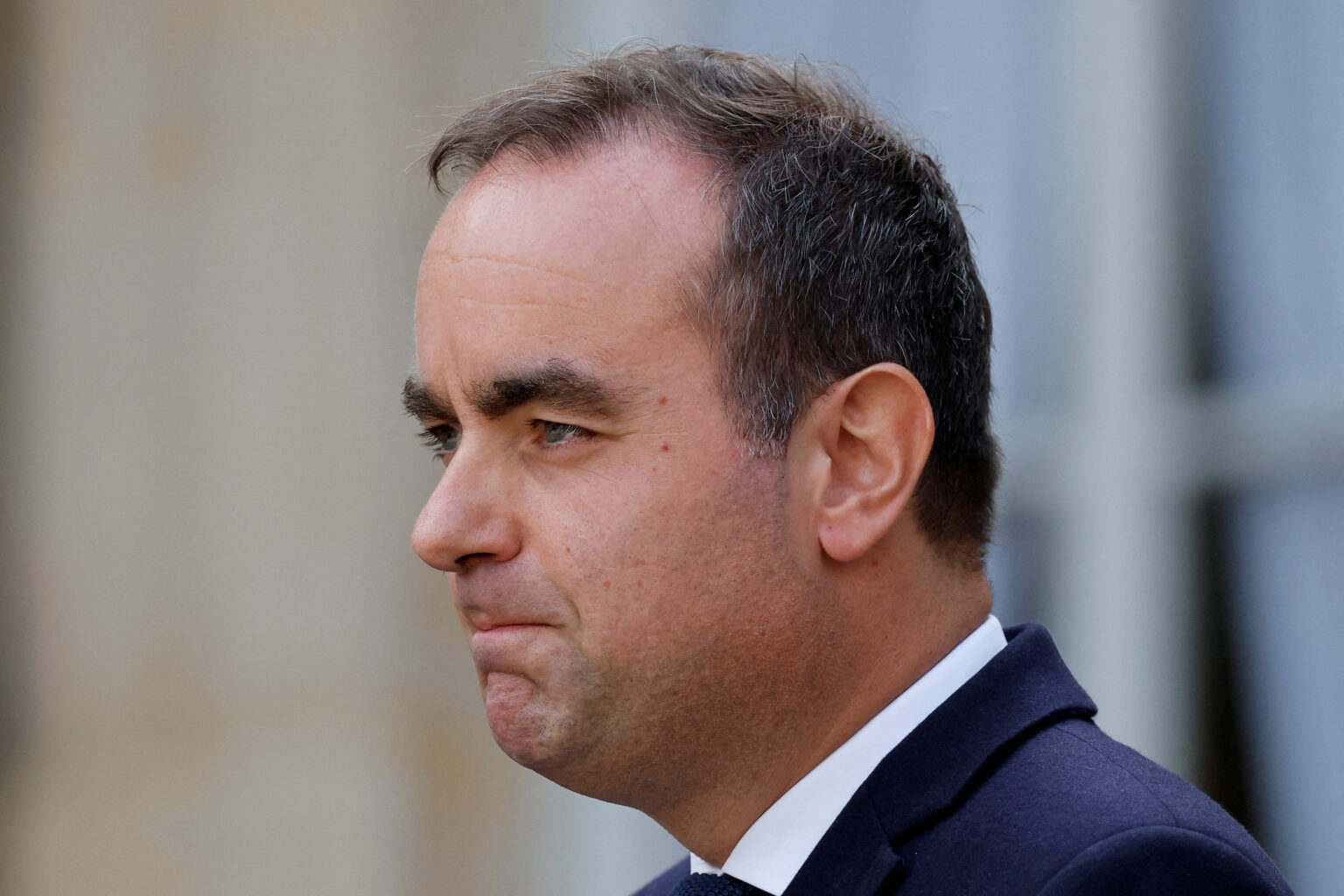
France experienced an unprecedented situation on Monday. Prime Minister Lecornu, a close ally of Macron, resigned just hours after the first meeting of his new government.
The Élysée Palace confirmed that Macron had accepted the resignation. Lecornu had presented the composition of the government with 18 ministers over the weekend, but the new lineup immediately met with dissatisfaction. The opposition described it as too right-wing, while some of Macron's allies said it was not bold enough.
The result was resistance across the entire political spectrum, raising the question of whether the new cabinet would even survive its first few days. In the end, it lasted fourteen hours.
Since Macron's re-election in 2022, France has been paralyzed by the lack of a stable parliamentary majority. Last year's early elections have exacerbated the situation—the National Assembly is now fragmented into many smaller blocs.
Lecornu was already the fifth prime minister in the last two years, illustrating the extent to which the French executive is in deadlock. Lecornu sees the cause and blame in the stubbornness of the parties.
“You can't be prime minister if the conditions for it aren't there,” he said in a brief speech after his resignation. He accused opposition politicians of “selfishness,” saying they stubbornly stuck to their agendas while members of his minority coalition focused on their own presidential ambitions. “You should always put your country before your party,” Lecornu concluded.
According to the Politico portal, some of Macron's minority coalition partners also expressed reservations. On Sunday evening, the centrist Union des démocrates et indépendants (UDI) party, which is allied with the government, announced that it was leaving Macron's coalition. Among them, Valérie Létard expressed her decision that she had no interest in taking up a government post again.
The leader of the nationalist party Rassemblement National (RN), Jordan Bardella, called for the dissolution of parliament and the calling of new elections.
The leader of the Rassemblement National (RN), Marine Le Pen, also commented on the situation, stressing that Emmanuel Macron's resignation would be a “wise” decision. Le Pen also said it was “absolutely necessary” for the president to dissolve the National Assembly (Assemblée nationale), reported the daily newspaper Le Figaro.
The leader of the Republican Party, Bruno Retailleau, the former interior minister whose tweet criticizing the composition of the cabinet may have triggered the latest crisis on Sunday, was more cautious, saying that Macron now had the ball and would soon have to make a statement.
“If there is a stalemate, we will have to go back to the ballot box. However, I believe there are other ways to achieve this,” Retailleau told TF1 television.
Jean-Luc Mélenchon, who leads the radical left-wing movement La France Insoumise (LFI), described the current government crisis during the Fifth Republic as “a political situation without historical precedent” and said, “that is why we have a duty to respond by giving the people a voice.”
Former French Finance Minister Bruno Le Maire, whose appointment as defense minister reportedly triggered Lecornu's resignation, confirmed on Monday that he is leaving the government in an effort to end the crisis. Macron has accepted his resignation.
According to a post on social network X, Le Maire suggested to the president that he transfer his duties as defense minister to Prime Minister Lecornu.
The news of the resignation led to a slump in French stock prices and a weakening of the euro. Government bond yields also rose, indicating increased investor mistrust of the future development of the French economy. The French prime minister's resignation weakened the common European currency, with the euro falling 0.7% against the dollar to $1.1665 in a single day.
The country is thus facing another period of uncertainty. Macron now faces a difficult task: he must find a prime minister who can, at least temporarily, win the support of parliament and stabilize the situation.
However, French politics shows that such a personality is very rare today.
(reuters, lud, est, kul)